Feelings,
Nothing more than feelings;
Trying to forget my
Feelings of love.
Teardrops,
Rolling down on my face,
Trying to forget my,
Feelings of love...
THE classic soft-rock ballad ‘Feelings’ was part of the slow section at the Blessed Oliver Plunkett disco when I was a boy back in the mid-70s. Little was I to know as the Plunkett boys and girls eyed each other lustfully across the room while Brazilian crooner Morris Albert poured out his heart that the song would become the anthem for alienated, post-conflict unionism in the terminal stages of partition.
The Ulster Protestant is famously a dour, plain-speaking man (there may be dour, plain-speaking Protestant women, but for some reason that has never formed part of the narrative). He likes his Sunday silverside well done, his roasties drowned in duck fat and he takes his spuds boiled with plenty of salt and butter. And just as his taste for plain fare makes no concession to concerns about type-2 diabetes, so his life of the mind has remained impervious to new-fangled and fanciful post-50s ideas of mindfulness and mental health.

But no longer. Suddenly Loyal Ulster is desperately concerned about people’s feelings.
I have no idea who inserted the word feelings into the loyalist lexicon; I suspect it might have been Scarvla Lockhart, but equally it could have been her Upper Bann DUP colleague Jonathan Buckley; or indeed their boss, the Honey Monster of unionist politics, Gavin Robinson.
No matter. What’s important is that the word is here. Whether or not it’s here to stay will rather depend on whether it succeeds in its function of getting the DUP over the traumatic sentencing of Jeffrey Donaldson with as little damage as possible.
Feelings are A Concept and not A Thing, of course. You might even say that feelings are a feeling. But when the DUP attaches the word to the IRA it starts to take on a rather more concrete cast.
You might expect the IRA’s feelings to come in a rather lame last in any list of things about the IRA that Loyal Ulster should be worried about. Blowy gear, for instance. If I was a plain-speaking, dour Protestant I’d be more worried about the IRA’s supply of Semtex and ammonium nitrate fertiliser than I would be about their feelings. Because as important as the IRA’s emotions may suddenly be, they are strictly limited in their ability to reduce town centres to rubble.
Guns. There’s another thing that would worry me more than the IRA’s mood on any given day. Attacks. Personnel. Money. Influence. There are all sorts of things that would meet our eye as we went down the list of Worrying IRA Things before we finally arrived at Feelings. But the awkward thing about bombs and guns for the DUP is that they actually exist. You can pick them up and feel them (that’s hand-feel, I should point out, and not mind-feel); you can put them on a decorating table, take pictures of them and send the images to a grateful media. And so the DUP doesn’t ask the PSNI to give their assessment on the IRA arsenal, for the very simple reason that the IRA decommissioned its weapons; for the very simple reason that the PSNI, if asked, would reflect that reality.
But feelings? Deep, shallow, warm, cold, happy, sad, angry and calm feelings? You can talk about your feelings till the cows come home and not a sentence, not a word, will mean a damn thing. Except to those who desperately want them to mean something.
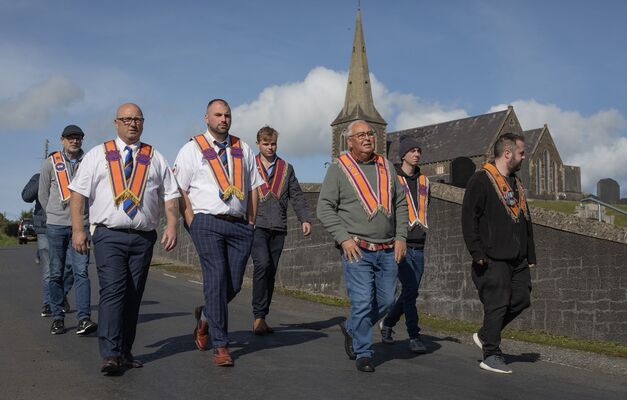
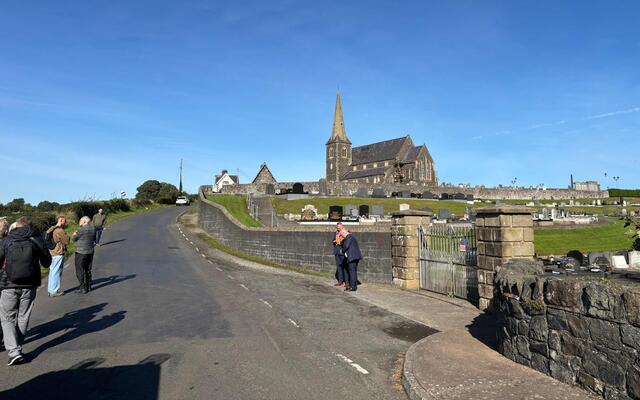
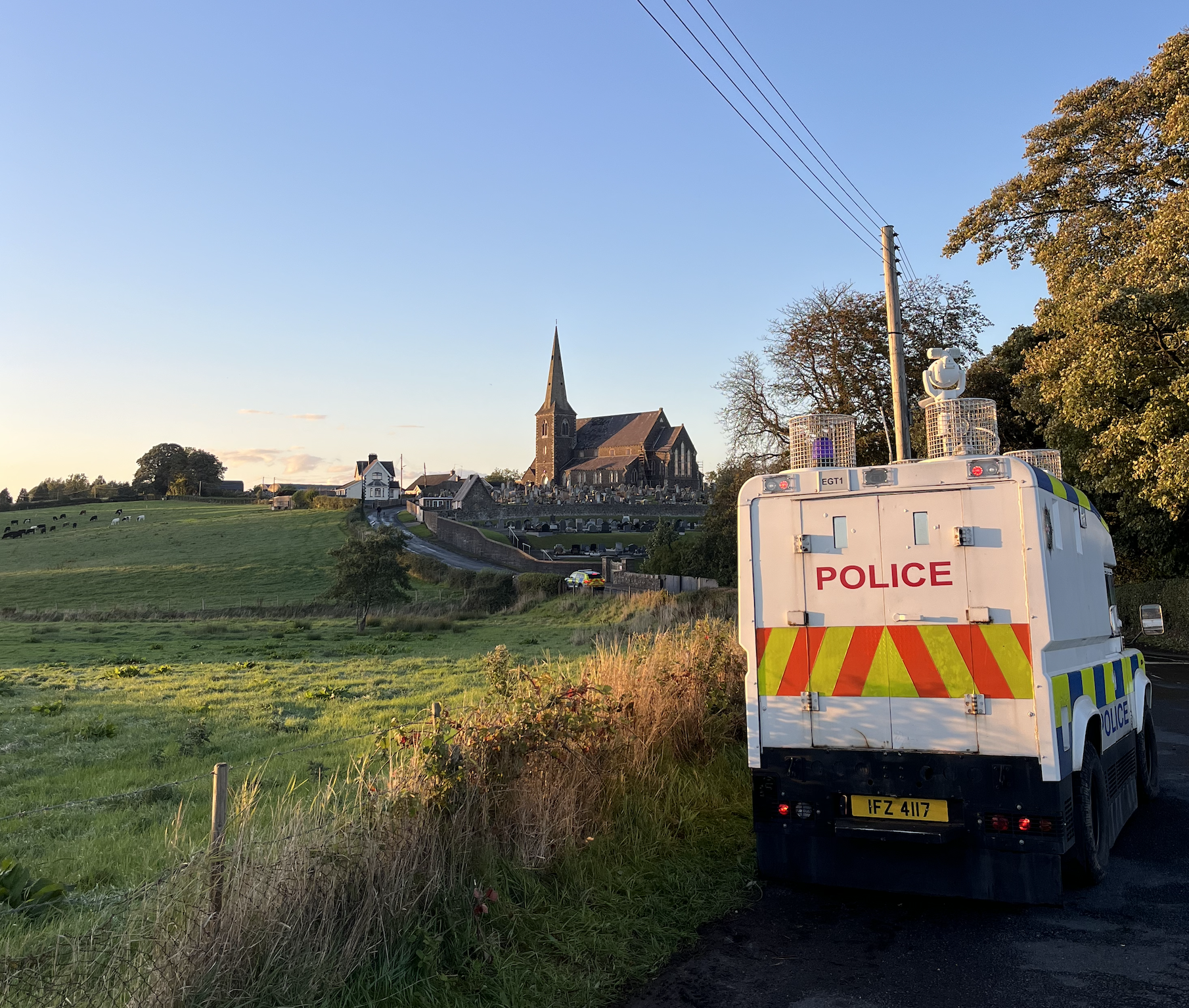
This new concern about the inner life of republican volunteers is a surprising development, but it appears not to have produced the autumn harvest envisaged. The PSNI assessment that led the Secretary of State to send the Drumcree Brethren home from the hill was long on Dissies, short on Provies. And the gulp from Loyal Ulster could be heard across the Armagh orchards as the Trevors pointed out that they feared Uncle Andy could get involved on the hill.
Counsel for the Orangeman seeking the judicial review, reading from the PSNI assessment, said it was “almost certain” that that republican dissidents were among the Garvaghy Road protesters and it was “possible” they had access to firearms. Further, it was also “possible” that the weapons could have been used to attack police. But not to attack Orangemen, as the DUP had hoped. Sorry, feared.
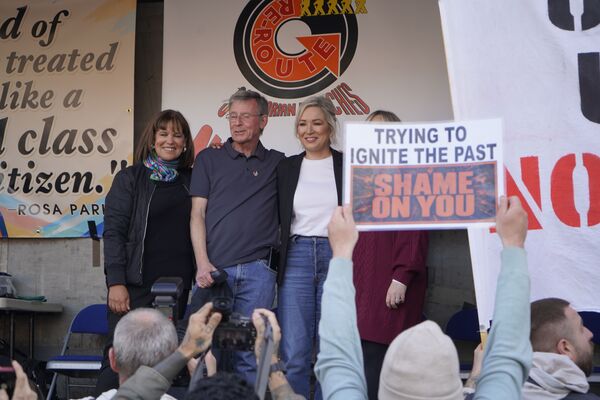
I was at Garvaghy a couple of times and on both occasions I saw dissidents – so it’s not “almost certain” that dissidents were there, it’s just certain. And if my evidence doesn’t do it for hthe cops, I can show them quite a few pictures in which dissidents are featured. They are not secret. They were in the daily papers. Perhaps the PSNI’s intelligence guys read them occasionally.
And while I didn’t see any guns in the hands of dissidents at Garvaghy, I can further apprise the PSNI that it’s not “possible” that the dissidents have access to guns, it’s as sure as his officers have access to guns.
Threadbare as the PSNI’s assessment was, it was still fallen hungrily-upon by the usual suspects to suggest that Garvaghy was a north Armagh Tet Offensive waiting to happen.
The yawn-inducing truth is that the PSNI statement was written i) to keep the peace process on track, with so many conditional words and clauses included that it gave a new depth of flavour to the old granny-balls-granda matrix; and ii) to validate (just about) the decision to call in the Secretary of State to put Portadown District and Eddie the Legal out of their misery.
As a tangential bonus, the assessment allowed the DUP to pretend that their Chicken-Licken claims from last week of Garvaghy being awash with guns and petrol were more than distraction slop. Crucially and paradoxically, it was thin enough to allow DUP leader Gavin Robinson to dismiss the idea of giving Michelle O’Neill her P45 by giving Emma Little-Pengelly her P45.
The bull elephant sitting in the corner of the High Court trumpeting loudly while depositing steaming piles of dung on the floor had the letters UVF/UDA tattooed on its trunk. In the week before the PSNI told the Parades Commission that a Portadown District march along Garvaghy would be an Orange walk in the park, the Parades Commission sat down with representatives of the two unionist paramilitary groups to discuss the matter. Since typing that statement has made even me wobble my head and take a second look, let me explain what that means.
Days before the Parades Commission did its fateful Man from Del Monte impression, it sat down with still-armed, murderous, drug-dealing, people-trafficking, sectarian loyalist paramilitaries to find out how they felt about Orangemen walking through a Catholic district. To take on board, in other words, UVF/UDA ‘feelings’ about Garvaghy. The same loyalist paramilitaries who had provided the lethal muscle at 90s Drumcree.
Questions abound.
Why was the Parades Commission interested in the feelings of sectarian narco-gangs? Yes, the agency had shown itself to be an absolute clown car of an organisation via its comical decision-making processes that precipitated this mess; and yes, the Parades Commission was obviously keen to get back on the right side of Loyal Ulster (or at the very least to get a little less on its wrong side).
What were the UVF/UDA’s feelings on Garvaghy that they passed on to the Parades Commission?
What were the Parades Commission’s feelings on the UVF/UDA’s feelings and what part did its meeting with them play in its decision to put us on DefCon 1 for three weeks?
And finally and perhaps most bafflingly, why on Earth should we listen to the PSNI about anything when it was their laughably inaccurate initial security assessment that freed up a desperate Parades Commission to throw the Orange a Drumcree bone?
Perhaps it’s time for an assessment of all those assessments.