THE British and unionist casting of Irish citizens and Irishness as criminal, or suspect, is an old trick. Repeating it around parading is tedious and nothing more than a distraction.
Sending priests into the mountains and forcing masses to be held on rocks following the criminalisaiton of the Catholic Church cast mass goers as criminals.
Banning the Irish language and sending teachers to teach in hedge rows cast children learning to read as criminals.
Deeming hurling and gaelic football illegal meant parishes holding matches was wholescale criminal enterprise.
Organising the workplaces against stevedores forcing working families into starvation justified the beating and maiming of trade union members.

Denying women the vote, arresting women seeking human rights and deeming prison protests as illegal, justified strip searching and force feeding.
Banning a march against internment and howling through loud hailers that “This is an illegal march” justified the Parachute Regiment opening fire and killing 14 men and boys in the crowd.
Criminalising an entire community entitled the rhetoric of “pan-nationalist front”, which justified the arming and direction of loyalist murder gangs.
Our community knows exactly what is going on when power chooses to criminalise good men and women who stand up for their right to exist as equal human beings. It is the deliberate framing of our community as less. It says we are all suspect and up to no good. It is how the British state still gets away with the attempted murder of our nation when they stole our food, killing and exiling half of our population, and how it still feels it can force us to accept less.
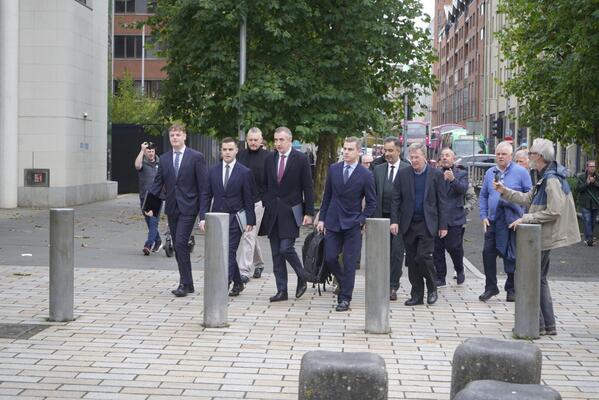
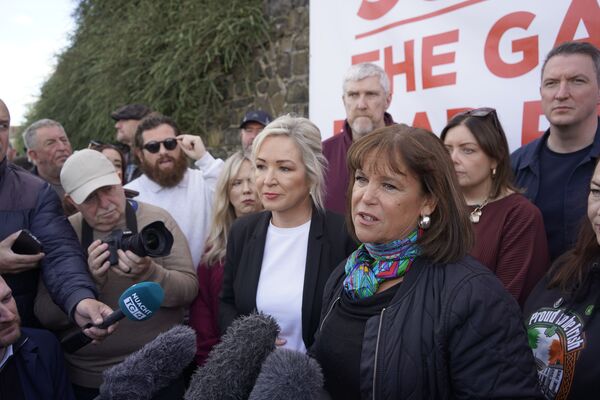
Unionism’s attempts cast aspersions on the unified, organic, right protest against a forced march on the Garvaghy Road is a deliberate distraction from its own failure and the continuation of the sectarian casting of Irish citizenry as suspects in their own country.
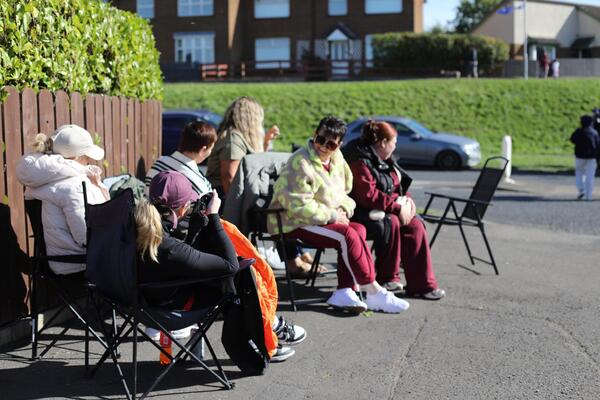
No one thought there was anything other than a unity of purpose in the early hours of that Sunday morning. As the community centre stayed open all night with tea and coffee, and residents offered changes of socks to the drenched and tumble dryers for soaking coats, there was no whiff of cordite, apart from the incongruous yet heartening mid-morning fireworks display from someone lending their Halloween fun early for the tired masses.
That is in no way to diminish where the threat of violence was felt. There was only one set of weapons that threatened – from the PSNI officers in riot gear, backed up by hundreds of Scottish officers, who had moved water cannon behind them, and who each had a belt with an assortment of weapons, and presumably plastic bullet guns sitting somewhere
That these were not used is a good thing, but for those hours the community expected them, the PSNI was ready to use them, and the battle, if there was to be one, would only be the state using weapons against the peaceful bodies of those who chose to defend themselves from sectarianism. Of which there is painful, living memory.
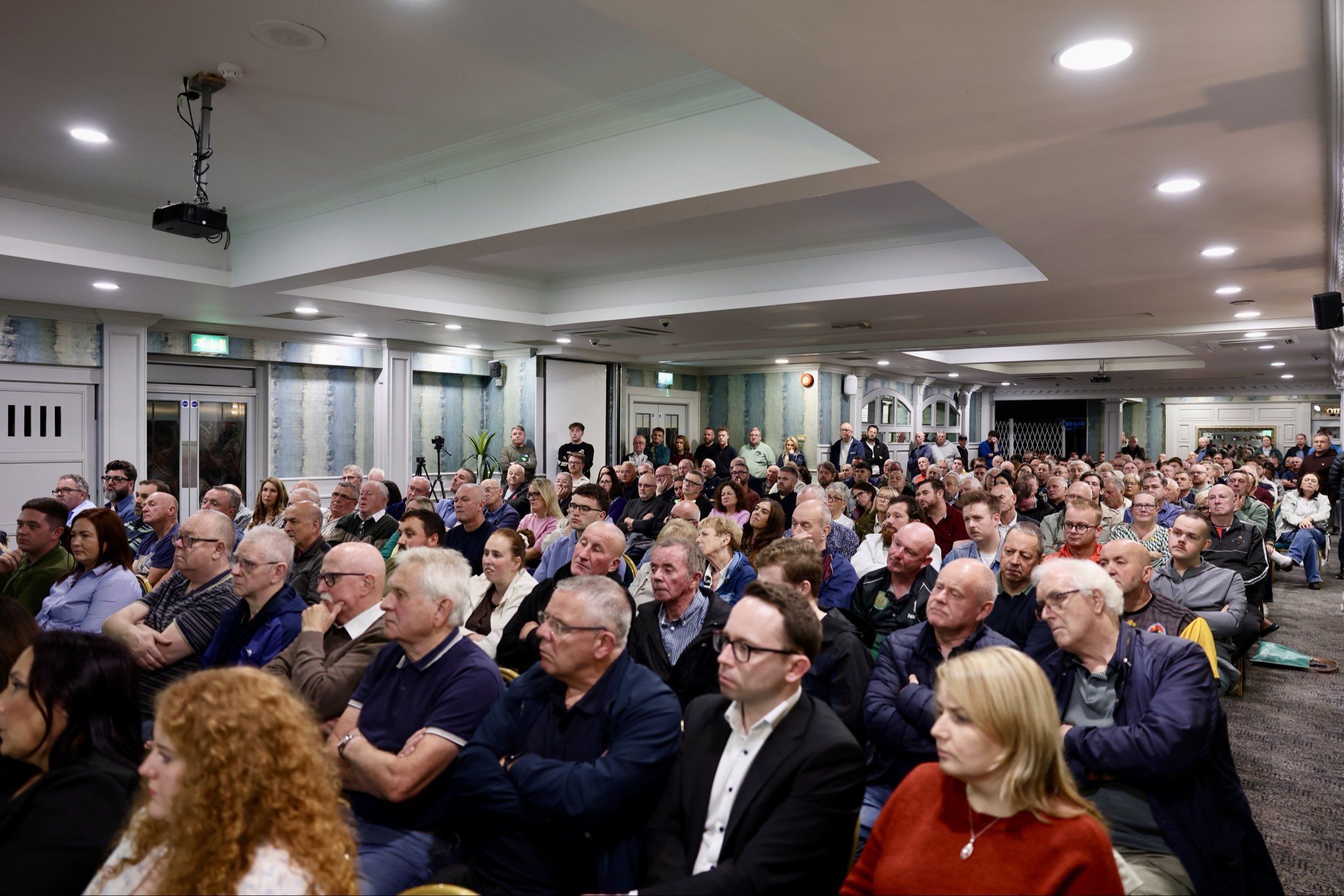
The distracting narratives from unionism which gain attention in recent days should only serve to confirm what we know. Our community needs to constantly record our own story, affirm our own commitment to equality, justice and peace. And not for one second facilitate those attempts to drag us down rabbit holes of criminalising narratives.