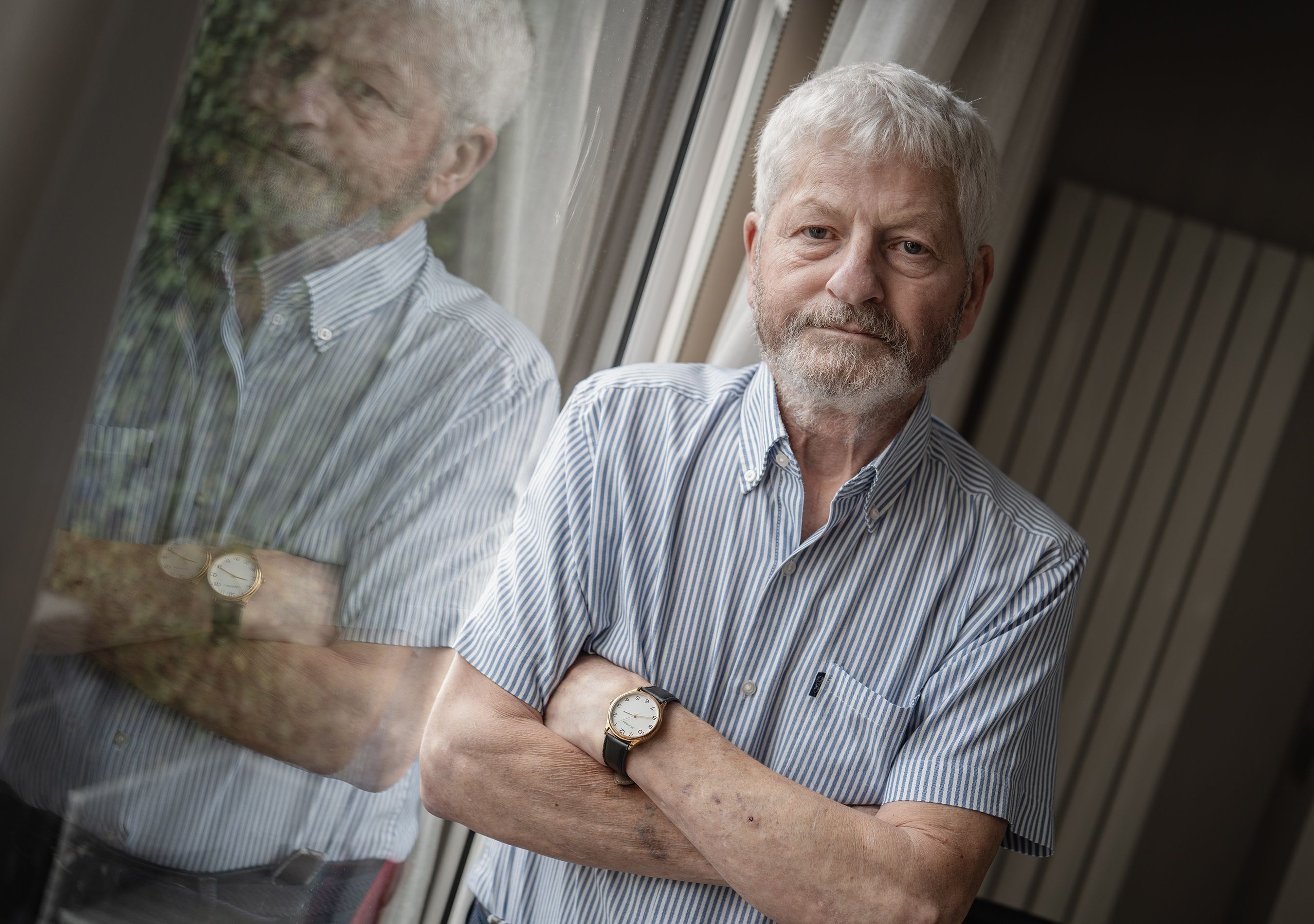
A BELFAST man who was tortured by members of the Ulster Defence Regiment (UDR) for more than a week while he recovered from gunshot wounds in a military hospital has hit out at the slow pace in processing a victims’ payment scheme.
Gerry Loughlin fears that he may not be around long enough to collect any award from the Victims’ Permanent Disablement Scheme due to a recent deterioration in his health.
In February Gerry suffered a heart attack and while he was in hospital also took a stroke. He lives with COPD and has had 14 chest infections in the past two years. His respiratory problems have worsened in recent weeks and he has been told that if his condition does not improve he will have to be admitted to the Cardiac Unit at the RVH.
Three years ago, Gerry applied through the Victims’ Payment Board to the Troubles Permanent Disablement Payment Scheme which makes a payment to people who have been permanently injured through the conflict. Under the scheme applicants who either have a terminal illness and who are vulnerable have their applications prioritised and fast-tracked.
Gerry, 77, is also questioning whether his role as a former combatant is playing a part in any decision being made on his application.
Gerry’s ordeal at the hands of the UDR began after he was shot in the leg and badly wounded during an Official IRA armed robbery in the Docks area on December 2, 1971. An RUC man was also shot in an exchange of fire.
After being operated on in the Royal Victoria Hospital, Gerry said he was taken to the basement of the hospital where paramilitary patients were treated and was effectively handed over the UDR.
“I knew I was in for it,” he recalls.
At the RVH he was put in the back of a military vehicle and transferred to Musgrave Park Military Hospital. It was here that his ordeal began.
“I was brought into a ward and Rita O’Hare was there. She had been shot in the back and was being treated and another IRA man was there who had also been shot in the back.
“The UDR were only interested in me because not only had I shot a cop but the Official IRA had been specifically killing UDR members, so they targeted me. So over the nine days I was there I was being beaten by the UDR, not in ones or twos, but in sixes, and this was happening while I was in the ward and Rita O’Hare and the other fella would be screaming at them to stop. Both of them couldn’t move because they had been shot in the back.
“Not only was it physical torture but it was also psychological as they were telling me that the policeman I shot was dead – which was lies – and I was going to hang. I believed them but I didn’t care, I was sick because I had lost so much blood. They were watching me bleed and laughing and I was delirious.
“This is what I had to endure over the next nine days."
The UDR men who tortured Gerry opened the wounds on his leg with the butt of their rifles and as a result, Gerry says, his bed was soaked with blood.
“Their special trick was to come in in the early hours of the morning when everybody was asleep. They would come around half drunk, spray aerosol in your eyes first and then start beating me again.
“The British Army would come in and carry out emergency surgery as they had beaten me all around the legs and reopened my wounds. But then it would start again.
“On the ninth night they woke me up at four in the morning, did the usual with the aerosol in the eyes and I felt a heavy weight on my shoulder and it was a Sterling sub machine gun. The barrel was at my ear and it was put on single fire and the UDR man fired three rounds and the bullets went out the window.
“After that a British Army nurse came to me and whispered in my ear, ‘Gerry, get your personal effects together, we’re taking you out of here today. We can’t guarantee your safety.’ I never forgot those words. The British Army couldn’t protect me because the UDR are a law unto themselves.”
The RUC took Gerry to Crumlin Road Jail where, he says, two rows of Paras beat him into the governors’ office.
Gerry doesn’t know how long he was in the prison hospital, but he received a number of blood transfusions and his wounds were treated and dressed on a number of occasions. He was sentenced to 12 years and was out in six. During his time inside he was one of the prisoners gassed and beaten by the British Army after Long Kesh had been set on fire by republican prisoners. He ended up back in Musgrave Park Military Hospital. The British government has never admitted which gas the army used during the October 1974 operation but it has been blamed by republicans for the premature deaths of scores of former prisoners.
Gerry said his solicitor has all his medical files from his time in Musgrave Park Military Hospital.

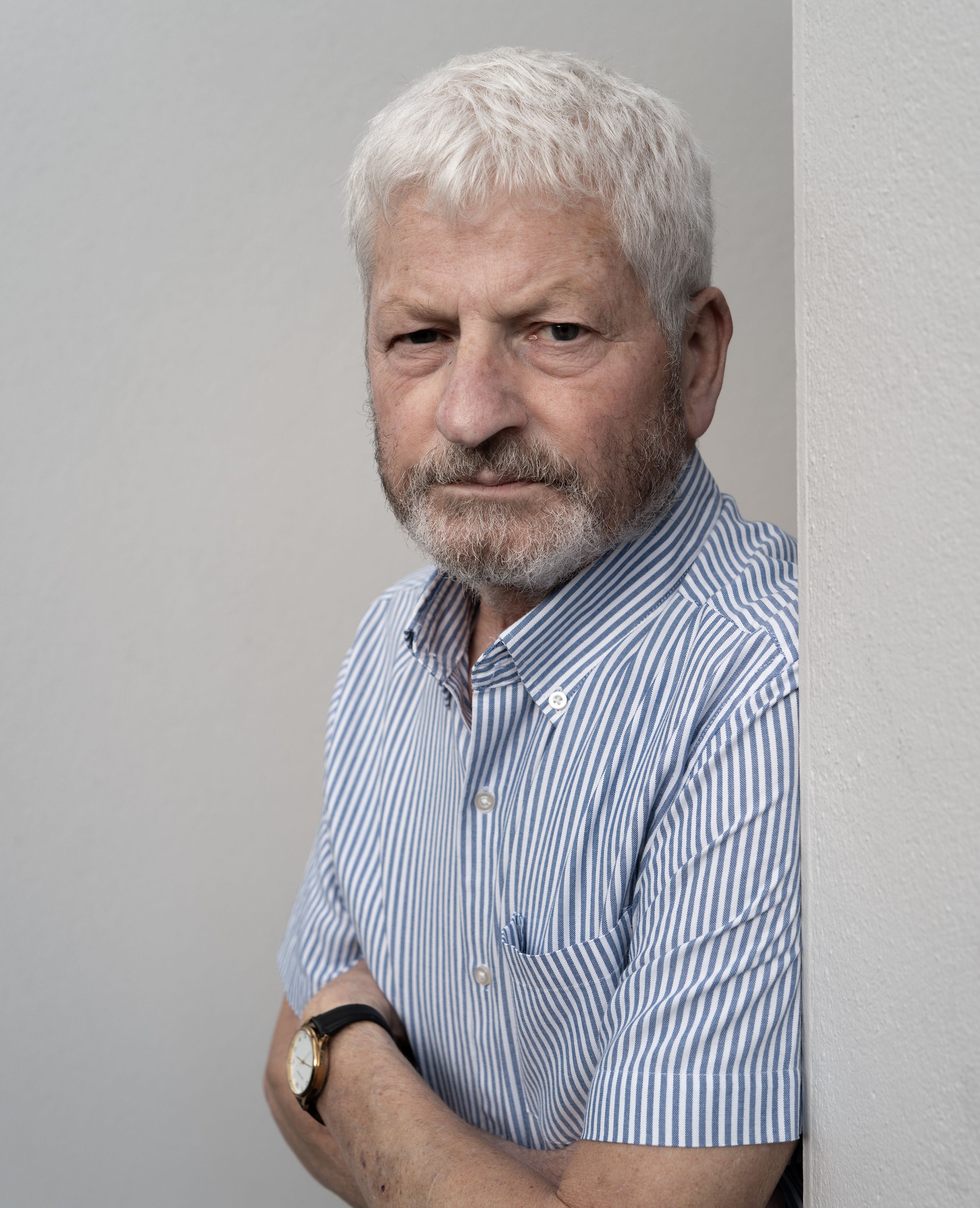

In 1983 Gerry stood for the Workers’ Party in Lagan Valley during that year’s General Election, after which he cut his ties with the Officials.
“A couple of months later I applied for a position as Organising Secretary with the Northern Ireland Peace Forum where I spent two years promoting peace activities across the North,” he said. “My next job was personal secretary to former unionist politician Peter McLachlan in his role as Director of Bryson House. After that I became Administration Manager at another Belfast charity, the National Schizophrenia Fellowship.
“It was around two years later that I started to feel ill and have never worked again,” he said.
With his health now deteriorating rapidly, Gerry is growing increasingly frustrated with the pace of the victims’ scheme and fears that when a decision is made it may come too late.
“I’m not just talking about myself here,” he said. “There are other people who will be reading this and are in the same boat and are wondering, are they just waiting for us to die so they don’t have to pay us any money?”
The SDLP’s Gerard McDonald, who has been assisting Gerry in his case, said: "Mr Loughlin has throughout the process irrefutably demonstrated his entitlement to an award from the Troubles Permanent Disablement Payment Scheme. He is now enduring unnecessary delay, which solely lies at the feet of the Victims' Payments Board (VPB).
"Repeatedly the SDLP have sought assurances, timescales and clarification from the VPB on the experience endured by Mr Loughlin and all we have been met with is generalities and obstruction. Unless swift and urgent intervention takes place we fear many people are not going to benefit from the payment scheme in the way envisaged and campaigned for by the many victims who ensured its existence today."
A spokesperson for the Victims’ Payments Board said they cannot discuss individual cases, "especially those that are in progress".
The spokesperson added: "Applications progress through the various stages of the Scheme at different rates. The progress of each application is dependent on the provision of supporting information from external organisations – something outside of the control of the Victims’ Payments Board (VPB).
"Given the historical nature of the subject matter, the passage of time makes certain records difficult or impossible to retrieve – the VPB are often dealing with incidents that happened up to 50 years ago.
"Approximately one-in-three applications have multiple incidents with varying levels of detail to set against the tests required by the legislation that underpin the Scheme. Each incident requires both verification of eligibility and evidence gathering and requires a separate determination, which can take a considerable amount of time to process.
"Application processing includes but is not limited to; verification checks, evidence gathering, and a medical assessment. Delays also occur where an application form is incomplete, supporting evidence is missing or there are gaps in incident disclosure etc.
As at 12/10/2026 the Scheme has received 16,419 applications and has paid out over £164.3 million to applicants since 31.08.2021."