IT takes patience to a whole new level to successfully have a wild bird literally eating out of your hand.
But that’s exactly what reader Liam Garland has managed to do.
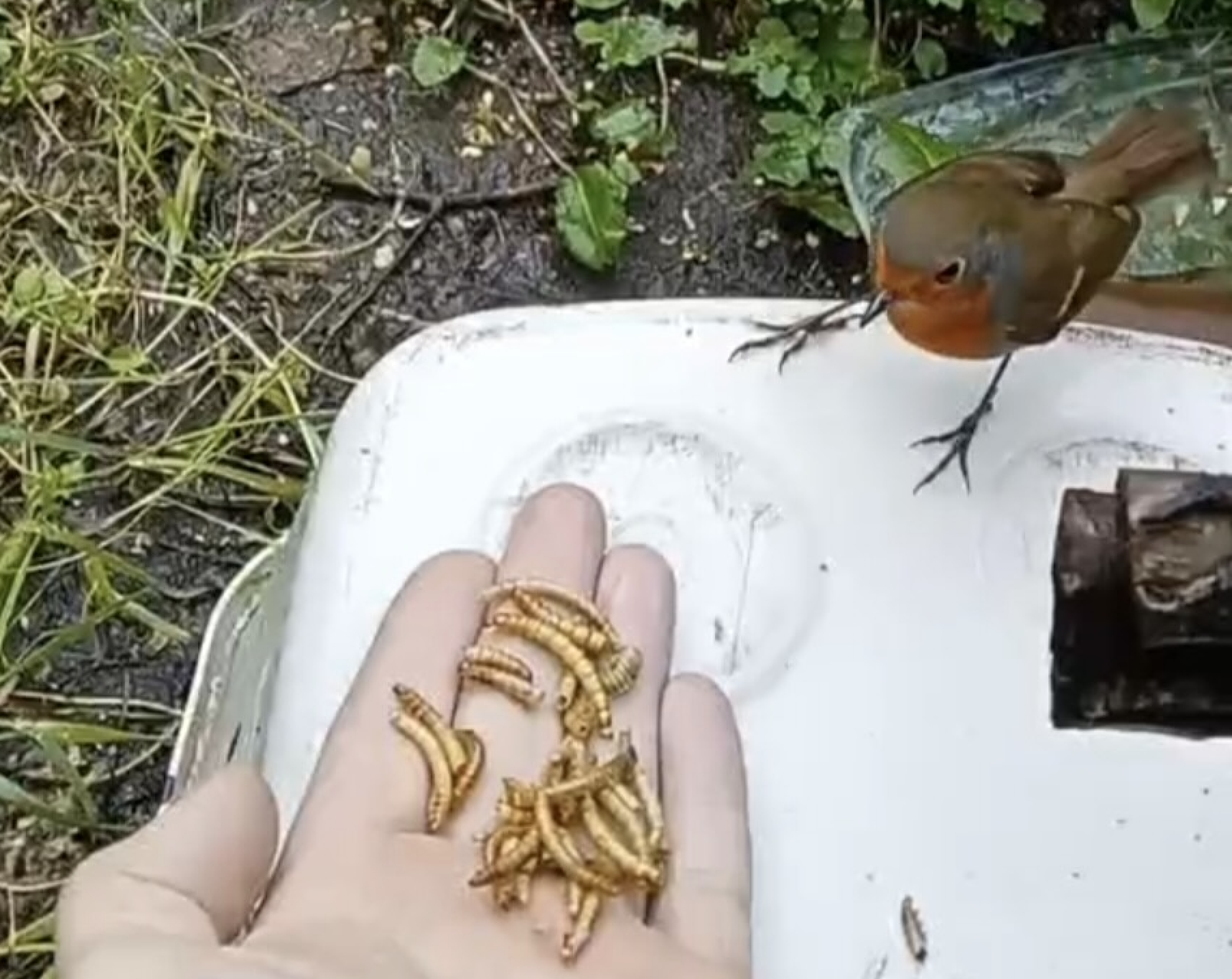
The Rosgoill resident has managed to coax his garden robin on to his hand to grab mealworms – and has videoed it for proof.
WATCH: Shaws Road man Liam Garland feeds a robin from his hand in his back garden - see this week's Dúlra for more. pic.twitter.com/nf209oyAUD
— Andersonstown News (@ATownNews) October 22, 2026
And you can see that as soon as he opens his palm, the robin appears in the back garden, jumping from branch to branch and weighing up the danger. It’s a risk v reward situation – and it seems the mealworms tilt the balance.
And after taking a worm and realising it isn’t a trap, it returns again and again for more, encouraged by Liam’s gentle clicking sound.

Mealworms are another of those super-foods which have recently been developed for wild birds.
They're the dried larvae of the yellow mealworm beetle and are usually imported dehydrated from China and packaged locally – but if you really want to spoil the birds, major brands are offering ‘premium’ mealworms produced under strict EU rules, like Chubby Mealworms, grown in a mega-factory in Valencia, Spain. Maybe it's best not to see any pictures of the inside of that factory!
Whichever you choose, for robins, mealworms are to die for – or at least worth risking their life for. Because there’s no need to dig through mud and under leaves in the hope of finding a wriggly insect – these dried babies don’t even put up a fight!
And so when Liam decided he’d woo the garden robin to his hand, he chose the perfect lure.
Dúlra managed this very trick a few years back – and again, it was the mealworms that did the trick. It takes patience however – it’s not easy to stand still as a statue with your arm outstretched for a long time. Any movement at all and you’ll have to start all over again.
The robin in Dúlra’s garden became so tame that it must have let down its guard and been taken by a hawk or a cat – because one day when Dúlra went out, arm outstretched, it didn’t appear – and other passing robins just ignored the offering. It takes time to build up the trust of a wild creature, and Dúlra’s never managed it since.
But Liam’s got a new mate who he’ll help get to the other side of winter. In fact in a way, they’ll help each other get through winter, because it’s just as rewarding to be helping nature as it is to be on the receiving end.
That’s why so many of us feed the garden birds in winter and hang out feeders full of lifesaving seeds. We help them overcome the deadly threat of winter, and in return they brighten our lives. It’s a deal!
Of all the birds on Dúlra’s bucket list, the crossbill is right up there at the top. The crosghob doesn’t breed here in any numbers, but occasionally arrives from its northern forest breeding grounds in winter.
Last week 14 of them were spotted feeding on conifers near Dungannon in County Tyrone – a bit too far off the beaten track for Dúlra to visit.
But they are an incredible bird, their beak developed to prise open the toughest of seeds. And they are a member of the bird family closest to Dúlra’s heart – the finch family.
They are said to be slightly bigger than sparrows but built like parrots and live in the tree-tops – but will land on the ground to pick up seeds that fall. But what makes them special is that unique crossed beak that would be a real treat to see – how far away is Dungannon again?
• If you’ve seen or photographed anything interesting, or have any nature questions, you can text Dúlra on 07801 414804.