THESE birds should be a symbol of Irish-Canadian friendship, with a logo of them appearing each time both countries are mentioned.
Because the brent Geese that Dúlra watched on the shores of Lough Neagh last week had undertaken one of the most gruelling migration journeys in the entire avian world.
They had flown an incredible 3,500 miles to get here, touching down just once to refuel – just like a long-haul flight – in Iceland.
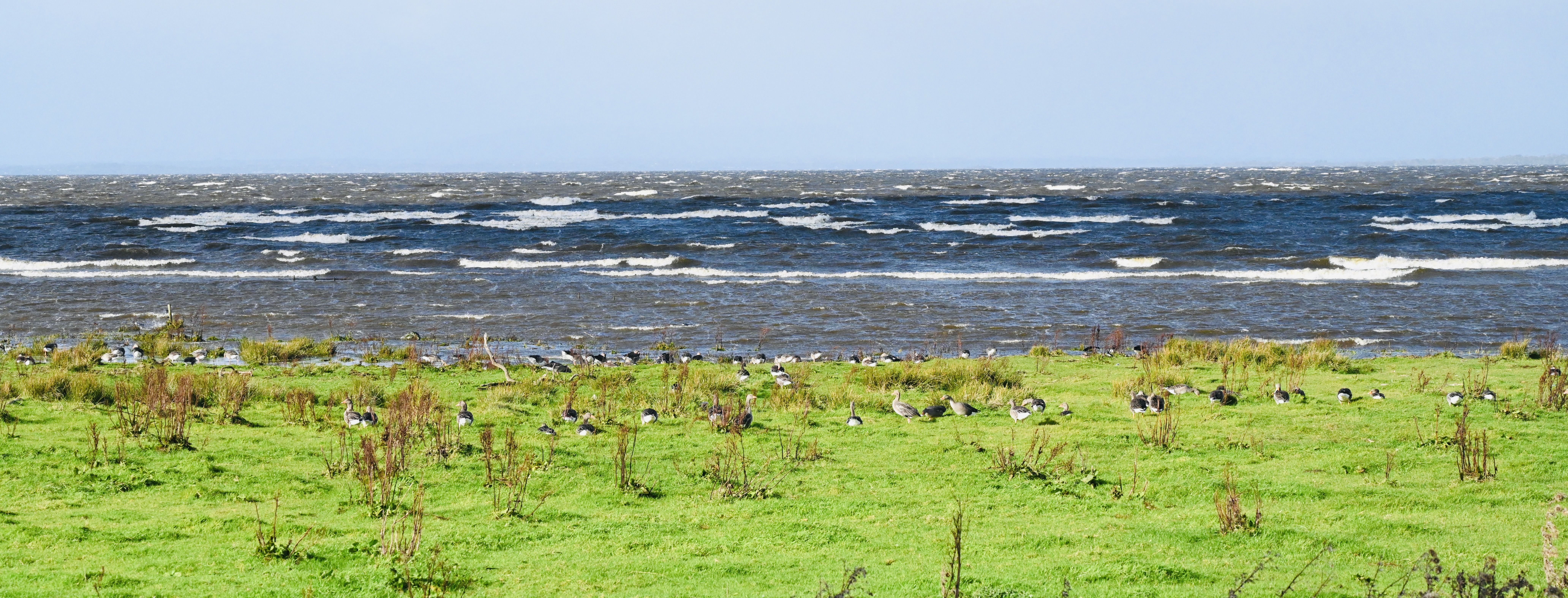
By the time they arrived at Lough Neagh, they were famished and they hungrily gulped down eelgrass at the shore, oblivious to passers-by like Dúlra.
Brent geese – with their dark heads – were hanging around with the more common greylags, a much more familiar goose that now breeds here and can be seen all year round in places like the Waterworks in North Belfast. The greylags at Lough Neagh, however, made it here from their breeding ground in Iceland 900 miles away – just a few flaps of the wings compared to those Canadian brents!

In total, Ireland gets 5,000 wintering greylags but 40,000 brent geese – incredibly, that’s 90 per cent of the bird’s world population. It is evidence of how far-flung parts of the world can be crucial to a bird’s survival – the Canadians are relying on Ireland to make sure their birds get enough food so they can return to breed. The same can be said for so many of our summer visitors – we’re depending on countries in Africa for their survival.
The geese on the shore of Lough Neagh aren’t bothered about people – at least not since shooting them was banned in 1957. The Greylag - gé ghlas – can still be killed, but they rarely are nowadays.
The sheer size of these birds and their large numbers helps give them courage – they’re not for budging no matter how close you are.
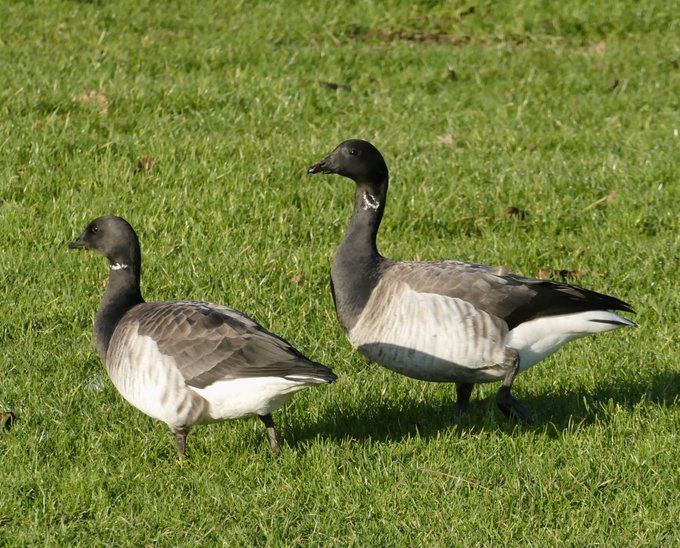

Brent geese have always been held in high esteem in Ireland. Of course we’ve heard of the Wild Geese, those Gaelic lords exiled to Europe in the 1600s, who achieved great things all across the continent. The brent goose – known as cadhan in Irish – was so special that it even ended up as a surname – Ó Cadhan.
In Celtic Ireland names were often given to a person who had the same traits as an animal or bird – much like the native Americans. Brent geese were famously untamed, and of course were prone to wandering. And so some people who shared those traits became Cadhain – and their children and grandchildren became Mac Cadhan and Ó Cadhain.
Many of these names were Anglicised under British rule to O’Kane, Kyne or Coyne – but some Irish families were aware of the original meaning and instead decided to call themselves Barnacle – as in the famous barnacle goose. One such person was Nora Barnacle, wife of James Joyce.
It’s why the surname ‘Fox’ is so common here – Mac an tSionnaigh, son (or daughter) of the Fox – a wily redhead perhaps – or Ó Draighneáin – son (or daughter) of the blackthorn, which became Thornton or Drennan – a tough customer!
In fact, in parts of Ireland it was thought that these geese were in fact more fish than bird, because they just appeared each year and no nest was ever found. In Kerry they couldn’t be eaten on a Friday, just like fish!
It was an exhilarating day at the lough with these wild geese, their honks being carried in the breeze as the waves rolled behind them.
As we hunker down for winter, these stunning visitors will help lift our spirits. And the Canadians can rest assured we’ll return them safely in the spring.
* If you’ve seen or photographed anything interesting or have any nature pictures, you can text Dúlra on 07801 414804.