THERE are moments in the life of a city when history quietly turns a corner and you know instinctively that you are witnessing something that future generations will speak about with pride.
This year’s Féile and the arrival of the All-Ireland Fleadh in Belfast feels like one of those moments. If someone had told me years ago that Belfast would one day host the world’s greatest celebration of traditional Irish music and culture, I would probably have smiled politely and quietly dismissed it as wishful thinking. Yet here we are.
To be honest, I never thought I would live to see the day.
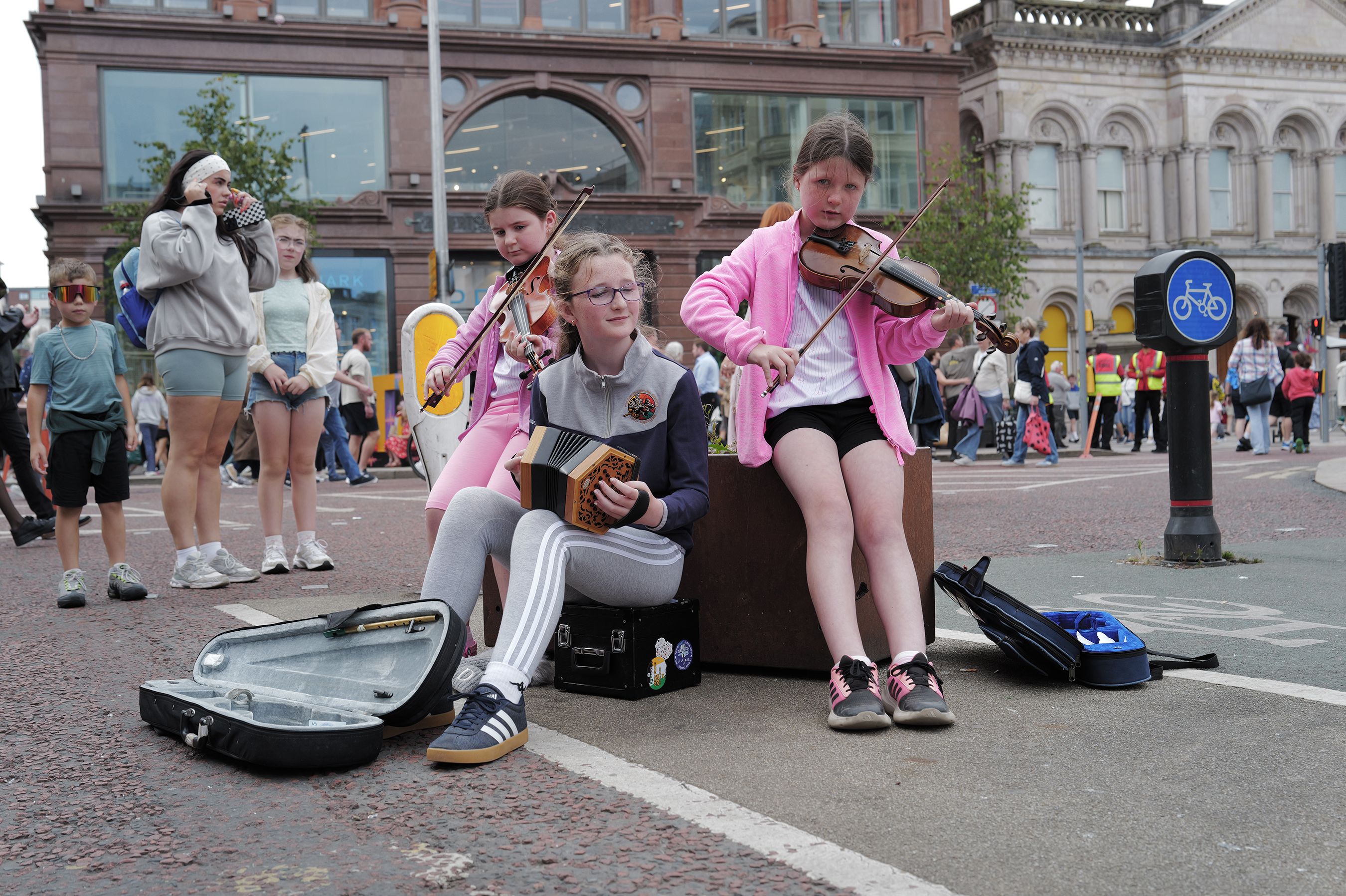
In recent days our city has echoed not with division or discord, but with fiddles, flutes, pipes, bodhráns, laughter and conversation. Streets once associated with conflict have become places of welcome, where music spills from pubs, cafés and street corners, inviting strangers to become friends and neighbours to become family once again.

There is something deeply symbolic about this happening during Lúnasa, our ancient Celtic festival that marks the beginning of the harvest. Long before modern festivals existed, our ancestors gathered at this time of year to celebrate the first fruits of the land. Named after the god Lugh, the master of light, craftsmanship and the arts, Lúnasa honoured not only the harvest but also creativity, community and gratitude.
The celebrations were never simply about food. They were about people. Communities gathered to feast, share stories, compete in athletic games, dance, make music and strengthen friendships. Looking around Belfast today, it strikes me that very little has changed. The instruments may be better tuned, the stages larger and the audiences more diverse, but the spirit remains exactly the same.
That spirit has always been at the heart of Féile. What began as a local community festival has grown into one of Ireland’s greatest cultural celebrations, proving year after year that culture has an extraordinary ability to heal, unite and inspire. The arrival of Fleadh Cheoil na hÉireann feels like a natural extension of that journey. It is as though Belfast has finally stepped confidently on to a stage it has long deserved to occupy.
Perhaps what moves me most is seeing young people playing alongside seasoned musicians, visitors mingling effortlessly with locals, and families filling the streets with smiles. Music possesses a remarkable ability to dissolve barriers. It asks no questions about politics, religion or background. It simply invites us to listen, tap our feet and perhaps even dance together.
As someone who has watched Belfast evolve over many decades, I find myself filled with quiet gratitude. We often hear that time heals, but time alone achieves very little. It is people who heal. It is communities that choose hope over fear, celebration over suspicion and friendship over separation.
This year’s Féile and Fleadh have shown the very best of Belfast. They have reminded us that our greatest traditions are not relics of the past but living expressions of who we are becoming. As the music drifts across our city beneath the warm skies of Lúnasa, it feels as though the harvest we celebrate is not simply gathered from the fields but from the hearts of a city that has learned, at last, how to sing together.