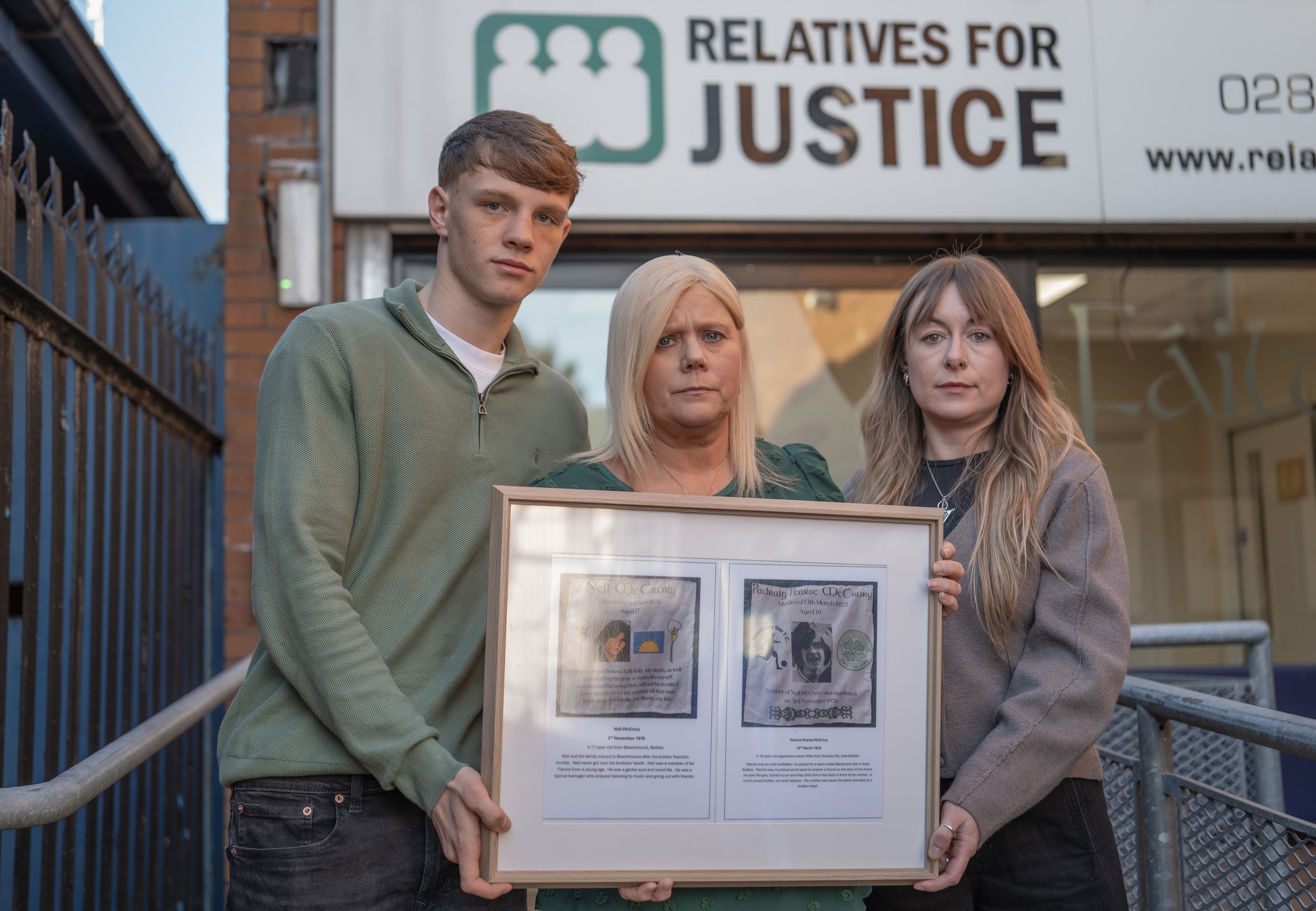
THE family of a West Belfast teenager who disappeared for three days before his body was found are still seeking answers about his brutal murder as they mark his 50th anniversary.
Francis Cornelius McCrory, known affectionately as Neil, from Beechmount Avenue was just 17 when he disappeared on November 1, 1976.
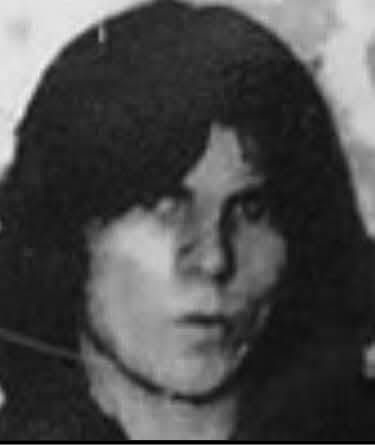

His body was found three days later on November 4 in the Glencairn area, having been shot in the back of the head.
Tragically, his older brother Patrick (19) had also been murdered by loyalists four years earlier, aged just 19. On March 13, 1972, Patrick was murdered by loyalists outside the family home in Ravenhill Avenue.
Neil's murder was attributed to the UDA, and the weapon used was an RUC pistol reportedly stolen from a police officer which was subsequently linked to other UDA attacks.

Nobody has ever been brought to justice for his murder and 50 years on his family are still seeking answers about what happened to Neil, including concerns about possible collusion.
Speaking to the Andersonstown News, Neil’s cousin Vourneen McCrory said the family remain in limbo about what happened to him.
"My mummy died last December and never got justice for Neil. For me, I am carrying on the fight for her to find out what happened," she said.
"Neil went missing for three days. Nobody knows where he was for those three days and no one has been able to tell us for 50 years what happened to him.
"It is important for us to remember him. He is just not a statistic but somebody who was loved and part of a family.
"Neil was a normal teenager, cheeky and loved music and hanging out with his friends. He spent a lot of time in our house after the death of his mother. He was more like a brother to me than a cousin.
"When Neil went missing, there was a huge search effort. I remember the house being so busy with his friends coming in and offering to help.
"My daddy ended up phoning the morgue and asked if they had a young man there with a grey checkered coat on but they said no."
Vourneen said her father went to the morgue anyway and it was there that he identified Neil.
"I remember him coming home crying about the state that Neil's body was in."
She added: "We didn't find out for years that when Neil was found that he had hair in his hand. That detail broke my heart because it meant he fought for his life.
"No one has ever been arrested for the murder. We have asked for the files but to no avail. We just want to know what happened. He was just a kid.
“As a family, we don't want people to forget Neil. We have never forgotten him. He was more than just a victim of the conflict. He was loved and treasured, and he deserved to live a full life. We will always remember him fondly, and we will always remember the beautiful young man that he was. Ar dheis Dé go raibh a anam.”
Irati Oleaga, from Relatives for Justice has been working with Vourneen in her search for answers.
"Relatives for Justice stands alongside the family of Neil McCrory as they mark the 50th anniversary of his murder in November 1976.
"Half a century later, his family still do not know precisely what happened to Neil after he disappeared, how long he was held before his murder, or the full circumstances surrounding his death. The family have also long held concerns that Neil may have been subjected to torture before his murder, concerns which have never been satisfactorily resolved for them.
"The murder was attributed to loyalist paramilitaries, with forensic evidence linking the weapon used to subsequent UDA attacks. Despite this, nobody has ever been brought to justice for Neil's murder.
"The weapon used to kill Neil was an RUC pistol, reportedly stolen from a police officer just weeks before his death. RFJ has encountered this familiar explanation of supposedly stolen state weapons in numerous cases involving loyalist killings. Our experience gives us serious reason to question whether such accounts adequately explain how weapons passed from state possession into the hands of loyalist paramilitaries.
"The circumstances surrounding the acquisition and use of this weapon, including the possibility of collusion, demand independent and effective scrutiny. Neil's family are entitled to know how the weapon reached those responsible for his murder and whether any state actors played a role.
"Fifty years is an extraordinary length of time for a family to be left without a full account of what happened to their loved one, and without anyone being held accountable for taking his life.
"The family's right to truth and justice does not diminish with the passage of time. The British Government remains bound by its human rights obligations, including the requirement for effective investigation of conflict-related deaths. Yet the legacy mechanisms advanced by successive British Governments have repeatedly failed to secure the trust and confidence of bereaved families.
"Vourneen has made clear that she does not wish to engage with the so-called Independent Commission for Reconciliation and Information Recovery (ICRIR). RFJ continues to advocate for genuinely independent, effective and human rights-compliant mechanisms that can command the confidence of victims and survivors and provide meaningful opportunities for truth and accountability.
"Above all, this anniversary is an opportunity to remember Neil as he lived, rather than solely through the circumstances of his death.
"He was a much-loved son, brother, cousin and friend whose life was cut short at just 17. His family have kept his memory alive for five decades, ensuring that he is remembered not simply as another victim of the conflict, but as the young man they knew and loved.
"RFJ stands with Vourneen and the wider McCrory family in remembering Neil and Patrick, honouring their lives and supporting the family's continuing pursuit of truth and justice.
"Fifty years on, Neil has not been forgotten. His life mattered, and his family deserve answers."