I WAS born in 1999. I am fortunate to be from a generation that has not had to worry about pub bombings or shootings, and for whom such events are part of a darker past. Nevertheless, I have heard the story of McGurk's Bar many times, and have on countless occasion driven by the facade on the corner of North Queen Street which stands as a memorial to where the bar once stood.
I had the opportunity to interview Martin Lynch a number of months ago about his disappointment at the lack of funding from the Arts Council for his play about the bombing. After seeing the play on Saturday in the Waterfront Hall, it is clear that Lynch's heart and soul has gone into this latest production.
McGurk's Bar in North Belfast was destroyed in a UVF bomb on 4 December 1971, killing 15 Catholics. Owned by Patrick and Philomena McGurk, the pub sat on the corner of North Queen Street and Great George's Street.

The bomb had been planted by four UVF men, who according to the only convicted bomber were told not to return "until the job was done". Fifteen people were murdered in the explosion.
The set itself immediately brings you to 1970s Belfast. The proximity of McGurk's to the intended target for the bomb – another bar on North Queen Street called The Gem – is demonstrated artfully, with lighting and music transporting audiences between the two pubs in the opening act.
We also see the UVF men plotting and the laying of the bomb, and several conversations between soldiers and army intelligence.
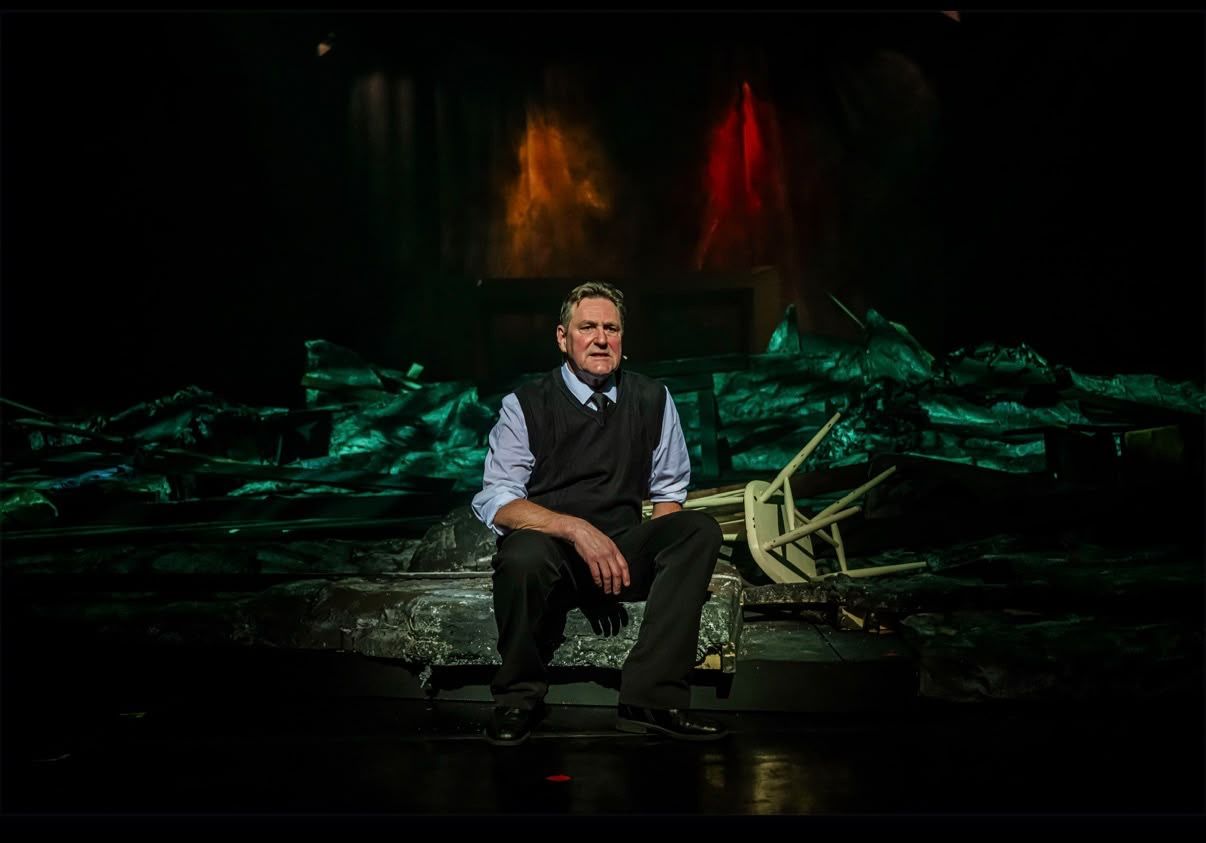
James Doran is spellbinding in the leading role of Paddy McGurk. Breaking the fourth wall with the audience throughout the play, his physical presence combined with his command of tone and pacing of speech make it impossible to look away when the spotlight is on him. The camaraderie of those in the pub – its role at the heart of the tight-knit community, and Mr McGurk's strong relationship with his punters, and strict rules around swearing, are brought to the fore in the performances of this stellar cast.
The scene of devastation after the explosion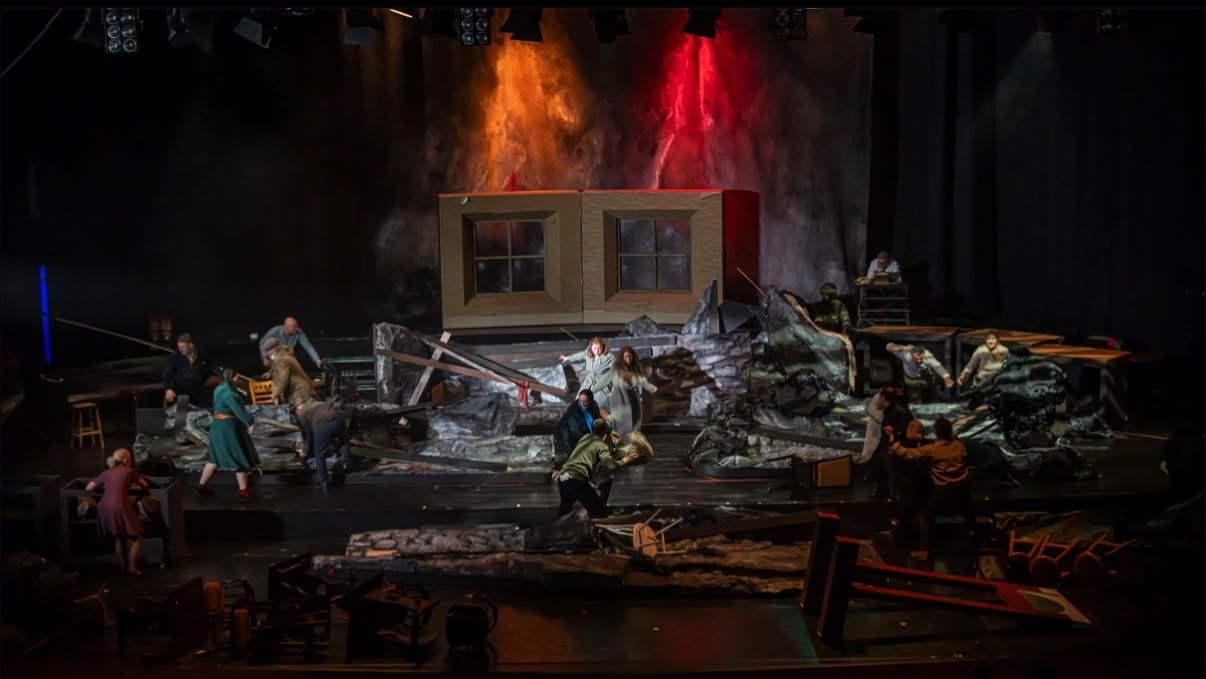

The humour of Act One is tempered by the fact that the audience know what is coming, and the lives of these characters who they get to know so well are about to be torn apart.
Doran introduces the audience to the everyday folk who occupied the bar, with a real sense of the community of the area in strong performances from the local cast. We meet people like Eddie Kane, a bricklayer from the Whiterock and the youngest adult killed in the explosion, aged 29; to the oldest victim, former seaman Philip Garry, played by award-winning actor Paddy Jenkins. Philip was 73 and his remains were only identified by a key that had fallen out of his pocket in the blast and which fitted into his front door.
Doran also introduces the audience to Paddy McGurk's daughter Maria, aged 14. The McGurk family lived above the bar, and Maria and her mother Phylis – played with poise and delicacy by Kelly-Anne Flynn – had just returned from Confession in St Patrick's Church. They were going upstairs when the bomb exploded and both were killed.
James Francis Cromie was the youngest victim of the bomb. Aged 13, James was football-mad and good friends with Gerard and Patrick McGurk. He was upstairs from the bar playing Subbuteo with the McGurk children and Seamus Kane when the bomb exploded.
Act One ends with the explosion, and we are introduced to a remarkable set in Act Two.
Doran again owns the stage in the second act as Paddy McGurk, and as he moves around the rubble of the pub, we hear what happened to the fifteen people killed in the blast and the many others injured. The characters themselves emerge from the set and speak to "Mr McGurk", and the audience learn of the plot to place the blame for the bomb on an IRA mistake.
The play ends with a moving and powerful conversation between Paddy McGurk and his son John, played by Conor Grimes. The two recall the bomb and discuss the conscience of the people who carried out the attack. Speaking to the media in 1971 the day after the bomb, Paddy McGurk said "it doesn't matter who planted the bomb. What's done can't be undone. I've been trying to keep the bitterness out of it." Lynch's script makes Mr McGurk's attitude until the end of his life very clear in this regard, with the audience totally enraptured in the honest conversation between father and son.
The bombing has been the subject of two police investigations, two Police Ombudsman reports and numerous court challenges. Robert Campbell was convicted of 15 murders in 1978, and received 15 life sentences for his role in the atrocity. To date he is the only person convicted in the case.