A Chairde,
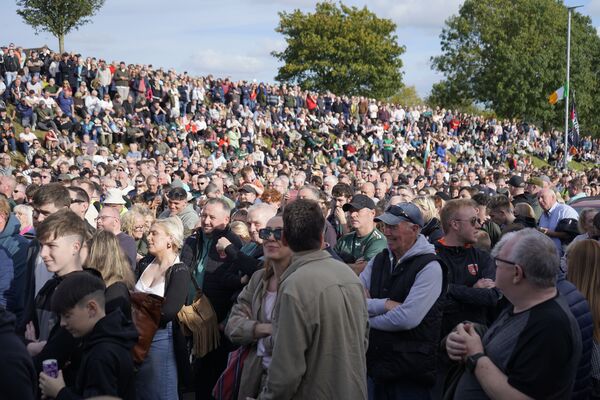
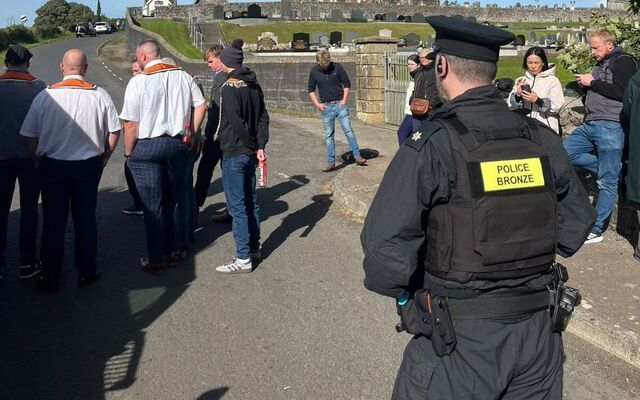
Now that the British Secretary of State – recently landed among us – has banned the Portadown Lodge march on Garvaghy Road all of us should take time for a quiet reflection. Time also to be thankful that the stand-off was peaceful.
You and the people of Garvaghy Road deserve credit for that.
All thinking people want to see our society moving beyond the sectarian hatred that has cursed us for so long.
Division in our country was created and is exploited to keep us apart. This is our home place. Your homeland as well as mine. The land of the Orange and the Green and many others as well.
We have a deeply toxic past and a troubled present. But we have the opportunity to build a peaceful shared future.

Many of us disagree with aspects of what the loyal orders believe in and they disagree with us. But there is no harm in that if we can respect and tolerate our differences.
We recognise that you are an integral part of the culture and heritage of some of our Protestant and unionist fellow citizens. And an important dimension of the deep well of our wider history. And our future on this island.
2,507 notified parades took place this year up to March 2026. Only 137 had restrictions imposed on them and 51 of these were connected to weekly parades in Portadown relating to Drumcree.
That means that the vast majority of Orange and Loyal Order parades – 2,370 – took place without any controversy or issue.
Some of these are in towns and villages with a nationalist majority, including in the South and most famously in Donegal.
But respect is a two-way process and parades must be set in context. There is no divine right for any organisation to parade where it likes.
In the 1990s the marching season became an annual hatefest involving widespread violence, fear, lawlessness and death. Much of that came from supporters and members of the Orange Order.
On that basis alone the rest of us will take no lectures about the law.
Those years have left a permanent scar on the Garvaghy Road.
Our leaders have personally stood over the last few weeks not with a “mob’ but with the beleaguered and decent people of the Garvaghy Road.
Incidentally, if the road had not been blocked as quickly as it was and if the parade had been forced through as it was thirty years ago, I shudder to think of the bedlam which might have ensued as a consequence.
So, many of us stood with the people of Garvaghy Road and we will continue to stand with them.
But this is a crisis that never needed to happen. It is deliberately driven by those engaged in so called “culture wars” to create division and hatred.
In their eyes Drumcree is simply a weapon in that war and the people of Garvaghy Road mere pawns. This is totally unacceptable.
We greatly appreciated the support of all those many Protestant people who have bravely spoken out and stood in solidarity with their fellow citizens.
Thank you especially for your letter of support. You have no idea just how much this is appreciated. It is also my belief that many many more Protestants, including some from the Orange, support the sentiments expressed in that letter.
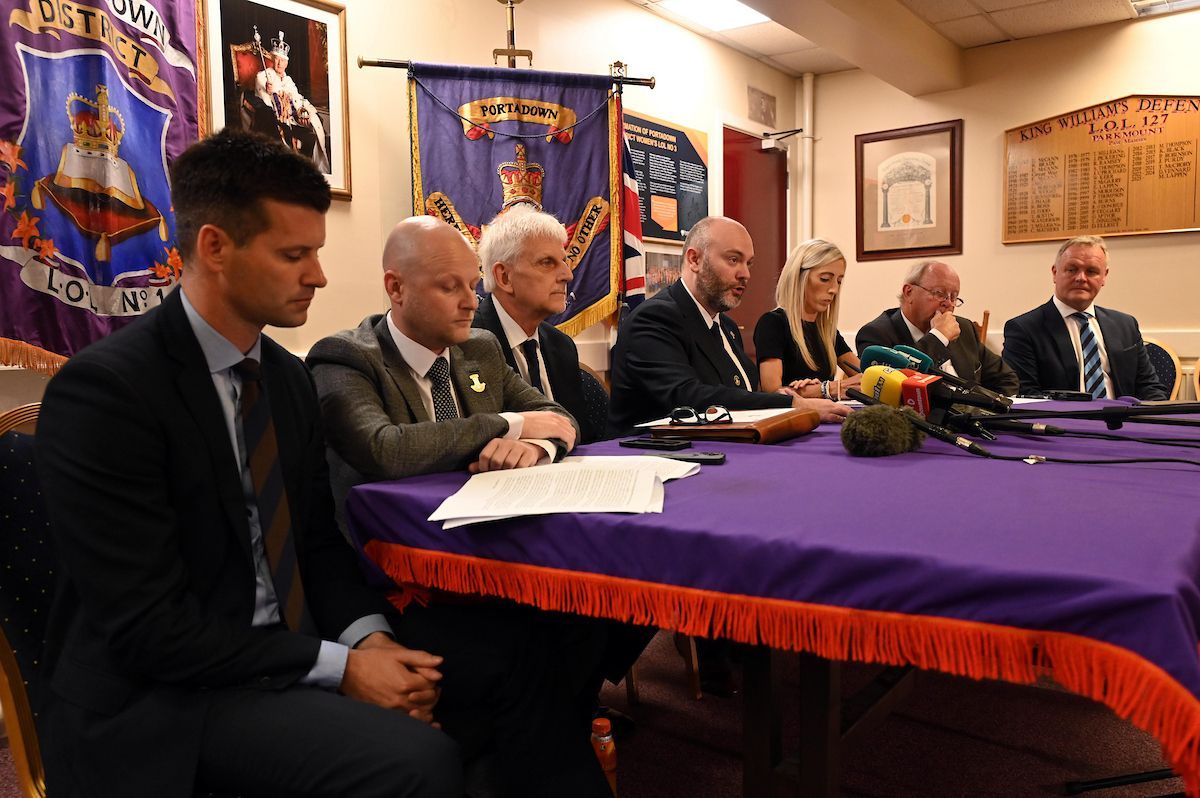
The Portadown Lodge must surely realise that the crisis which is now ending is not in anybody's interest.
Let's all step back from this madness for all our sakes – and leave hatred and division behind.
I really enjoyed the presence and the outstanding contribution by musicians from the Orange tradition at Fleadh Cheoil na hÉireann in Belfast in August. That is the future. Embrace it. It is your future also.
Gerry Adams.
Outdoor relief uprising a brief flowering of hope in a sectarian state
FOLLOWING the Wall Street crash in 1929 and the economic crisis it created, unemployment across the North stood at approximately 40 per cent, with nationalist areas especially hard hit because of decades of discrimination. Life was hard for working people, including working class Protestants. Poverty was endemic. A survey conducted in the 1930s concluded that 36 per cent of the population was in absolute poverty. That meant they had little food, clothing or fuel. Children from unemployed families were on average two to three inches shorter and 10lbs lighter than those in middle class areas.
The welfare scheme at that time was called ‘Outdoor Relief’. To qualify, an unemployed person had to work on public employment schemes, paving roads, digging holes, laying pipes, digging ditches and so on. Those unable to carry out this physical work were often reduced to starvation. The scheme was administered for the Stormont regime by a 27-strong local Board of Guardians whose relief rate was half that of similar schemes in Britain.
Michael Farrell in his exceptional book ‘The Orange State’ records: “Single men who got no work, single girls, widows and orphans had either to live off their relations or to go into the workhouse.”
CLASHES: The aftermath of an Outdoor Relief protest in Belfast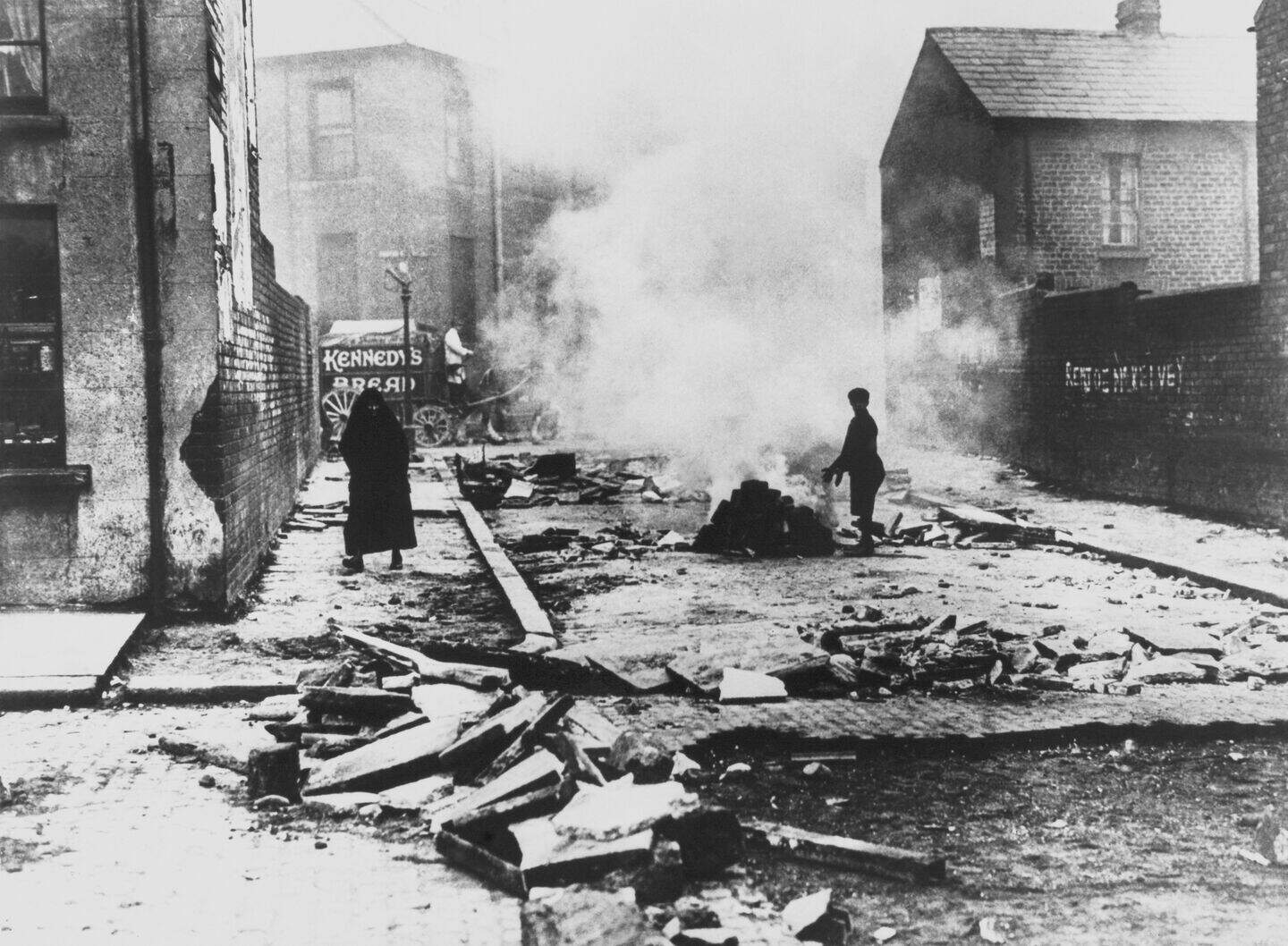

Growing anger at the pitiful payments made by the Guardians saw thousands of Catholics and Protestants unite in a campaign demanding improved payments. The Outdoor Relief Movement saw the establishment of workers’ committees in unionist and nationalist working class areas in Belfast. On Monday, October 4, 1932 tens of thousands marched to the Customs House steps from the Falls and the Shankill.
The following day, 7,000 marched to the workhouse on the Lisburn Road where the Guardians were meeting, demanding improved payments and an end to the public works scheme. A march the following day was banned by the RUC and rioting broke out when the RUC baton-charged the crowd. By the end of that week the Guardians agreed to a slight increase in payments. The ODR leaders rejected this and called for mass protests on 10 October. These were banned and attacked by the RUC. The unionist government, unionist politicians, business leaders and the Orange Order exploited sectarianism to split the ODR. They claimed it was a republican plot intended to bring down the northern state. Dawson Bates, Stormont Minister for Home Affairs, claimed the IRA was using the ODR as a cover to overthrow “Protestant rights”. The News Letter reported one unionist leader saying: “It was a shame to see their own Protestant people being driven by hirelings from Dublin, Glasgow and from Moscow...”
The Ulster Protestant League summed up the attitude of the unionist establishment when it “deplored that these unfortunate conditions were used as a cloak by the communist Sinn Féin element to attempt to start a revolution...”
On October 14, 1932, the Government and the Guardians bowed to the pressure from the ODR movement and significantly increased their offer to the workers, but by this stage the ODR committees were already separating on the basis of Catholic and Protestant.
The divide and conquer tactic of the unionist elite worked. In the midst of an unparalleled economic depression Protestant workers were frightened into believing that their rights and future could be best protected in an apartheid unionist state. The lesson of 1932, of partition, and the years since is that sectarianism only fosters division and fear. It has to be opposed. To that end we need dialogue, more conversations about the future and how we can improve living conditions for every person and family.
Stand for Moore Street
THE Moore Street Preservation Trust is holding a rally on Saturday, November 7, at 1pm to support the campaign to protect one of the most important sites in Ireland’s history.
Moore Street is where the leaders of the 1916 Easter Rising met for the last time following the retreat from the burning GPO.
The Moore Street Preservation Trust, the families of the signatories to the Proclamation and others have opposed plans by British developer Hammerson to destroy much of the Battlefield site.
I would urge readers to join the Moore Street Preservation Trust on November 7 in demanding that the Irish Government take Moore Street into public ownership and secure, protect and build a 1916 Historical Cultural Quarter for future generations.
There will be music, street theatre and much more as we stand together for Moore Street. Join us to demand action, protect our history and secure Moore Street’s future.