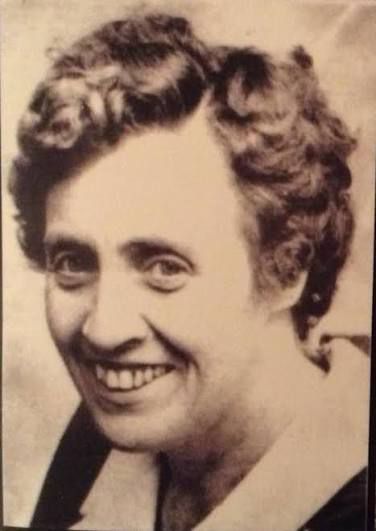
A SERIES of events have taken place in South Armagh and in Belfast to remember Leas Uachtarán Shinn Fein Máire Drumm.
Máire was shot to death by unionist gunmen in the Mater Hospital in Belfast fifty years ago.
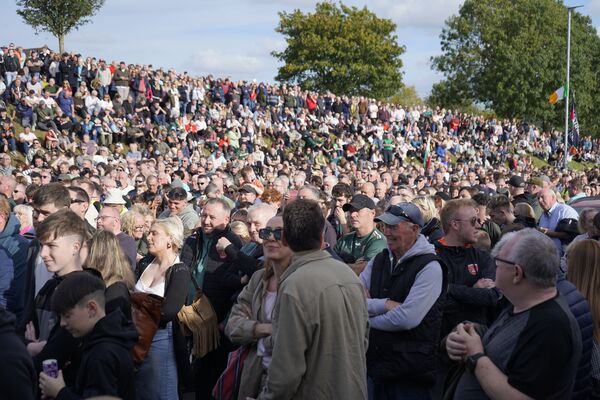
One of the Belfast events last weekend was at her grave in Milltown Cemetery. The other was in the grounds of the Roddy McCorley Heritage Centre.
Órlaithí Flynn MLA chaired the ceremony and Carál Ní Chuilín MLA gave the main address. Seamus Drumm, Máire’s son, and I planted a tree in her memory.
We were joined by George Stagg, brother of Frank Stagg, who died on hunger strike in 1976. George was in Belfast for the play about his brother that was performed at the weekend in Ionad Eileen Howell/St Comgalls.

Máire was born Máire McAteer on Kelly’s Road, Killean, on 22 October, 1919. It was the year before the British Government of Ireland Act partitioned Ireland. I was fortunate to have known and admired Máire.
She was a remarkable and formidable leader, a gifted orator, a committed republican and a constant opponent of partition and the British occupation in the North. I heard Máire speak many times at internal party meetings but more often on the streets when she was speaking out against injustice.
She had an ability to speak from the heart and in language that resonated with people. Her compassion and empathy for ordinary citizens was evident in her willingness to open her home to the refugees fleeing the loyalist and RUC attacks on Catholic homes and businesses in August 1969.
She was also enormously courageous. In July 1970 three thousand British soldiers surrounded the Falls area. The Falls curfew imposed by the British army lasted two days. No-one was allowed out of their house.
No-one was allowed into the district. Barbed wire entanglements and armed troops were on every corner. CS gas canisters were dropped by the score from British army helicopters, many smashing their way through the roofs of the old houses, creating white clouds of debilitating gas.
Máire Drumm, Marie Moore and hundreds of other women from West Belfast marched on the curfew carrying essential food like bread and milk and baby food and nappies.
They swept the British troops aside as the relieved the Falls community.
The threats, the arrests, the periods of imprisonment never deterred Máire. Never broke her spirit or her determination to achieve an end to partition and a united Ireland. Courageous people do not surrender hope – they embrace it.
That was Máire Drumm.
We remember her with pride.
Máire Drumm. A Visionary: A Rebel Heart. Available from www.anfhuiseog.ie
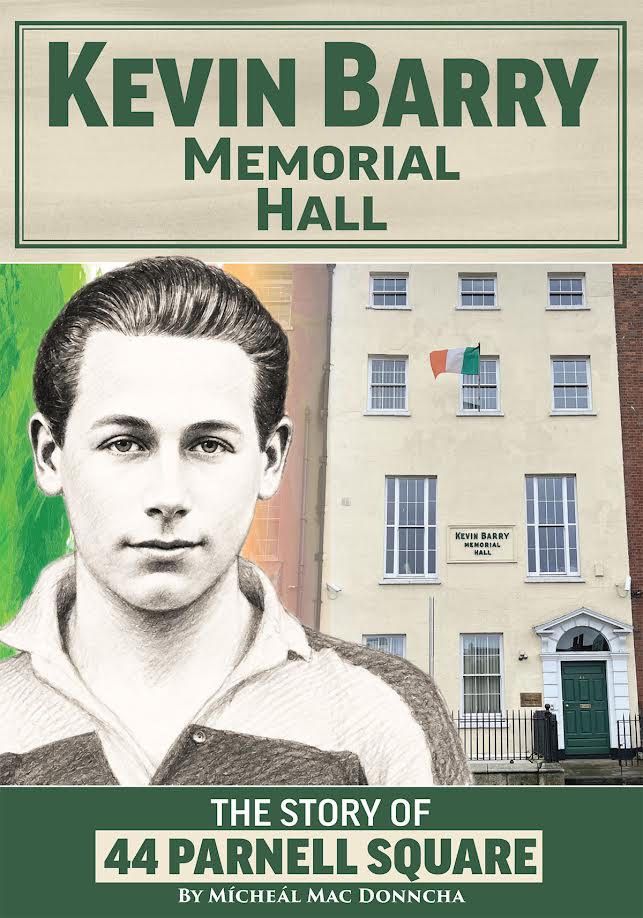

SF Dublin HQ’s rich and tumultuous history
I HAVE been in and out of 44 Parnell Square (Kevin Barry Memorial Hall) in Dublin for more years than I care to remember.
It is Sinn Féin’s Head Office and for a time it was where An Phoblacht and then An Phoblacht/Republican News was produced.
It started life around 1760 as a residence but the house has had a long association with republican activism and has been witness to significant political developments in the struggle for Irish freedom.
Micheál Mac Donncha, a Sinn Féin Dublin Councillor, former editor of An Phoblacht/Republican News and an insightful writer and historian, will be publishing a book telling the story of 44 Parnell Square on November 1.
For the first half of its life the building was a family home but that changed at the start of the 20th century when it became an important centre of the Irish revolution.
Micheál writes: “Since November 1914 it has witnessed, within its walls and outside, the upheavals, the tragedies, the triumphs, the defeats and victories, of a changing Ireland.”
For a time, it belonged to the discredited party of John Redmond, who urged Irishmen to join the British army and fight for the British Empire during the First World War. It was then taken over by the Irish Volunteers and became a base for “urban guerrilla warfare” from 1919 to 1921.
Many well-known leaders and fighters from that period trained and planned within its walls.
According to Micheál: “Kevin Barry, Dick McKee and Peadar Clancy were but three of those soldiers of the Irish Republic who died in the struggle. Their successors defended the Republic from 44 in 1922.”
Cumann na mBan and the Women’s Prisoners Defence League worked out of 44 Parnell Square as did Na Fianna Éireann. Saor Éire, the Republican Congress, the Boycott British campaign, all had their offices there in the 1930s.
44 Parnell Square was named the Kevin Barry Memorial Hall after the 18-year-old IRA Volunteer who was executed in 1920 by the British and whose anniversary is on Sunday week, November 1.
Following the Belfast pogrom of 1969 Kevin Barry Hall was a place of refuge for many from the North. For over 80 years support for republican prisoners and their families was always central to the work carried out in Kevin Barry Hall.
The printed edition of An Phoblacht was produced in 44 Parnell Square. During times of censorship and Section 31 it played a crucial role in providing information about events in the North and the work of Sinn Féin.
The Sinn Féin Head Office moved to 44 in 1979 and the offices have play a pivotal role in building Sinn Féin into the largest party on the island of Ireland.
Well done, Micheál. A great book detailing the history of 44.
https://sinnfeinbookshop.com/products/kevin-barry-memorial-hall-the-story-of-44-parnell-square
DONÁL Lunny’s death has robbed us all of one of the great innovators of Irish music. Dónal was one of the giants of Ireland’s traditional music and a central figure in the revival and expansion of Irish music for over sixty years, from Emmet Spiceland to Planxty, the Bothy Band to Moving Hearts and many celebrated musical collaborations.
Dónal brought his unique talents to numerous film scores and music documentaries. He fused ancient Irish traditional airs and tunes with modern influences and non-traditional instruments. He played with the greats of Irish ceol, most famously with Christy Moore, his friend of over sixty years.
Together they and others supported the women prisoners in Armagh and the Blanketmen in the H-Blocks. Go ndéana Dia trócaire air.
Go raibh maith agat, a chara. Ba mhaith liom chomhbhrón mo chroì a deanamh le do theaghlach.
ON November 7 at 1pm the Moore Street Preservation Trust will be holding a rally in Moore Street in support the campaign to save and protect one of the most important historic sites in Ireland’s long struggle for freedom.
16 Moore Street was the last meeting place of five of the seven signatories of the Proclamation – the leaders who planned and led the 1916 Easter Rising.
The terrace at 14-17 Moore Street was bought by the government 19 years ago for a national monument. The rest of the 1916 battlefield site is in the hands of a London-based developer – Hammerson – that plans to knock it down. In the two decades since, 14-17 remain derelict. No work has commenced on building the national monument and interpretative centre th
at was promised. The rally on November 7 is part of a long running campaign to Save Moore Street and is being held to demand that the Irish government take Moore Street and its laneways into public ownership to secure and protect them for the future.
There will be music and song by Frances Black and Evelyn Campbell, street theatre and much more as we stand together for Moore Street.
So come along and join us – join the campaign to protect our history and secure Moore Street’s future.