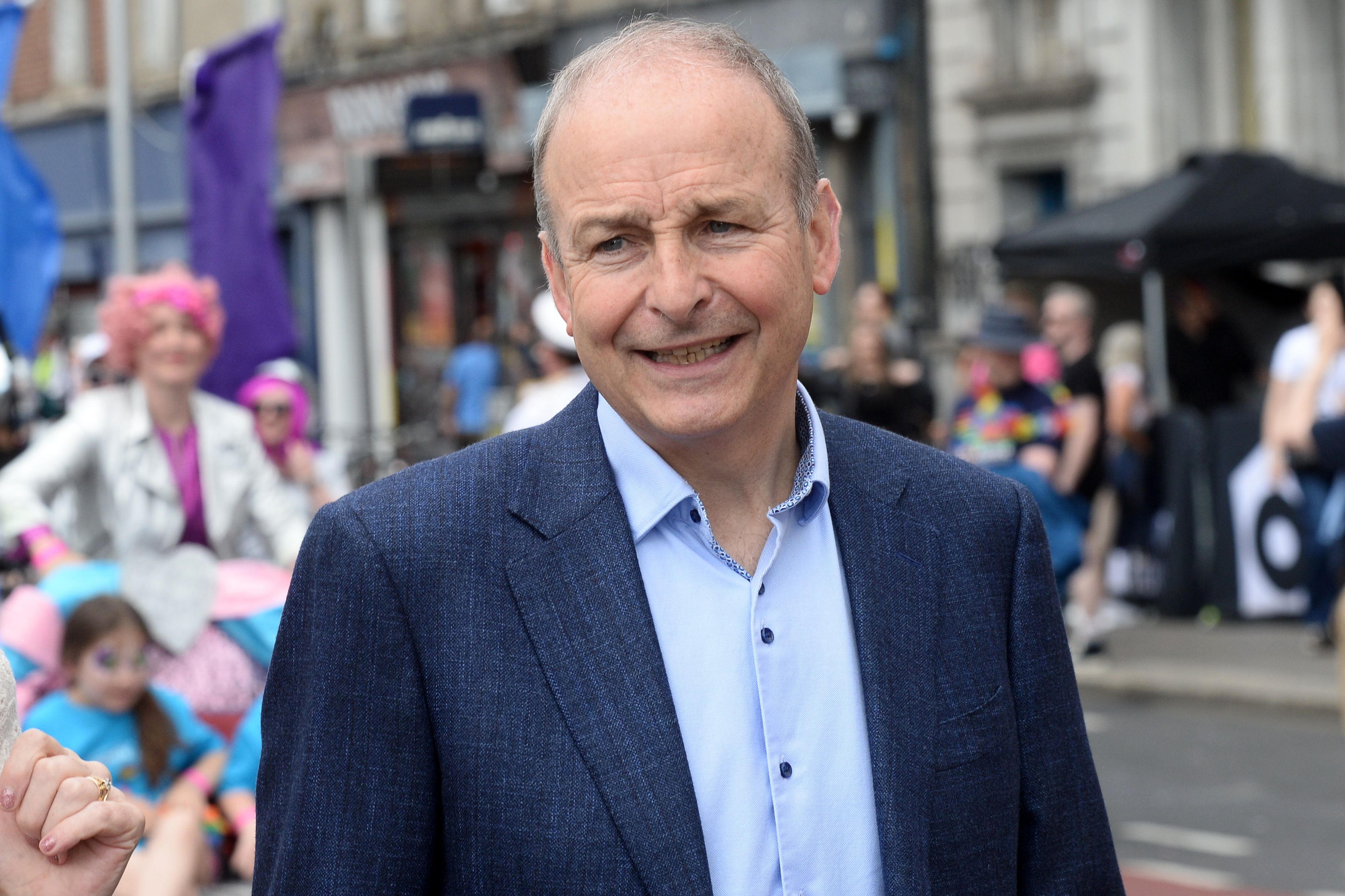
THREE months ago An Taoiseach Micheál Martin urged Fianna Fáil TDs and Seanadóirí to push back against the increasingly vocal calls for the unity referendums promised in the Good Friday Agreement. To underline his opposition to the popular demand for the Irish government to plan for unity Martin said: “I go bananas when fellows talk to me and say, ‘What about a Border poll?’”
However, last week Micheál Martin appeared to U-turn on this. In an interview in the Irish Times he announced that he was creating a new government body to “study and evaluate the issues adjacent to the unity question.” Martin’s plan is to “explore three baseline scenarios: a 32-county united Ireland; a continuation of the link between Northern Ireland and Britain; and a new united Ireland, but with a devolved Northern Ireland.”

On the face of it this is a welcome development. The more people speak out in support of unity the better. The more the political parties publish proposals and plans for unity, the better. The more we examine the complexities of unity and seek to address, through consultation, the place of the unionist section of our people in a new Ireland, the better.
The cynical might conclude that this is really about the Fianna Fáil leader trying to upstage Fine Gael, which is due to publish its blueprint for unity at its party’s Ard Fheis this weekend. Many will also remember that in March 2017 Martin announced that Fianna Fáil was working on a 12-point plan for a united Ireland which would be published within months. It never happened.
Notwithstanding this, the shift in the approach of Fianna Fáil and Fine Gael is welcome and needs to be taken seriously by united Irelanders. Whatever the rationale behind the move it is undoubtedly due in large part to the significant growth in the public campaign around unity and the obvious popular support for it. People power is having a positive impact on Irish government policy.
Every effort now has to be made to build upon these developments. There is now an onus on the two government parties to quickly establish an inclusive, democratic process of planning for unity that is comprehensive, open to public scrutiny and is time framed. Every effort must be made to ensure that there is no undue delay or obfuscation. No one party or government can achieve unity. It must be a collective effort. An inclusive effort. It will require a process of dialogue and persuasion involving all who wish to participate, including the diaspora, and must examine all aspects of the process of transformation and transition. There must be accountability.
Seanadoir Conor Murphy put it well when he said that: “People deserve clear, trustworthy information about what unity would mean for their health services, pensions, jobs, public services and rights. That requires a serious examination of the economic opportunities, transition costs and practical challenges.”
Mr Martin has taken a potentially important initiative that should not be devalued by inaccurate and propagandistic accusations from him about nationalists gathering “together to agree how right we are and how everything will be fine” or “implicitly side-lining persuasion or change as prerequisites” for any constitutional change.
Nationalists and republicans understand absolutely the enormity of the challenge facing the people of the island of Ireland as we seek to build a new and prosperous future based on equality and parity of esteem. Sinn Féin is not trying to marginalise those with different views. That would be irresponsible. On the contrary we have consistently argued for an inclusive dialogue involving everyone and excluding no-one.
It must be a democratic process of persuasion working toward the unity referendums pledged in the Good Friday Agreement. There can be no vetoes in this process. This is an important, possibly historic opportunity if managed properly.
The union doesn’t protect our peace – or much else
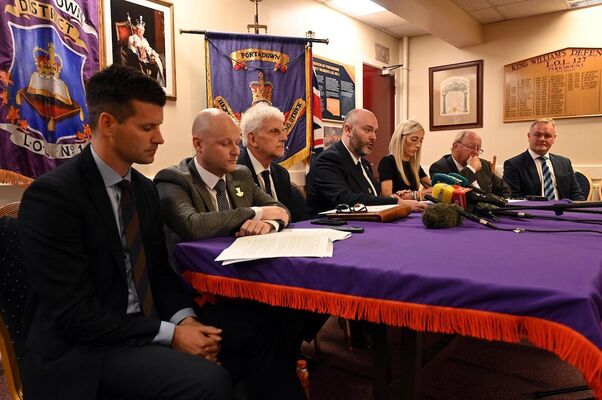
AS the Assembly and local government elections loom the Democratic Unionist Party, the Ulster Unionist Party and Traditional Unionist Voice are increasingly speaking wistfully of unionist unity; a unionist electoral pact; of electoral co-operation; and of maximising the ‘pro-union vote’. Jonathan Buckley, a DUP MLA in Upper Bann, has called for talks between the three unionist parties on the issue of unionist unity.
Calling for unionist unity is easier than delivering it. Elections are about winning votes and seats and each unionist party wants to make gains. That can only happen at the expense of their putative allies. Consequently, there are obvious differences of approach.
ULTIMATUM: The demand for Michelle O’Neill to be ousted from her position over Garvaghy has been elevated to an electoral demand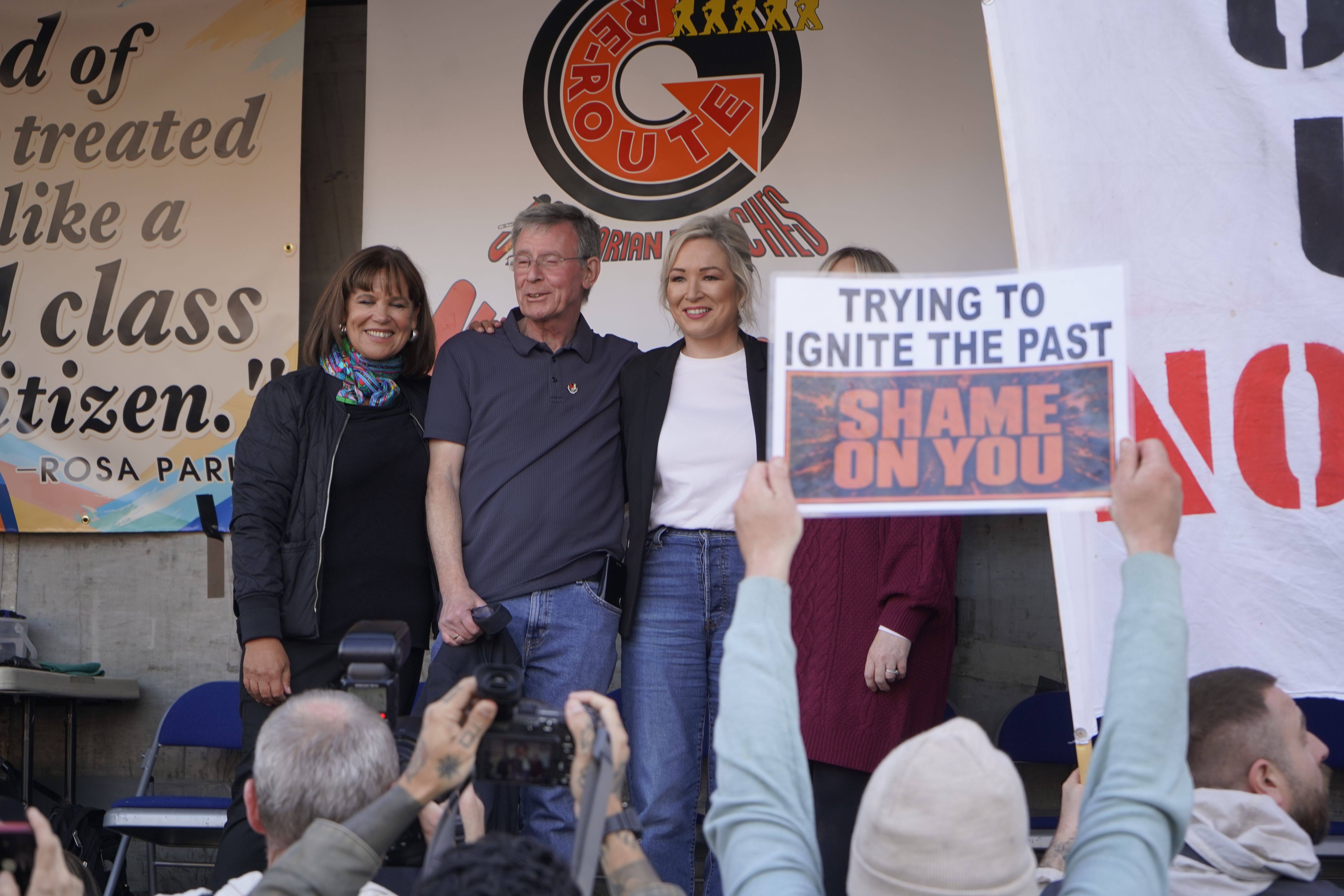

Currently, some want the DUP to crash the Executive by withdrawing Emma Little-Pengelly from the Office of First and deputy First Minister. Some don’t want to go this far at this time but they want to chastise Sinn Féin by restricting Michelle O’Neill’s ability to do her job. So they blocked her – and by extension Emma Little-Pengelly – from going to a meeting with the British PM and First Ministers of Scotland and Wales. Others within the DUP appear to be backing Carla Lockhart and making a push against Gavin Robinson, the DUP leader. This week Carla answered the question many had been asking about her future intentions and left the DUP.
In addition, the very vocal demand for Michelle O’Neill to be ousted from her position as First Minister has been elevated to an electoral demand. For political unionism, which believes that the northern state is still a unionist state, it is intolerable that a republican and nationalist is First Minister. As the election draws closer the ‘O’Neill Must Go’ posters that are already on lampposts in Portadown will increase as unionist efforts escalate to maximise the pro-union vote.
In this context one interesting development last week was the decision of the UUP to initiate a six-day social media campaign to defend the union with Britain. According to the UUP their campaign makes “five arguments for the Union: our shared national security, a lower cost of living, protecting our peace, a health service free at the point of use, and greater economic security.”
Whatever the argument around shared national security, which I don’t believe will impress many, the claim that the union protects our peace is a nonsense. It is the work of people living on this island, and especially in the North, that has successfully defended the peace process.
Questions on the cost of living, health and the economy issues are answered in a recent book by Professor John Doyle. I recommend this to the UUP’s leader* Jon Burrows.
(*Unelected.)
For example, on the cost of living, Prof Doyle reports: “Taking all the available evidence together, the best and more reliable measure of living standards shows that after allowing for the cost of living including housing, and after taxes and benefits, the average standard of living in the Republic is over 18 per cent higher than in Northern Ireland.”
On health, Professor Doyle points out that while the NHS is “maintaining the principle of access without charge at the point of care, it is increasingly rationing the availability of healthcare due to inadequate funding. Healthcare is therefore technically ‘free’, but often unavailable … At its most basic, life expectancy is a general measure of health care in society and is a good reflection of the quality of healthcare in its broadest sense. Life expectancy for children born in the Republic in 2020 is 82.4 years, compared to 80.4 years in Northern Ireland.”
On the economy Professor Doyle states: “The Republic of Ireland is now a wealthier place than Northern Ireland. It is more productive, more export-orientated, attracts more and better quality FDI, has stronger domestic industries, and pays higher wages, pensions and benefits, which support a higher standard of living, lower levels of poverty and a faster- growing population.”
As a campaign, the UUP effort was a bit minimalist, but as part of the conversation around constitutional change it is to be welcomed. It is important that those who are for the British union articulate their position.
And finally...
ON Saturday the Moore Street Preservation Trust is hosting a ‘Reclaim Moore Street Rally’ at 1pm in Moore Street. The rally is demanding that the Irish Government purchase the entire Moore Street terrace and develop a 1916 Historic Cultural Quarter in the area. The rally will feature music from Frances Black and Evelyn Campbell, and will be addressed by Mary Lou McDonald TD, Cllr Donna Cooney and SIPTU representative Ethel Buckley.