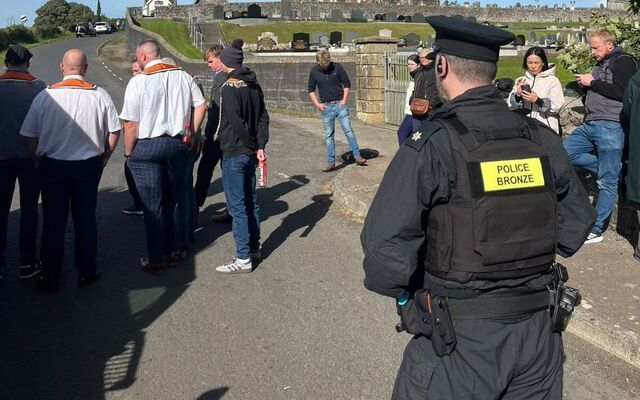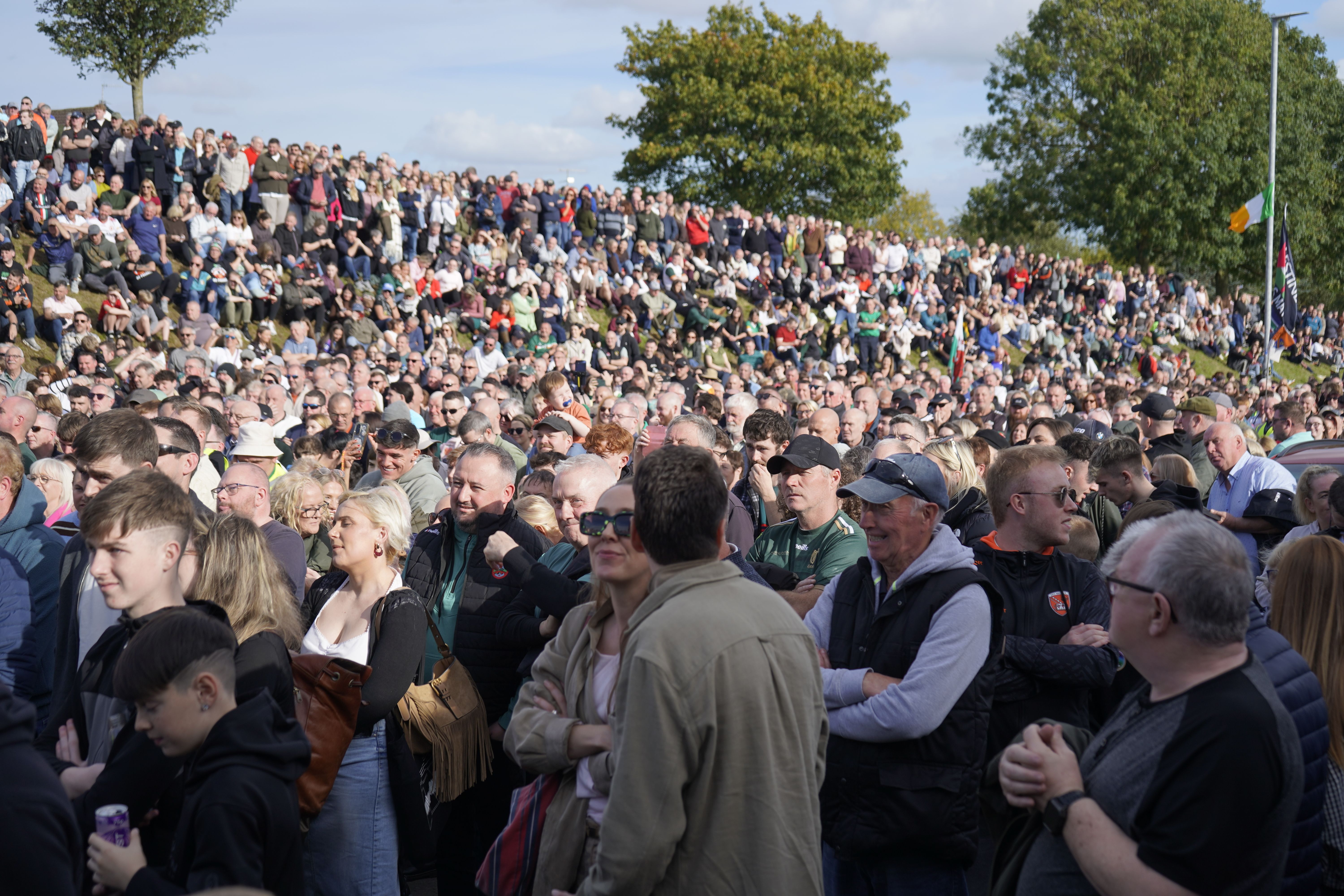
SUNDAY’S rally on the Garvaghy Road was amazing, wonderful. Over many years of activism, I have attended countless rallies. but Sunday was special. It lifted the spirits of the thousands who were there. From the speakers, to the musicians, to the thousands standing and applauding, and to the many more watching on social media, the overwhelming message and focus of the rally was about the future. A better future. A different future. A new future in which the rights of all are respected.
The mood was also defiant and determined. Given the implications of the disastrous decision by the Parades Commission that was to be expected. But it was also positive. A community refusing to allow the past to dictate its future. With one voice those present were rejecting supremacism. Asserting loudly and clearly that bigotry and sectarianism have no place in our society. Instead, they want the promise of the Good Friday Agreement, of equality and parity of esteem. Of respect. Of rights.

It was a good day. A powerful day. It exemplified why the residents of the Garvaghy Road have won such widespread public support from many within the unionist and Protestant section of our people, and internationally. Last week, a bipartisan group of United States Congress members wrote to the British Secretary of State Chris Bryant, warning him: “Without decisive action, we risk reopening one of the most painful chapters of Northern Ireland’s history and undermining nearly three decades of peace, stability, and reconciliation made possible by the Good Friday Agreement.”
At the time of writing this column more than one thousand people, who identify as Protestant, have now signed a letter to Chris Bryant and Irish Minister for Foreign Affairs Helen McEntee TD, calling on them to intervene to “spare the residents of the Garvaghy Rd a return to the fear they endured” for so long. The initiative began with Claire Mitchell and four of her friends – all Protestant women – who travelled to Garvaghy Rood and spoke to residents. The letter has attracted support from a wide range of people, including Wallace Thompson, a founding member of the DUP, Davy Adams former loyalist negotiator, and Derry Presbyterian Minister Reverend David Latimer.
The European Association of Lawyers for Democracy and World Human Rights issued a statement expressing its “serious concern at the decision of the Parades Commission to permit an Orange Order procession along the Garvaghy Road”. It warned that the decision “risks damaging years of painstaking work, reopening wounds and undermining confidence that compromises reached in the transition from conflict will be respected.”
Christy Moore caught the public mood of the moment in a social media post. With a slight change to the words of ‘Back Home in Derry,’ written by Bobby Sands while he was in the H-Blocks, Christy sang: ‘Well done. There is no going back down Garvaghy, Keep it calm – No Pasarán!’
The phrase, ‘No Pasarán’ – ‘They Shall Not Pass’ – is rooted in the republican resistance to fascism in Spain during the siege of Madrid in 1936 and in the Spanish Civil War.
Christy’s expression of solidarity is very welcome. So too with Damien Dempsey. Kneecap. The Mary Wallopers, Gráinne Holland, Aoife Scott, Seán Óg Mac Corraidh and many, many more, including Fergus Ó hÍr, who led us in ‘We Shall Overcome’.
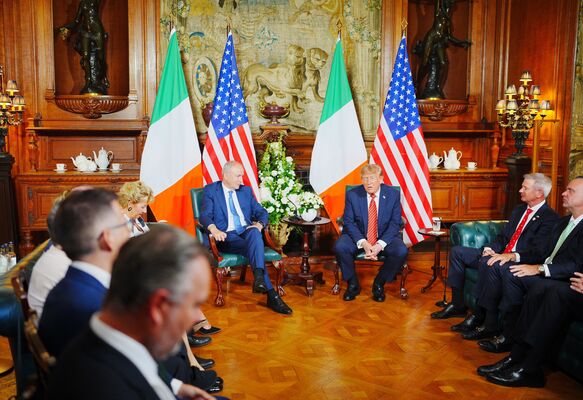
Unlike the words of An Taoiseach Micheál Martin who tried to turn the crisis around the Garvaghy Road into an excuse to attack Sinn Féin. He accused the party of a “lack of sincerity” and having an “overly simplistic” view on resolving the Drumcree dispute. He also continues to make clear his absolute opposition to the growing calls for the Irish government to begin planning for Irish unity.
Unionist leaders claim that nationalists are involved in a culture war against unionists, with the Garvaghy Road cited as one example of this. The facts expose the truth. There are almost three thousand marches annually by the various loyal orders across the North without dispute. A small number – around two per cent – are contentious. Hardly an assault on the culture and identity of unionism.
No. The Orange Order’s demand to walk the Garvaghy Road is symptomatic of a supremacist/racist belief by political unionism that nationalists are inferior – second class citizens – who have to know their place and accept the dominance of unionist demands over their rights and equality.
Those days are gone – over. The underlying principles of the Good Friday Agreement are equality; mutual respect; parity of esteem. That’s the future. I pay tribute to the people of Garvaghy and to all who stand with them. A special thanks to the scores of protestors who rallied in the heavy rain Sunday week ago to block Garvaghy Road. They did so in the expectation that they would be attacked by the police, as has happened many times before. That this didn’t happen, so far, is welcome. A sign of the strength of passive resistance and good leadership.
As we go to print the Court case in Belfast is starting. Meantime the protest continues. No Pasarán.
A video of Sunday’s rally is available on YouTube.
On the streets of East London, the past is prologue
SUNDAY marked the 90th anniversary of the Battle of Cable Street in the East End of London in 1936. Its historic importance is in the resistance of the working class people of that part of London to a march by Oswald Mosley’s British Union of Fascists into a mostly Jewish community. Its contemporary significance lies in the parallels with contentious parades here, and in particular the solidarity of those standing with the residents of Garvaghy.
The 1930s saw the rise of fascism across Europe and in Britain. Thousands of people were fleeing persecution in fascist Italy and Nazi Germany. The concentration camps, first established in 1933 in Germany, were already full of trade unionists, Jews, left wing activists, the disabled, homosexuals and political opponents of fascism. The East End of London saw an influx of Jewish refugees.
The Great Depression of 1929 had caused huge hardship for working people. The fascists were intent on exploiting the refugees and scapegoating them as the source of the problems facing working people. A tactic still used today.
The Jewish community protested. But political and media pressure saw Britain’s National government, led by the Conservatives and including the Liberals and Labour, refuse to ban the march. The Daily Worker, communists and Irish Dockers encouraged support for the East End community. Thousands of workers responded to the call while 6,000 police were drafted in to force the march through. They led and flanked the fascist march which tried to make its way down Cable Street.
In the ensuing street confrontation, the police withdrew and Mosley’s fascists had to turn around. Interestingly, only six fascists were ever arrested as against 79 antifascists, some of were beaten by the police.
Declan Kearney was in London on Sunday for the commemoration. He drew on the comparisons between then and now on the Garvaghy Road. He said: “The fascists did not pass in 1936. The Orange Order will not pass on Garvaghy Road in 2026. We who are for progress will not allow those trying to destroy progress, to win.”
A fitting tribute
ON October 24 and 25. ‘We Have Him Back!’– a deeply evocative play about the death in February 1976 of hunger striker Frank Stagg – will be presented in Ionad Eileen Howell/St Comgalls, Divis Street. The play is written by Brían MacSuibhne and is set in Leigue Cemetery, Ballina, Co. Mayo, where Frank was initially buried by the Irish state after they stole his body; it was reburied beside his fellow Mayo hunger striker Michael Gaughan.
The play is a historically accurate and deeply human account of the events surrounding the three funerals of Frank Stagg. George Stagg, Frank’s brother, will speak on both nights. He says the play “conveys my brother Frank with honesty, dignity and accuracy.
It honours not only his sacrifice, but the pain, courage and determination of our family in the face of Frank’s treatment even after his death.” Almost two years after the Irish state buried Frank against the family’s wishes in a grave which they then concreted over, George and some comrades successfully extracted Frank’s coffin and on a cold and wet November night reburied him beside his friend and comrade Michael Gaughan.
The play has been developed with the co-operation of the Stagg family.
Tickets are available at ticketsource.com/whats- on?q=Frank+Staggg