ONE of the most enduring images from our recent past was the sight of Gerry Conlon storming out of the Old Bailey in London declaring to the world that he was an innocent man, just minutes after he and three others had their convictions for the IRA bombings of Guildford and Woolwich overturned.
Known as the Guildford Four, three West Belfast men – Paul Hill, Gerry Conlon and Paddy Armstrong – along with Paddy’s English girlfriend Carole Richardson, had been sentenced to 35 years in prison for the 1974 bombings in which seven people died. The judge told them during sentencing that if the death penalty had existed that they would be for the hangman.
Fast forward 15 years when their sentences are quashed and Conlon comes bounding out of the Old Bailey with his fist in the air and his sisters embracing him as crowds cheer around him.

Inside the court Paddy Armstrong slinks out the back door. Free. Confused. Alone. His solicitor Alastair Logan takes him in. It takes a while before Paddy realises that he can open the bedroom door in the morning and let himself out.
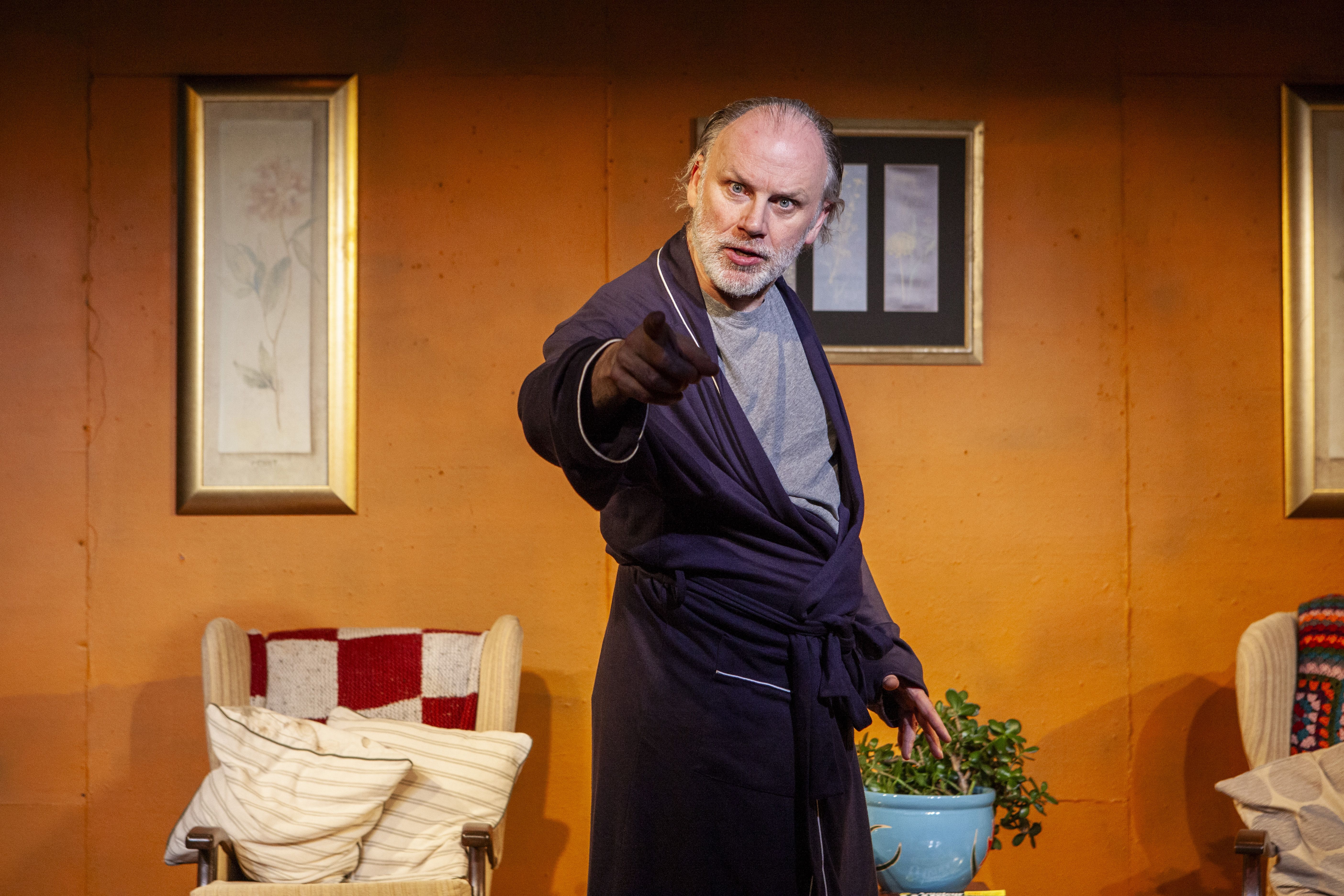
Currently playing at the Lyric Theatre in Belfast, The Life and Times of Paddy Armstrong is a powerful testament to hope over despair. A story of how one ordinary man can find himself caught up in extraordinary circumstances way beyond his control and how he came out the other end sane. Well almost.
Based on his best-selling book, Life After Life: A Guildford Four Memoir, which was written by Paddy and Mary-Elaine Tynan, Mary-Elaine would go on to co-write the play with Dublin actor Don Wycherley and Niamh Gleeson. On stage Don plays Paddy Armstrong. This is a compelling one-man show where several other characters are brought to us through Paddy's memory. Through sporadic flashbacks we travel from 1960s Falls Road to a squat in 1970s London, to the present day where Paddy is living in Dublin, and then back again to childhood Belfast. It's as though Paddy can't bring himself to dwell on one image for too long.
In Belfast we see him playing cards on the street corner with his granny’s money for that night’s dinner; his sister’s death after she is hit by a bus on the Falls Road; his father’s death when Paddy is still young; the craic of working in a bookies; and then Fr McGinley telling him that he should go to London and not be a burden on his mother. In London he embraces the freedom; meets a beautiful girl and off they go walking through the streets hand-in-hand, slightly high and Paddy picking flowers from gardens.
One night out in a Kilburn pub he runs into a friend from back home. Gerry Conlon introduces him to his friend Paul ‘Benny’ Hill. Soon after that he is on a three-day drug-fuelled bender at a never-ending party in his squat with Carole when the police kick in the door looking for a Patrick Joseph Armstrong. Paddy barely recognises the name. Tortured in the police station over several days, including being hung out the window by his ankles, he confesses to driving a bomb and planting it in a pub. Paddy can't drive. The detectives who interrogate Paddy tell him that they know he is innocent but they don't care. In court Carole is convinced that she will be found innocent – after all she has witnesses who can place her somewhere else – and sits at trial every day drawing pictures on the pages that she has been given to take notes. In prison Paddy fears for his life, constantly looking over his shoulder. Then during a three-day prison riot the inmates break into the admin block and find Paddy’s file where it states that he is not thought to be of IRA-calibre and is presumed innocent.
While Paddy gives up hope of ever being released and faces up to wasting his life away in his cell, the force of nature that is Gerry Conlon re-enters his life after being transferred to the same prison and tells him about the growing campaign on the outside to free the Guildford Four.
Don Wycherley puts in a powerful performance as the socially awkward and shy Falls Road man whose life was changed forever through a series of events – both unintentional and intentional. The play will leave you emotional in parts as you come to terms with just how cruel and unjust the justice system can be. But it will also make you laugh out loud as Paddy’s black humour shines through. Known in prison as The Bomber on one occasion Paddy got his revenge on his tormentors by leaving a package under a table in the prison canteen, winning over the affection of gang boss Reggie Kray who, amused by the stunt, told the other prisoners not to harass him anymore.
Paddy is now married to Caroline who he met several years after his release and they have two children. Considering what he has been through he appears to hold no grudges – well, apart from Fr McGinley.
The Life and Times of Paddy Armstrong continues at the Lyric until Sunday. The matinee on Saturday will be followed by a Q&A with Paddy in attendance. You can book tickets for The Life and Times of Paddy Armstrong at www.lyrictheatre.co.uk