Sinn Féin welcomes the now mainstream discussion on Irish unity both here in Ireland and abroad. We will continue to positively contribute to the national conversation, and also emphasise the need for Irish Unity to be built upon the Republican principles of anti-sectarianism, equality and national reconciliation.
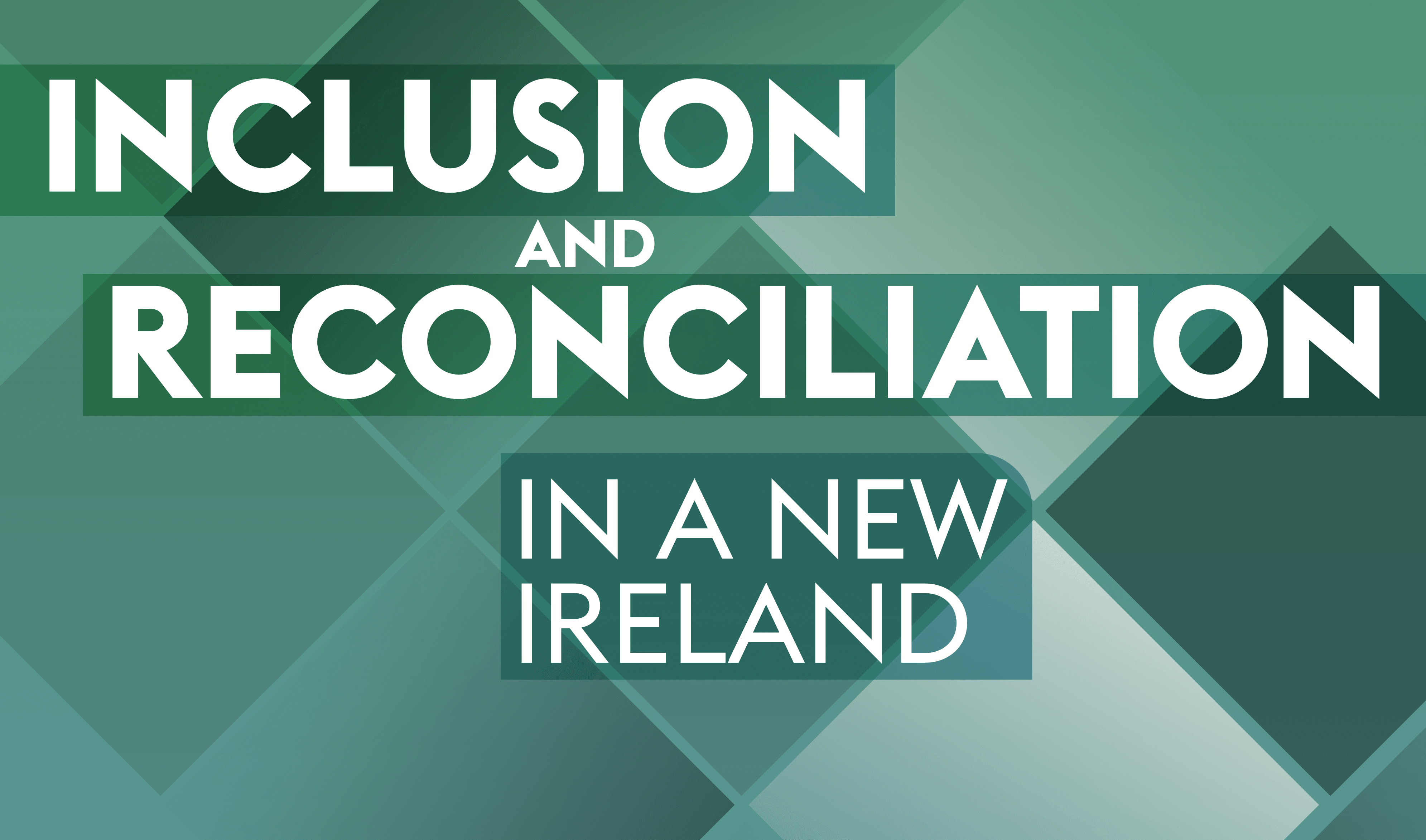
The latest work of my party on this is contained in our substantive policy document ‘Inclusion and Reconciliation in a New Ireland’ which can be found on our party’s website. Unlike other political parties in Ireland, we have shown leadership in publishing a detailed policy on how this can be achieved. The thinking has been informed by direct engagements with those from a traditional Protestant, Unionist or Loyalist background.

At a time when the debate on a unity referendum is growing and the desire for a United Ireland is increasing in popularity; this new policy document recognises that reconciliation must be at the heart of the transition to Irish unity. As the largest party on this island, we have, and will continue to lead from the front on the process of national reconciliation. Ireland has never, in its history engaged in a national reconciliation process. This needs to happen now, and encompass the nation as whole.
No one can deny that the political realities in Ireland are changing. It is time for the citizens of this Island to prepare for the potential of constitutional and political change. Irish reunification will bring about the biggest constitutional change since partition. We must grasp this opportunity to ensure the rights, identities and diversity of all ‘the children of the nation’ are protected.
So, there is an obligation on those making the case for Irish Unity, or indeed the union with Britain, to offer a logical and persuasive view of what the future will hold for us in the North under new arrangements and also what it will mean for the South. It must be a properly informed and facilitated debate about the constitutional change across the island.
The Good Friday Agreement changed the political landscape and brought an end to the conflict that had plagued Ireland for eight centuries. Crucially however, it also provided a democratic path towards Irish reunification and gave us the opportunity to decide our future together as equals, and with mutual respect and understanding. What is imperative, is that the Good Friday Agreement must be implemented in its entirety, and the international support for such a position is overwhelming.
So, there is an obligation on those making the case for Irish Unity, or indeed the union with Britain, to offer a logical and persuasive view of what the future will hold for us in the North under new arrangements and also what it will mean for the South. It must be a properly informed and facilitated debate about the constitutional change across the island.
Anti-sectarianism, equality and independence are the basis of Irish republicanism, harking back to the days of Wolfe Tone and Henry Joy McCracken. These principles have remained the guiding light of Republicanism from 1798 right until the modern day. This document remains rooted by these very same principles.
Reconciliation has to be at the heart of the transition to, and delivery of Irish unity. Both reconciliation and healing should be central to the political and civic institutions of any new, constitutional settlement.
Our policy examines fresh ideas for the development of a new phase of the Irish peace process based on reconciliation and healing.
So, we have a choice: We fight the tired battles of the past; or begin a new national conversation about how all traditions on this island can build a new departure. There is an onus on all of us, particularly those in political leadership, to demonstrate how this can be done, by how we critically engage in discussion, debate and reflection.
Such a process will be challenging, but Sinn Féin is up for that challenge. We will listen, present our positive vision for the future, and work tirelessly towards building a new Ireland, and a better Ireland.
Paul Maskey is the Sinn Féin MP for West Belfast