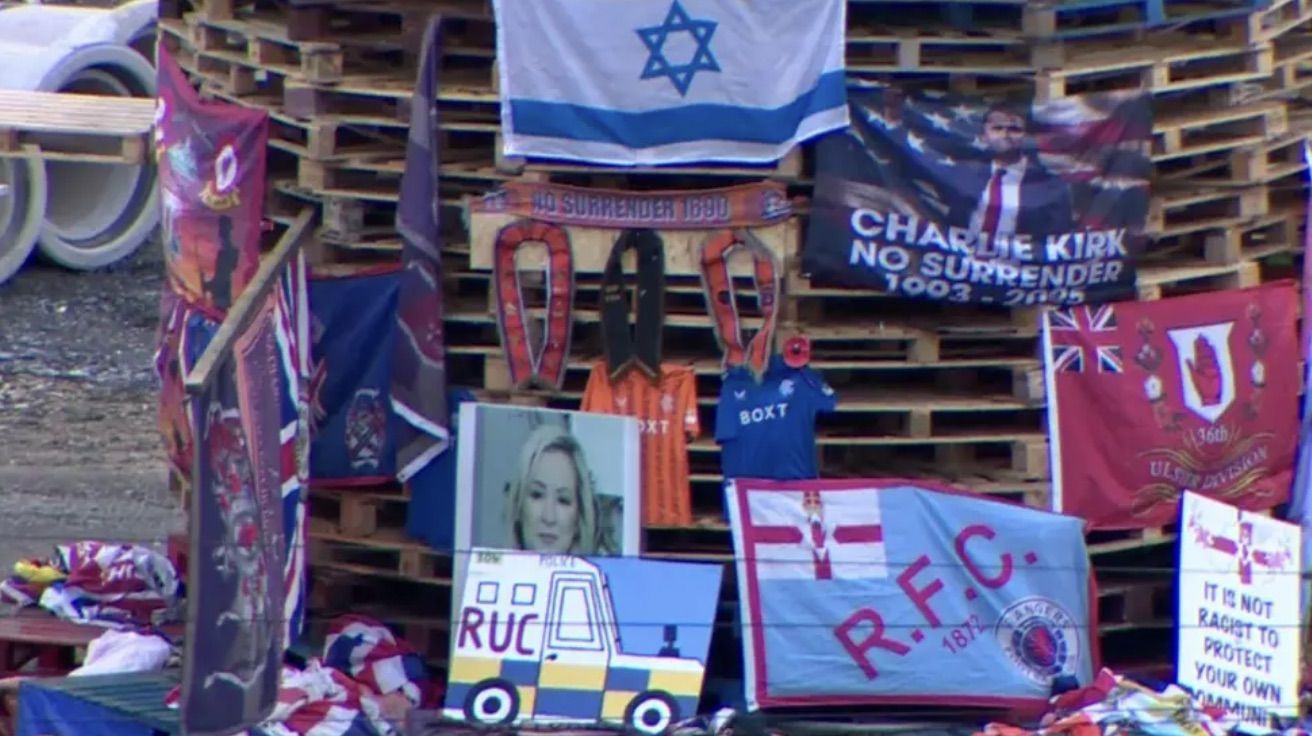
DERRY has fallen out with me. Or at least some of its most vocal boosters have after I had my say over the weekend about the Feast of the Assumption again being marked this year by the city pretending to be East Belfast on the Eleventh Night.
I don’t have much to boast about, approaching 40 years in the inky trade. But I can say with my hand on my heart that this paper did as much as anyone to bring the summer plague of bonfires in Belfast to an end. We threw ourselves in our reporting unflinchingly behind the people of Divis and the New Lodge in their exhausting annual battle with feral kids, swally merchants, thieves, ne’er-do-wells and dopeheads. We stood four-square behind those incredibly brave people who took their courage in their hands and took to the streets and the boney sites to say ‘No, you can’t do to us what the loyalists and the Brits couldn’t do.’ I know I will embarrass my pal Cllr JJ Magee by singling him out for special commendation, but tough luck, JJ. You are hereby embarrassed and commended.

What I said over the weekend was that in recent years I’ve seen little or nothing in Derry of the determination I saw in Belfast. Every summer in Derry it’s the same old story.
Desultory attempts by the statutory authorities to remove bonfire materials. Hooded teens taking over the place. Hard-working and respected political reps being insulted and threatened on bonfires built by kids who wouldn’t know Sinn Féin from the TUV but simply parrot the bitter enmities of their dissy enablers. And what we hear year after year is the dispiriting silence of the dog that didn’t bark.
Who’s taking to the streets to claim them back? Who’s going face-to-face with the junior mobsters? Who’s saying loudly and firmly that you’re not commandeering this road or building for a sectarian bonfire without a hell of a fight? I’m not going to say no-one, because I wasn’t there, I don’t know Derry well enough to speak categorically and I wouldn’t dream of insulting anyone who did their bit. But what I can say is that the city again couldn’t muster enough opposition to the bullying, the criminality and the madness to make itself seen or heard.
I don’t know why this is, although I’ve had plenty of angry explanations online.
Sure, they may be good kids at heart, but if so they’re good kids at heart with their hoods pulled up making Derry look as though it’s pining for the 70s.
Yes, there may have been bouncy castles and face-painters in situ just a hundred metres from the Bogside boney, but I’m not sure the prospect of a boing and cat’s whiskers is the same adrenaline rush for a 16-year-old and his mates as lording it over a district from the top of a boney.
No, I don’t want to see violence visited upon minors any more than I wanted to see violence in Divis or the New Lodge. But a community facing down schoolkids doesn’t mean baseball bats and punches; if it did I wouldn’t be recommending it. It means reminding these children at every turn that defaming and shaming a city is not a consequence-free activity. It means hounding them with a presence every time they want left alone to do what they like. It means denying them space at every turn by word and by deed.
Without putting on the oul’ béal bocht, I don’t need to fall out with Derry and I certainly don’t need my bonfire summers to stretch from July in Belfast to August in Derry. But when I spend weeks decrying rank racism in Moygashel, the asbestos boney near my place of birth, the incineration of homes in Greenisland and a death in Braniel, I think it’s reasonable for unionists and loyalists to ask me what I have to say about sectarian hatred on a Derry bonfire. And if what I have to say is similar to what I’ve had to say on the Belfast boneys, that’s hardly surprising. If it’s discomfiting for Derry to hear that they’re not doing much more about their bonfires than unionists in Belfast are doing about theirs, well perhaps that discomfiture may finally provoke the needed reaction.
It's important that it does because the vital task of reclaiming our summers depends to a large extent on isolating the toxic bonfire culture as an exclusively unionist and loyalist phenomenon. Derry summers are not like Belfast summers – they never were and they never can be. Belfast has been an identifiably British city for all of my life, from the architecture to the union-jack-draped shop floors of the smokestack industries from which Catholics were excluded. That Britishness found its apotheosis not only on the Eleventh and the Twelfth, but for entire, infernal summers of bonfire-building and parading from which Catholics with a wee bit of money fled the city while the rest stayed at home and seethed in silence while the city closed for a celebration from which they were excluded. Derry, as identifiably Irish to us as our city was British, largely and thankfully avoided the poisonous and debilitating summers that were the lot of Belfast Catholics.
Any post-ceasefire hopes that marching season tensions in Belfast would fade alongside the relative absence of violence and the promised normalisation of politics were quickly scotched and the hope was downgraded to ‘Perhaps it won’t get any worse’. But the unionist ramping up of culture war divisions, particularly around the Irish language and immigration, have seen the marching season atmosphere deteriorate in recent years.
The only way we’re getting our summers back is by regulation; of parades, yes, but more importantly of bonfires and the associated flagrant illegality. The loyalist bonfire-builders and their political enablers have overplayed their hand – so much racist and sectarian hate is being vomited out that civic society is at last approaching a cross-community consensus that something must be done. The narrative that one side’s as bad as the other wasn’t reflected in the bonfire numbers in the worst years of the Divis and New Lodge bonfires and that narrative is grotesquely misleading now that Derry is a single republican bonfire outlier. But as long as Derry apes Loyal Ulster’s worst excesses on even one occasion a year that narrative will endure and recalcitrant unionism will use it to oppose the twin forces of progress and regulation.
End the Derry bonfire and the unionist boneys stand exposed – and the end of the long road towards summers of sanity may soon hove into view.