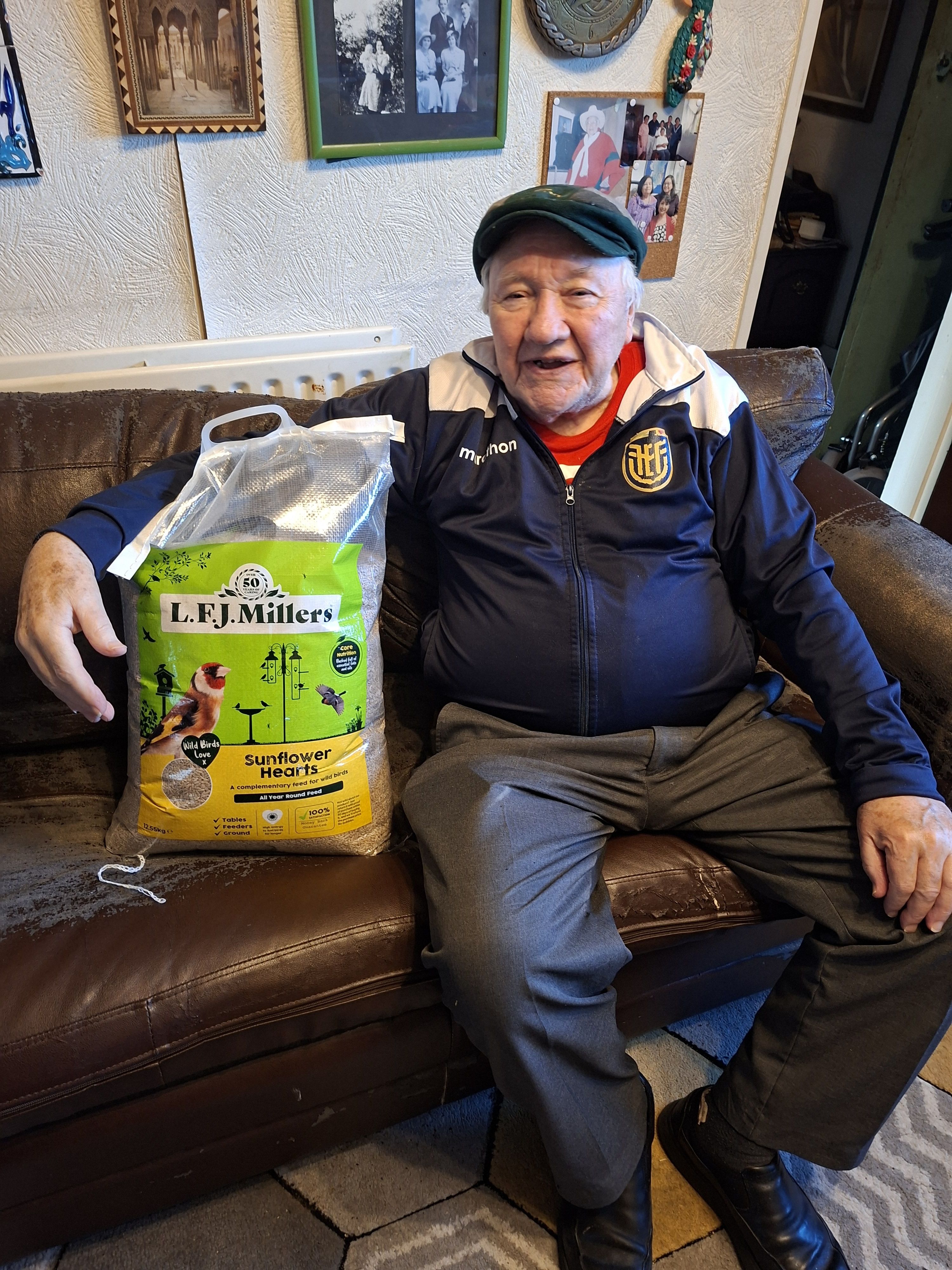
WHEN famous octogenarian Pádraig Ó Maolchraoibhe – former politician and educator Pat Rice – ran out of sunflower hearts to feed the garden birds this week, Dúlra came to the rescue.
When you live in Poleglass, bird food doesn’t last long. Surrounded by countryside including Colin Glen and packed with mature trees planted when it was built five decades ago, it’s long been a bird paradise.
Finches and tits will descend on the feeders as soon as they’re out, emptying them in days. And that’s especially true if that food is sunflower hearts, where we’ve done all the hard work for the birds, removing the hard black husks that surrounded them, leaving the kernel or ‘heart’.
When they were first introduced on the market as wild bird food, they quickly superseded peanuts and nyger seeds to become the number one choice. Birds go crazy for them even to the point of totally ignoring nuts or nyger feeders that they used to use.
They’ll gobble them up at record speed – all the other seeds including nyger have shells that have to be cracked with their beaks. That takes time and burns energy. When the birds eat sunflower hearts, however, it’s like gulping down pure protein – maximum benefit from minimum effort.

The seeds themselves have recently gone up in price as 30 per cent of the world’s sunflowers are grown in Russia – and 25 per cent in Ukraine! It's not just grown for birds – it’s made into oil and the seeds themselves are a popular food in many parts of the world, where they are eaten like nuts, often roasted as street food.
That 12.5kg bag should see Pat through to the New Year – as the early nights arrive and the weather cools, he’ll be able to watch all the activity and colour in the garden from the kitchen window.
But it seems nothing in life is risk-free. Because those very seeds that provide a lifeline to thousands of birds that would otherwise perish in winter can themselves be fatal.
And just as Dúlra was leaving to deliver the bag of sunflower hearts to Pat, he got a reminder of that danger.
A single goldfinch was sitting still on the garden wall. This most beautiful of species doesn’t do still. They twist and turn and sing and flash those golden wings, all the while twittering like Japanese bells.
It was obvious that it had contracted trichomonas. Its feathers were puffed up and instead of taking flight, it allowed Dúlra to approach and take this photo from just a couple of feet away. Eventually it gathered up the energy to fly and landed on the roof – again this was another sign of illness, because goldfinches aren’t out of place on a roof, always preferring trees. The disease affects their throats, making it hard for them to swallow and it normally kills in three weeks.
The sick goldfinch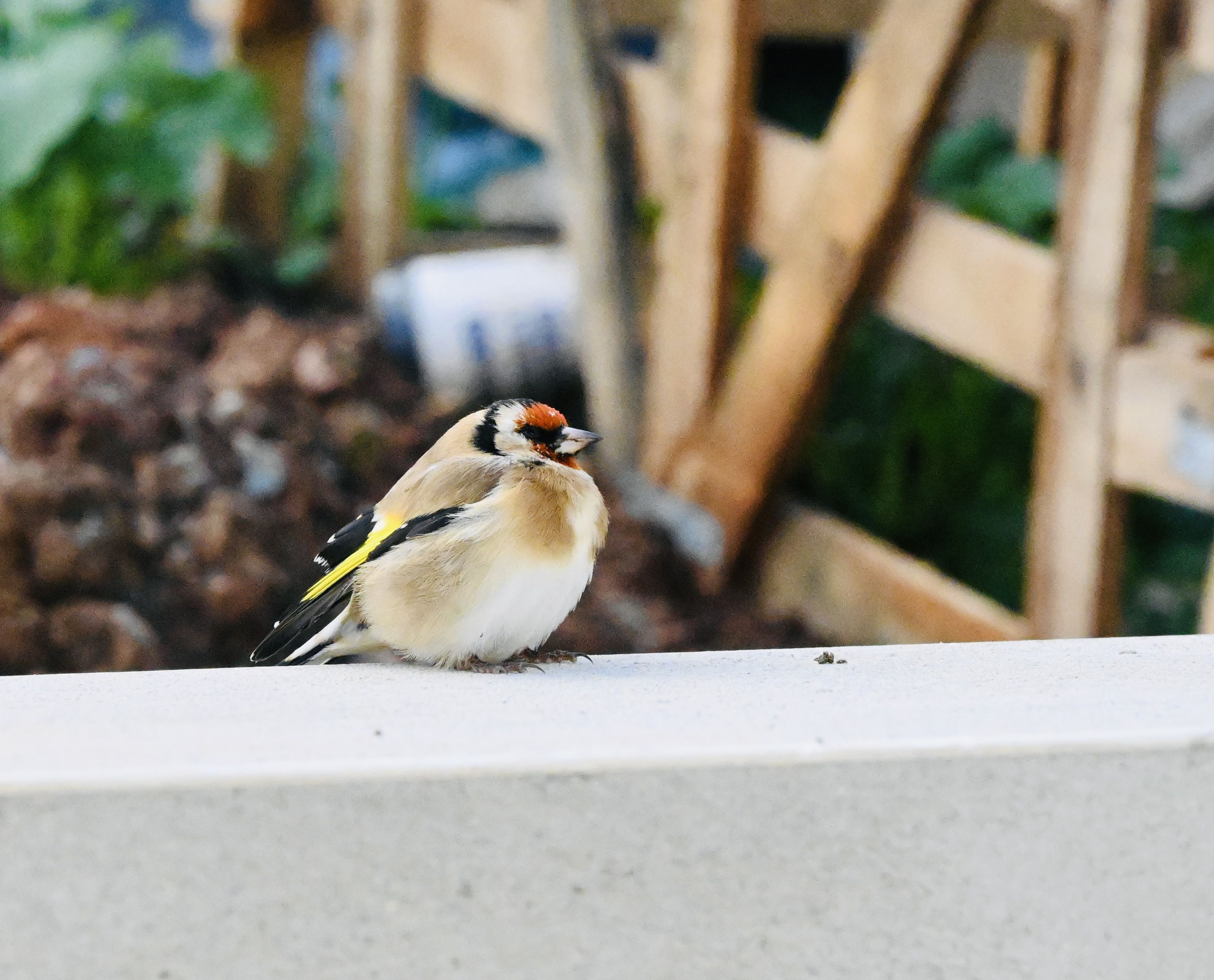

Trichomonas first struck birds just 20 years ago, almost wiping out our greenfinch population. Earlier this year Dúlra was delighted to welcome a family of greenfinches on his garden feeders – but they remain on the Red List of endangered birds. It took 20 years for them to bounce back and return to our gardens.
An outbreak in France in 2017 affected goldfinches as well – somehow almost all the other birds managed to avoid it.
Thankfully, it’s not the sunflower hearts that carry the deadly parasite, but the garden feeders themselves. It’s recommended that the feeders are thoroughly cleaned regularly – even allow them to hang empty in the wind and rain for a few days before filling them up again.
The stricken goldfinch in Dúlra’s garden didn’t catch the disease on his feeders – he stopped using them earlier in the summer and, like Pat, is now planning to restock them in time for winter. But it’s so sad that in a bid to help our garden birds in their time of need, we could be putting them in danger. Feed the birds, but keep those feeders clean!
• If you’ve seen or photographed anything interesting, or have any nature questions, you can text Dúlra on 07801 414804.