AHMED is in his late 30s and speaks four languages fluently. Like many residents of Bourj Al Barajneh refugee camp in south Beirut, he is impressively educated yet underemployed. He tutors groups of children whose schooling has been hit by swingeing funding cuts to UNRWA, the agency administering Lebanon’s 12 Palestinian camps.
During a lull in the activities, he takes out his phone and shows me an old video of him and his friends messing around at a kickboxing class. He smiles as he tells the story, then points to the faces on screen: This one, martyred by the Israeli military; this one, now in prison; this one, lost to drug addiction. He still smiles at their memory, as though in the face of the spectres of conflict, discrimination, and enforced poverty that haunt this community.

Earlier, walking into Bourj Al Barajneh for the first time gives the sense of a place that does not want to exist. Its labyrinthine streets are narrower than most hallways and far too tight for cars. Scooters noisily flit past, roaring around blind corners and deftly pausing an inch or two from our ankles. Above our heads hang plaited bundles of anxiety-inducing plastic water pipes and live electricity wires that frequently cause death or injury, especially during heavy rain. When rain falls and runs in rivulets down the centre of the street, it’s a sign that open sky exists above, otherwise we’d hardly know.
It was into this context that STEPS – Children in Conflict arrived, partnering with the Palestine International Centre in Beirut and the Palestine Sports Network (PSN). The programme’s goal was to deliver a first consignment of aid materials and instigate a sports programme for children adversely affected by UNRWA funding cuts. Those cuts have already forced the closure of half the camp’s six schools and gutted extracurricular programmes.
Ensconced in Lebanon’s political and economic chaos, this single square kilometre of precariously built apartments houses 30,000 souls. With an 80 per cent poverty rate and 40 per cent employment—mostly low-paid and insecure—it is noticeably poorer than the impoverished areas surrounding it. Most residents are descendants of Palestinians ethnically cleansed from the Haifa area, 100 miles to the south, in 1948. Denied their right of return, they carry a constant grief. Ask anyone where they are from, and they will name an ancestral village they have never set foot in, many wiped off the map.
Some of the young participants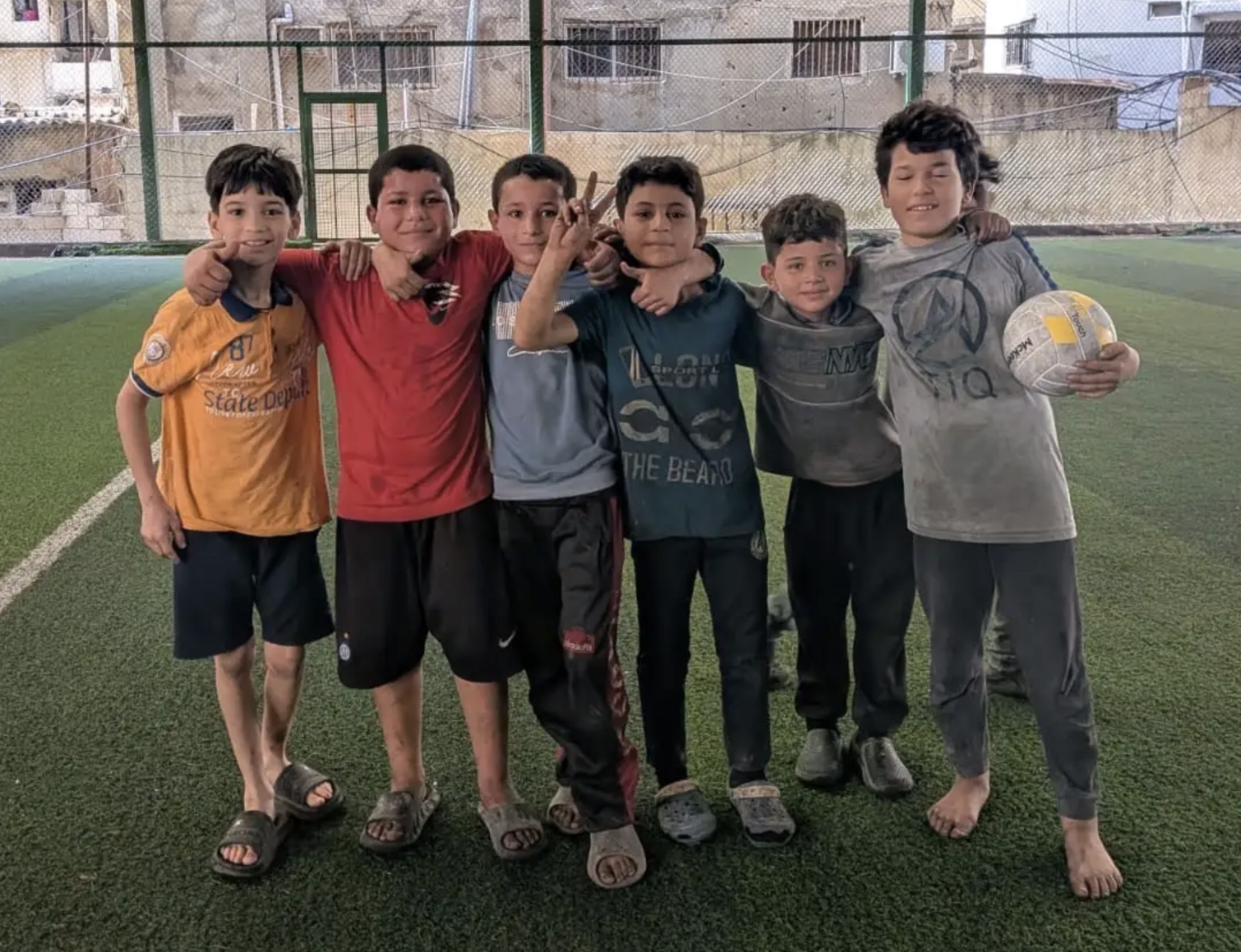

Of the 14 to 16 million Palestinians worldwide, roughly 500,000 live in Lebanon, half within UNRWA camps. Excluded from over 70 professions and denied state services, refugees are trapped in entrenched poverty with every obstacle placed in the way of escaping it.
While devastating, the UNRWA cuts have spurred a push for camp-led community structures that reflect local values and aspirations. Reliance on Western-based NGOs often brings directives asking Palestinians to forget their struggle for rights and accept their situation. For PSN director Hisham, funding would be far better spent supporting grassroots organisations attuned to camp realities. PSN uses sport to steer young people away from Captagon, a cheap, potent stimulant synthesised in Syria. Walking through the alleys, our hosts point out shops selling it, believing Lebanese authorities are complicit in using drugs to nullify a marginalised population.
Máirín Ní Dhuibhir and Frances Boyle of STEPS, past and present staff at Scoil Na Fuseoige, Twinbrook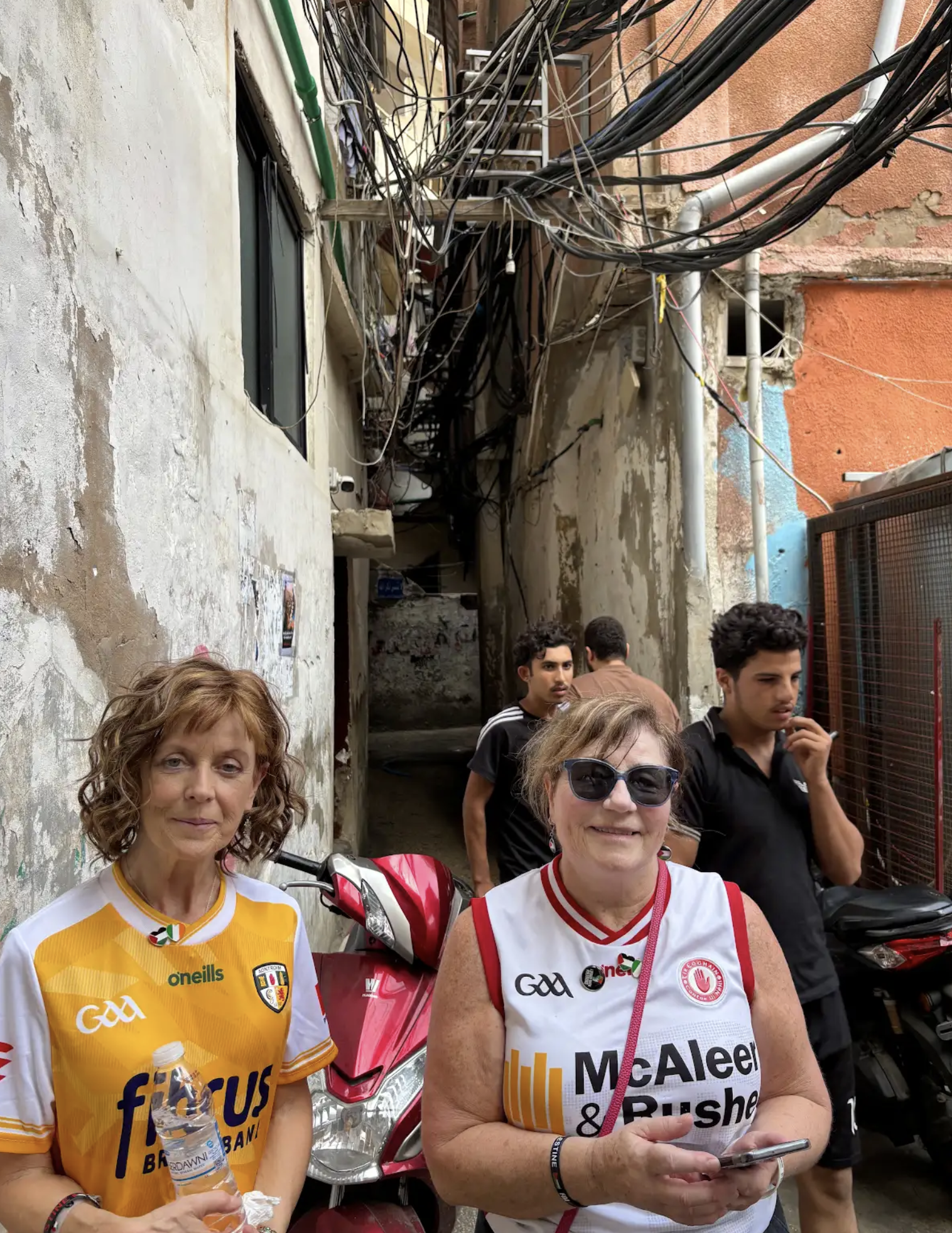
We met Rami, two years clean through a local rehabilitation programme. He explained through a translator that frustration over zero opportunity drove his addiction. Motioning to educated women in the room, he noted that refugee status bars them from becoming doctors, lawyers, or businesswomen, leaving cashier work as their ceiling.
Like elsewhere in the region, Palestinians here have no vote and no say in parliament. Practising diaspora politics, they aim to turn powerlessness into power through self-reliance. As Palestine International Centre director Khaled told us, the immediate focus is not nation-building, but restoring basic rights: “The most important values are dignity and freedom.”
Our Gaelic football camp runs well. While some of the 100 children show skills that will soon outstrip their ageing Irish coaches, the marks of poverty are plain to see on most of the children. We also train adult PSN volunteers, leaving them a drill booklet to sustain the coaching in the coming months. The sessions are filled with smiles and laughter; despite the poverty and obstacles they face, the capacity for joy remains undiminished.
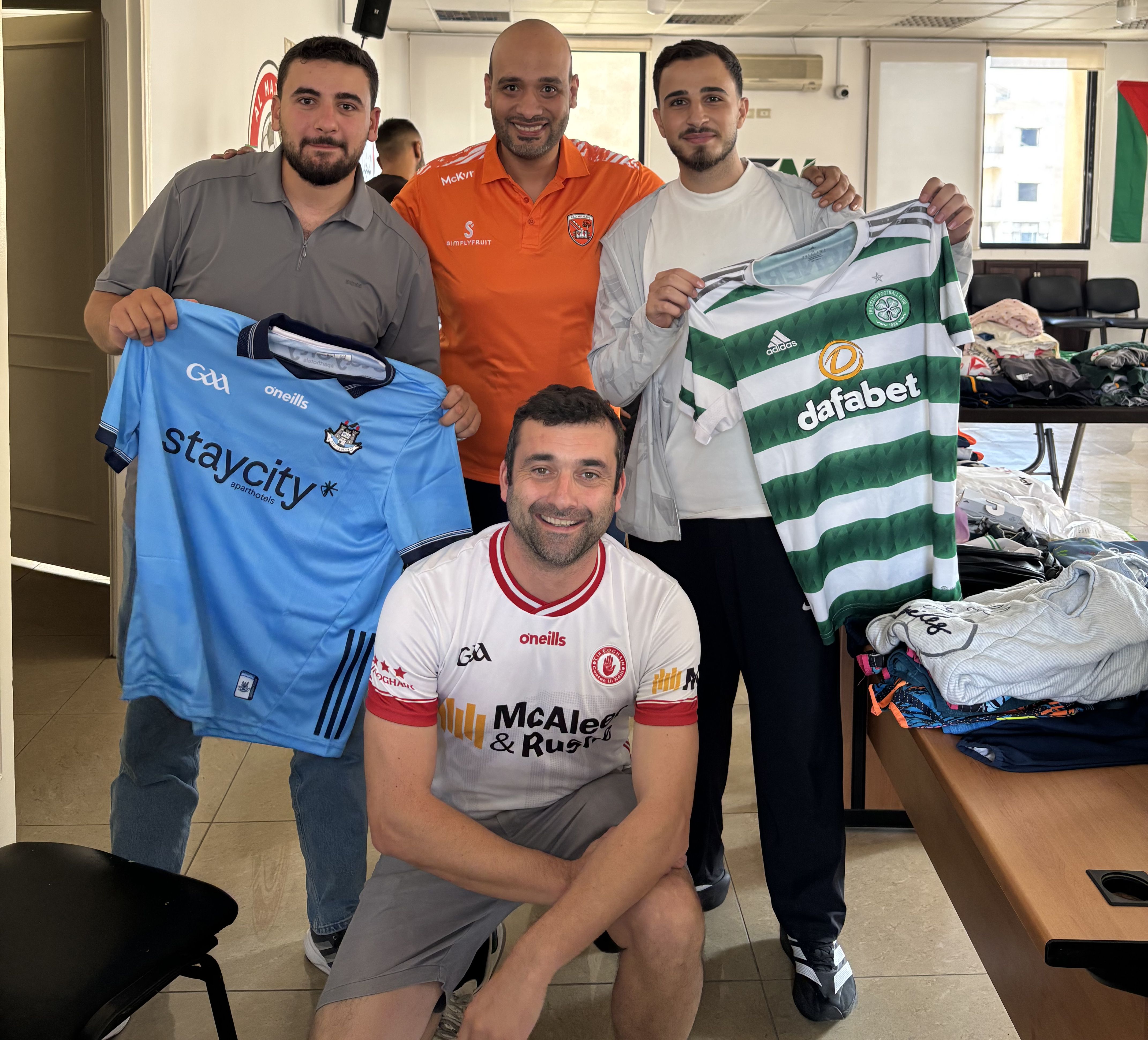
Ahmed acts as our guide around Beirut, often wearing the 1916 Rising commemorative GAA jersey we gifted him on our first day—it fits him perfectly. He takes us out of the way along the coast, where foreign and Lebanese diaspora wealth rises into the sky in polished metal and glass. For the camp’s residents, the towns and villages around Haifa, ethnically cleansed more than 70 years ago, remain vivid in the collective imagination yet distant in reality. While the right of return burns brightly as an aspiration, the urgent fight today is for basic rights as a people.
STEPS is planning a Christmas fundraising drive to pay for a container with much-needed supplies to the camp residents, if you’d like to donate, click on the link
https://www.goodhub.com/go/steps-helping-palestinian-children
Sean Mullin is a teacher at Holy Evangelists' PS in Twinbrook.