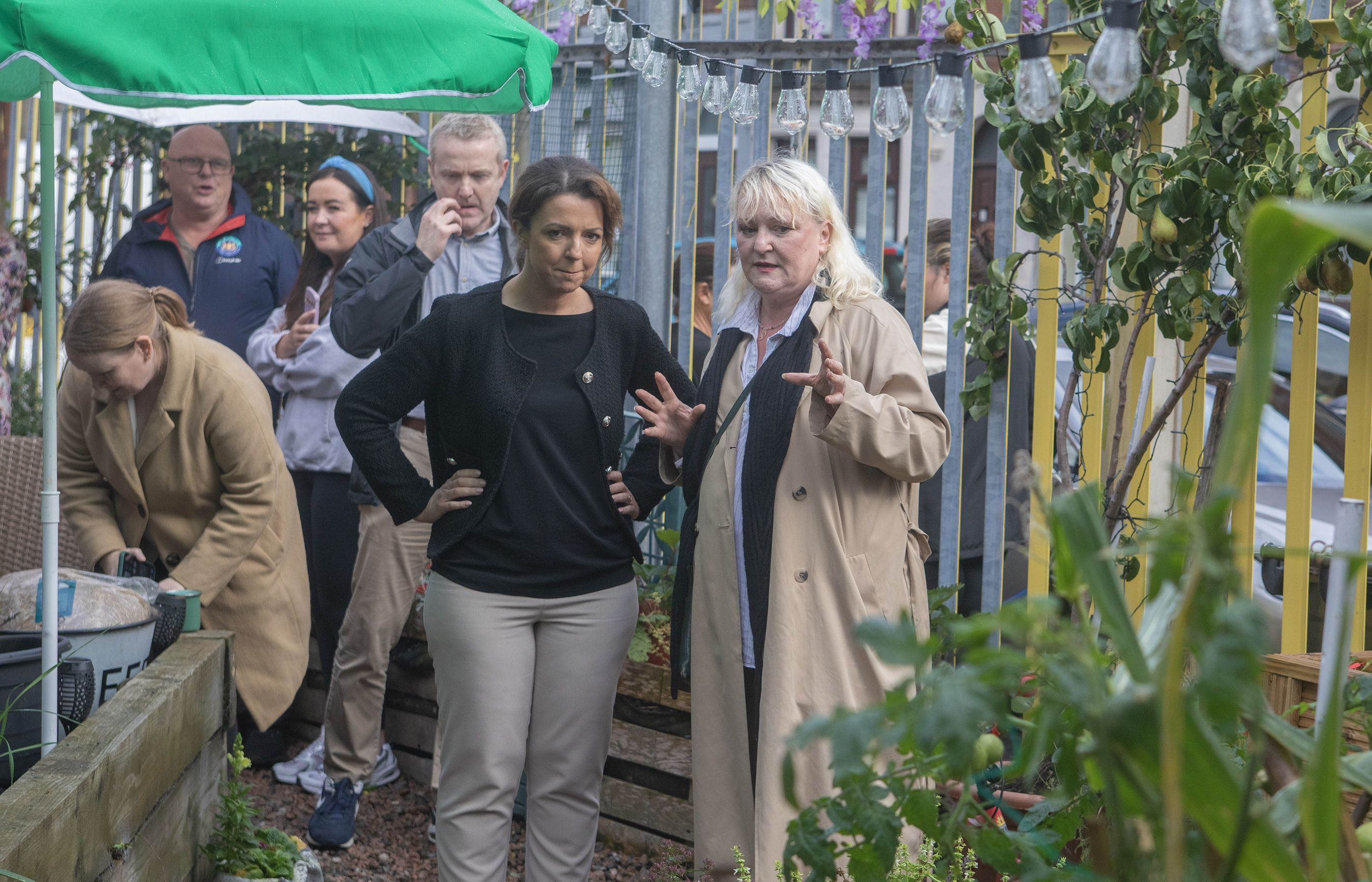
I CURRENTLY work for Community Garden Support, a charity involved in the support of and development of community growing groups. It also focuses on strategic networking and policy work to develop the community growing sector.
On January 28, Channel 4 News ran a story on how Downing Street had blocked and heavily redacted an intelligence assessment warning that climate breakdown and ecosystem collapse pose a critical threat to UK national security. The heavily suppressed analysis, originally commissioned by the Department for Environment, Food and Rural Affairs, and backed by the UK's joint intelligence services, stated the UK's water, food, and supply chains are at acute risk.
The risk has always existed due to climate change but the attacks on Iran and the closure of the Strait of Hormuz, exposed just how fragile our food systems have become.
Whilst GB and Ireland do have some strategies to cope, NI currently has none. Scotland has the 'Good Food Nation' and 'Community Empowerment Act'.

Wales has 'Well-being of future generations' policy and a strong political will within its devolved government.
We, in NI, have the climate act but it's less focused on adaption and no focus on food or community-based strategies.
Organisations in Northern Ireland, aware of the incoming effects of climate change, have been collaborating with local council officers, Stormont officials, and grassroots organisations and volunteers across Belfast working at grassroots level in all sectors.
There are answers to these problems and the strategy needs widespread support to succeed.
It's not remiss to call the Belfast Food Strategy exciting and dynamic.
It's the culmination of years of work with a wide range of stakeholders, including farmers around Belfast and the UFU. The strategy calls for, amongst other things, 'A re-localised agri-food system supported by people and anchor institutions in Belfast based on short transparent food supply chains ensuring good quality, sustainable food and fair farmgate prices in exchange for accountability and good practice.'
It's about giving people the means to access nutritious, affordable food, to grow a percentage of their own food by building urban food farms, and to make sure that farmers and farm labourers get a fair deal, as well as making our society more resilient and addressing food poverty and insecurity. We need this strategy implemented immediately and the situation is urgent. In the UK, Wales is the only country that has laid down strategies to cope with what is coming for our food system, and they are far ahead of us in local food access.
As too many of our politicians look away, the population here is becoming increasingly vulnerable, though the SDLP have recently launched 'Seeds of Success'.
There are no losers in implementing the strategy. Even people who refer to the climate crisis as a 'scam' cannot deny that giving people access to healthy, nutritious, locally grown, and affordable food is a win-win situation, increasing support for our farmers struggling to deal with increasing pressures.
No sector is safe from what is coming. From city residents to farmers, verified and credible reports are highlighting the struggles facing UK, Irish and European Farmers.
This week alone, all major media outlets in Ireland, and the IFA, have run major stories and issued statements on failing crops, beef and dairy farmers already accessing winter fodder and calling for government support as drought and hot temperatures wreak havoc on the Irish farming sector.
This week, the European Central Bank has now stated that food prices will be the main driver of inflation in 2027. No-one has missed the footage of widespread wildfires across Europe and the destruction of farmland. Lives were lost as governments struggled to contain the flames, evacuating communities in tinderbox conditions.
The UK imports nearly 40 per cent of its total food supply from European Union countries, with key trading partners including the Netherlands, France, Germany, Italy, and the Republic of Ireland. Each of these countries have been severely hit by elevated temperatures, affecting transport routes. Prolonged drought and severe summer heatwaves across Europe have driven the Danube River down to record low water levels, disrupting cargo shipping, grain, and food transport. Cargo ships and commercial barges, carrying shipments of vital bulk goods, including grain and imported fuel, can now only carry a fraction of their normal weight to avoid running aground on exposed sandbars and shallow riverbeds.
Theres also reports of strain on energy and agricultural systems across countries like Hungary, Serbia, Romania, and Bulgaria. Our food supply systems are interconnected, and the alarm is being raised across Europe.
None of this is being reported by British media and we cannot understand the reasoning for ignoring looming food supply disruption and shortages.
Our local population might not understand how these severe bottlenecks and weeks of delay in Europe, filter down to cause local supply issues and can result in empty supermarket shelves. Corporations like Sainsburys and Tesco already pass on rising costs to consumers, and they will have no hesitation in continuing to do so.
As always, women will be harder hit as they struggle to feed their children. We’re moving towards the colder months, and the recent luxury of not having to heat homes during the scorching summer will pass. People reeling from rocketing grocery bills will now have to look at domestic oil and gas costs as we head into winter and Trump shows no sign of stopping the attacks on Iran.
We need a large scale media campaign to raise awareness. It is important people aren't frightened but motivated for change. Framing is everything and the environmental sector are ready to move now.
Brenda Gough,
Project Coordinator, Community Garden Support