FOR more than 250 years the Assembly Rooms has been part of the lives of countless people, both locals and visitors to Belfast. Today, ongoing research and conservation are revealing new aspects of its history and encouraging the public to share their experiences and memories of the building.
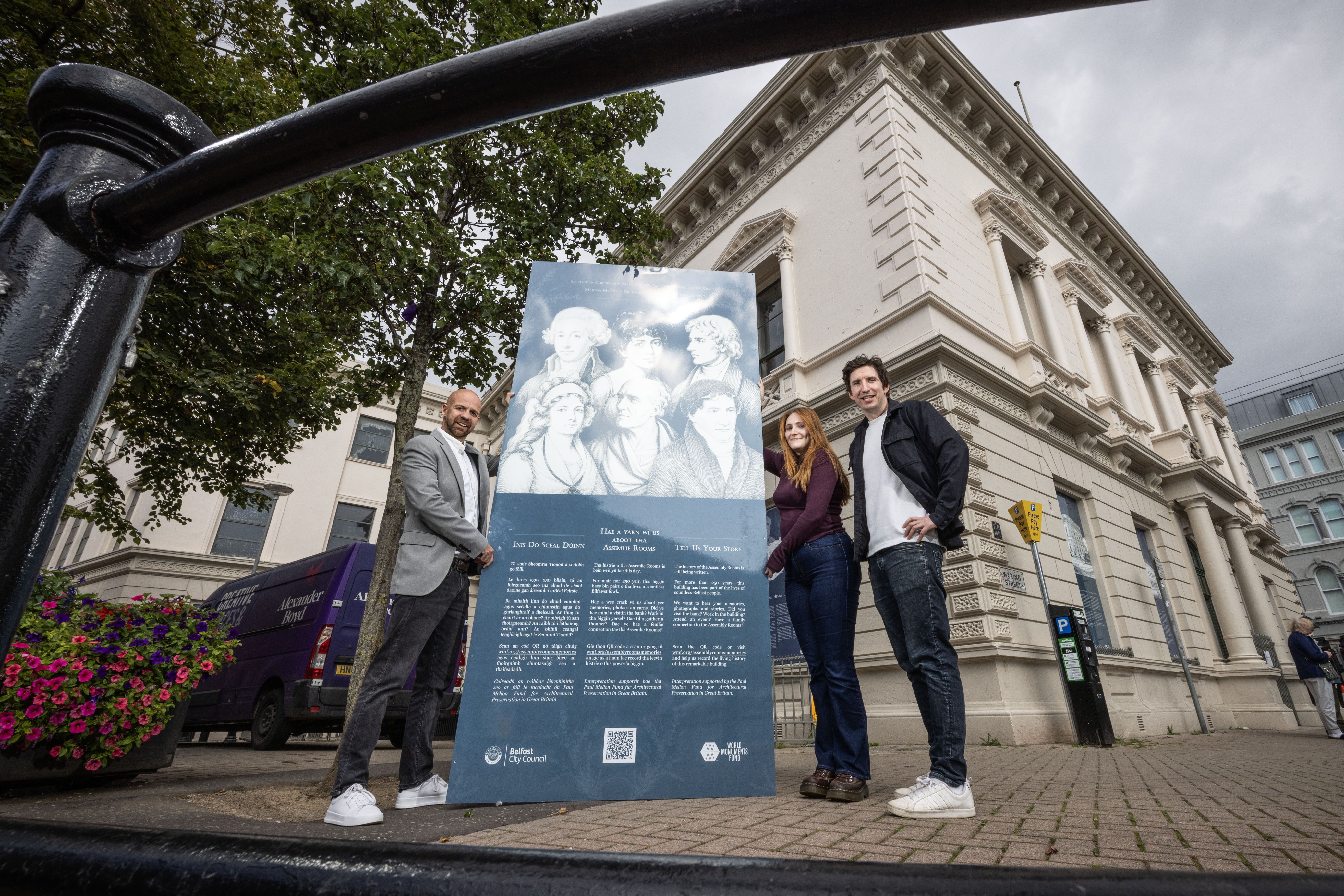
Earlier this year, Belfast City Council partnered with World Monuments Fund (WMF) on a conservation project to safeguard the Assembly Rooms, including a conservation management plan by Belfast-based James Grieve Architects. The plan provides a framework for the building’s future conservation, maintenance and sustainable use. Research undertaken as part of the process has informed a new trilingual – English, Irish, and Ulster Scots – interpretative scheme of 29 panels installed on the building exterior.

The interpretation traces the historical development of the building from the 18th century to the present day, beginning with its establishment as an Exchange, or market hall, and its evolution into the Assembly Rooms at the heart of Georgian Belfast’s social scene. It continues through its later use as the headquarters of the Belfast Banking Company, until the bank’s closure in 2000.
Councillor Joe Duffy, Chair of Belfast City Council's City Growth and Regeneration Committee, said: "It’s fantastic to see the history of the Assembly Rooms being shared with Belfast residents and visitors alike through this interpretation project – and I’d encourage anyone with memories of this wonderful building to get in touch to share them.
“We’re very grateful for the World Monuments Fund’s support which has allowed us to draw on James Grieve’s expertise and knowledge to raise awareness of this iconic building’s past and to give us guidance on the building’s conservation. These beautiful panels show why the Assembly Rooms is one of Belfast’s most historic and culturally significant assets, and we want to conserve, reinvigorate and reuse it in a way that will not only benefit our citizens, but act as a catalyst for further city centre regeneration.
The ghost sign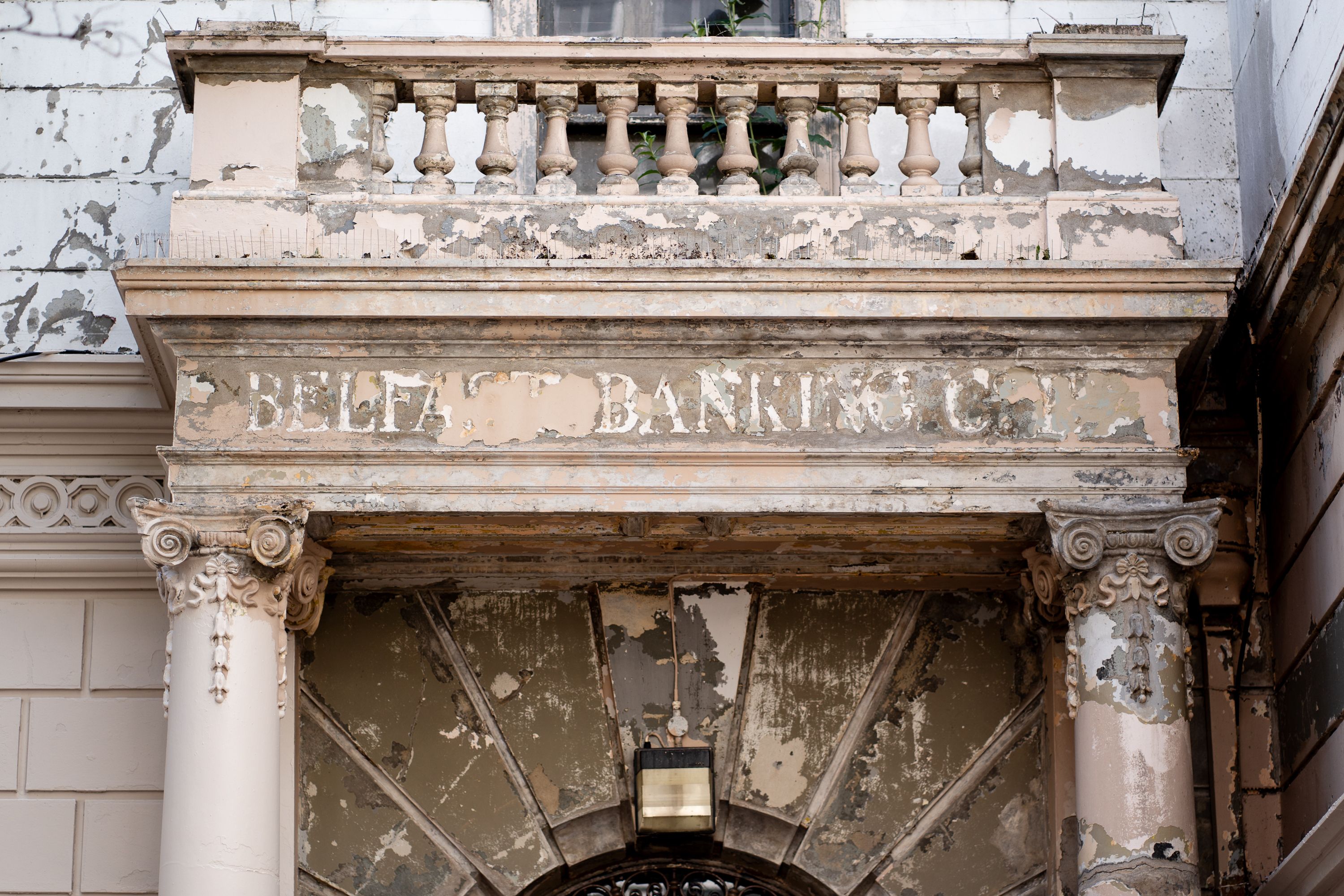

“In the next few years, we’re going to see this part of the city centre transformed. As well as bringing the Assembly Rooms back to life and giving it purpose and relevance for generations to come, we’ll be opening Belfast Stories, a stunning new public space, visitor attraction and creative hub on Royal Avenue in 2030. By next year, we’ll have transformed Cathedral Gardens beside Ulster University into a world-class public space for people to gather, relax and play, and in the coming years, our partnership with GRAHAM is set to deliver £280m worth of residential-led, mixed use developments, providing much needed city centre living.”
The new interpretation, conceived in collaboration with James Grieve Architects, highlights some of the seminal figures associated with the building, including Dr James McDonnell (1763–1845), known as the ‘Father of Belfast Medicine’, who helped shape the city’s medical, cultural and intellectual life and organised the Belfast Harp Festival of 1792. It also features Martha McTier (1742–1837), a prominent figure in Belfast’s reforming culture who helped establish one of the city’s earliest maternity charities and contributed to the intellectual life of Enlightenment Belfast. Also, a collaboration with the Royal Society of Ulster Architects (RSUA) showcases three architects who shaped the building.
James Grieve said, “The research has revealed just how many layers of Belfast’s history are contained within the Assembly Rooms. It has been especially rewarding to see those stories brought together and shared publicly, helping people understand how this remarkable building has evolved over more than 250 years.”
The remedial façade works revealed new aspects of the building, including a ‘ghost sign’ – a fading hand-painted sign that offers a glimpse into its past use. The interpretation draws attention to this feature, encouraging passers-by to look up. The scheme also highlights a more recent architectural feature that may be less familiar to younger generations – the night safe, a secure deposit box that allowed bank customers to deposit cash and other valuables outside banking hours. Its use has declined with changes in business banking.
Magnus von Wistinghausen, Executive Director at WMF Britain, explains: “These discoveries are a reminder that, even after more than 250 years, there is still more to learn about the Assembly Rooms. The conservation management planning process is not only about protecting the historic fabric, but also about ensuring that people can understand and connect with the places around them. Research into the Assembly Rooms provided the foundation for this engaging interpretative scheme. We encourage people in Belfast and beyond to learn more about this remarkable historic building and contribute their own memories, helping to ensure its significance is carried forward for future generations.”
As part of the ongoing research into the building’s history, WMF is collecting memories, photographs and stories that can help reveal its more recent past. Did you visit the bank, work in the building or attend an event? Do you have a family connection to the Assembly Rooms?
The memories, photographs and stories collected will help record the building’s more recent social history, particularly its long period of use as a bank. As online banking has reduced the need to visit bank branches in person, the everyday experiences associated with these spaces are increasingly becoming part of the historical record. Capturing these memories will contribute to a fuller understanding of the building and its significance, while informing its ongoing conservation and interpretation.
After more than 250 years at the heart of Belfast, the Assembly Rooms stands at the beginning of a new chapter. As it has throughout its remarkable history, the building continues to adapt and evolve, ready to serve future generations of Belfast.
The history of the building is still being written – share your memories: https://www.wmf.org/assemblyroomsmemories