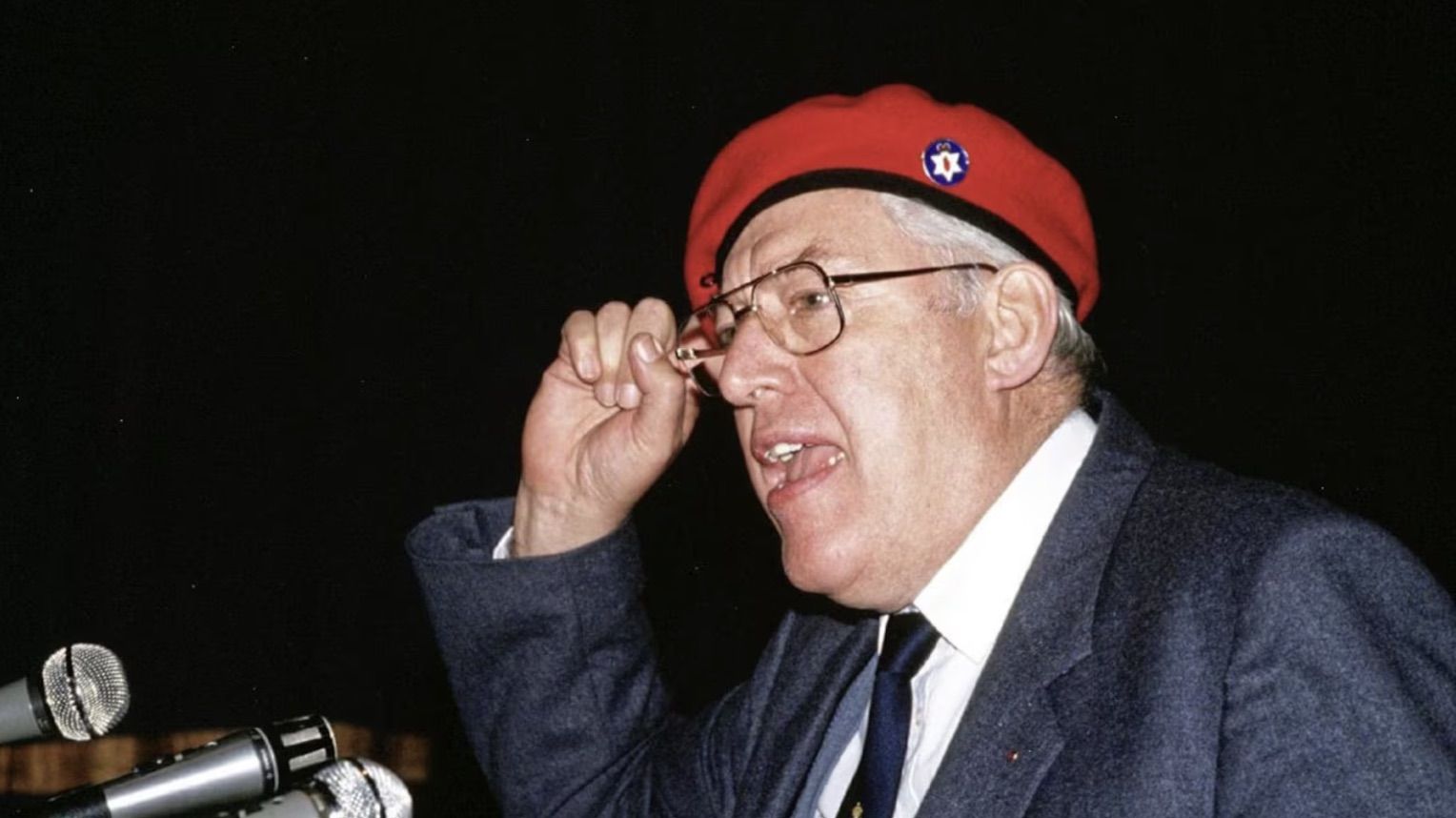
SQUINTER got asked on the radio last week to talk about Ulster Resistance and the DUP. He had assumed – perhaps naively – that the basis of the conversation would be firmly in place before he put the headphones on. That uncontested basis being that Ulster Resistance was founded in November 1986 by the DUP at a star-studded event at the Ulster Hall, during which senior members of the party donned red berets and paraded alongside notorious paramilitaries and gunrunners carrying swagger sticks in a none-too-subtle attempt to frighten the Brits away from the Anglo-Irish Agreement.
Unfortunately no cement had been poured into the foundations of the BBC Talkback discussion between Squinter and Malachi O’Doherty, the Belfast Telegraph columnist and noted Riverdale unionist.

We’d been asked in to talk about Malachi’s column last week in which he railed at Carál Ní Chuilín for having the temerity to ask a question in the Assembly about the DUP and Ulster Resistance. Malachi’s thesis – and it is an entirely mainstream unionist one – is that Carál, and indeed every Shinner who has ever troubled the courts, has forfeited the moral right to ask the DUP about the red berets, the swagger sticks and the humungous stash of sophisticated new weaponry with which Ulster Resistance packed the arms dumps of the UVF and the UDA.
Squinter’s thesis is that since Sinn Féin have kept their side of the Good Friday Agreement by ensuring the IRA went away, Carál is more qualified than most to ask questions about the DUP and about Ulster Resistance – a paramilitary organisation which was never part of the peace process and whose smuggled weaponry is still out there somewhere.
Malachi stuck to his metaphorical guns, of course, but disconcertingly, he balked at the idea that the DUP – the literal founders of Ulster Resistance – are institutionally connected to Ulster Resistance in the way that Sinn Féin is connected to the IRA.
Squinter is happy to admit he wasn’t ready for that.
“We don’t know that the DUP is linked to Ulster Resistance and weapons,” said Malachi.
Unfortunately for the debate, most of the time was spent after that in a lightly-heated toing and froing about whether the DUP has anything to do with Ulster Resistance rather than the much more interesting question of how the DUP’s foundational links to the paramilitary group impacts on their right to lecture others about the past.
And in that sense Malachi won the debate quite comfortably, because Squinter strongly suspects that when the title music played the majority of listeners who had tuned in for information and not affirmation would have come away with the distinct impression that the connection between our biggest unionist party and the gunrunning loyalist paramilitary group they founded was a matter of dispute and conjecture rather than of stone-cold historical fact.
The success of the DUP in distancing itself from the past is a notable and continuing triumph for a party desperately debilitated by the worsening symptoms of late-stage unionism. Not that the truth about DUP/Ulster Resistance is down only to a rare example of efficient unionist PR. The total failure of the media to interrogate the facts of the conveniently-timed ‘split’ between the party and the paramilitary group in the 36 years since that weapons bonanza has allowed the subject to lose relevance to the extent where to ask about it today seems vaguely mischievous; conspiratorial, even. But it’s never too late to ask important questions.
Questions like, when exactly did the DUP cut ties with Ulster Resistance?
All we know is that it happened astonishingly quickly, because from the strictly limited amount of commentary the DUP has made down through the years on the subject we glean only that the parting of the ways came just before the assault rifles, the Browning pistols, the grenades and the RPG-7 rocket launchers.
How soon before the gunrunning did the DUP cut the cord? A week? A month? Six months? We simply don’t know because nobody has ever bothered to put the question. (And before you ask, the DUP press office wouldn’t tell Squinter what day they put their bins out, so that important and belated task is going to have to fall to someone else.)
All we know is that some time in the year between the DUP pulling on the red berets and the boat carrying the arms arriving the DUP jumped ship. How do we know this? Why, because the DUP told us.
But even if we accept without document or affidavit the truth of the untested claim that the split came just before the weapons came in late 1987, we would then have to forget another fact as devastatingly undeniable as the fact of the DUP founding Ulster Resistance: You don’t order a containerload of assault rifles, pistols and RPGs and tens of thousands of rounds of ammunition online. An Amazon next-day-delivery driver is not going to leave it on your doorstep and take a picture.
We know that senior Ulster Resistance figures met with South African arms dealers in Paris and Geneva in early 1987, at which stage the DUP were still pantingly enthusiastic about their new baby. Are we to believe that that early weapons importation planning and the missions to Europe took place without the knowledge of Ulster Resistance’s founders?
At which point our boat, low in the water with its deadly cargo, now undergoes the customs and document check it managed to avoid way back when. Where’s the proof that the DUP broke with Ulster Resistance? The only proof is that the DUP later told us they did – and did so at a very convenient time in relation to the weapons thing. Where is the termination of contract papers and who signed them? The answer is that there aren’t any and nobody did. It’s a trust-me-bro thing – always has been and still is now. And the reality is that the media have been as willing to trust the DUP on the Ulster Resistance thing as they have been to slate Sinn Féin about the IRA at every opportunity.
Amidst the disinformation, the bluff and the spin, we’ll all believe what we want to believe, regardless of what Malachi and Squinter say on the radio. 10 and 12 years ago respectively Arlene Foster and Barry McIlduff got in bother over two pieces of improvised theatre. In the first, the then First Minister was surrounded by young members of the DUP on the podium at the annual party conference. Together, they launched into an all-singing, all-dancing rendition of Arlene’s on Fire, an adaptation of the Eurodance anthem Freed from Desire. Unfortunately, the conference was at the La Mon House Hotel, where 40 years earlier 12 people had died in an IRA firebomb attack.
In the second, Sinn Féin Tyrone MLA Barry McElduff tweeted a picture of himself in a shop with a loaf on his head. Unfortunately, the loaf was Kingsmill and the tweet was posted on the 42nd anniversary of the IRA’s Kingsmills massacre.
The idea that either Arlene or Barry deliberately danced or joked to mock innocent people killed in such horrendous circumstances was preposterous, but not preposterous enough to deter the media pack. Arlene did her silly two-handed dance quite simply because she was caught in a joyous celebratory moment not of her instigating. Barry did his silly loaf stunt because Barry always enjoyed doing silly stunts. But only one of these two people lost their career because of the images, or, if you prefer, because of their lack of thought – and it wasn’t Arlene Foster.
The credibility gap remains. Decades after the IRA stood down, Sinn Féin are unabashed about the connection. Decades after Ulster Resistance imported all those weapons, the DUP not only maintains its ‘nothing to do with me, guv’ pretence, it misses no opportunity to slate Sinn Féin.
For being honest.