THERE’S a common but catastrophically mistaken perception among the general public that bias and discrimination in politics and the media are necessarily driven by what m’learned friends are pleased to call mens rea, or a guilty mind.
It’s a perfectly understandable error.
The human mind is hard-wired to be suspicious and protective.
Permanently fearing the worst in a prehistoric forest mightn’t have done much for the peace of mind of our Stone Age ancestors Og and Zog, but it ensured they were likely to reach at least their teens, if not their maximum life expectancy of 20.
Fast forward three million years and a terror of fearsomely-fanged creatures persists in residual form in our modern desire to think the worst of others, even if only in private.

But very few if any of the practitioners of bias and discrimination – and I must include myself in that dread cohort – get up in the morning and decide over their Rice Krispies what acts of othering, belittling, harassing and isolating they will be inflicting on their fellow humans in the coming eight hours.
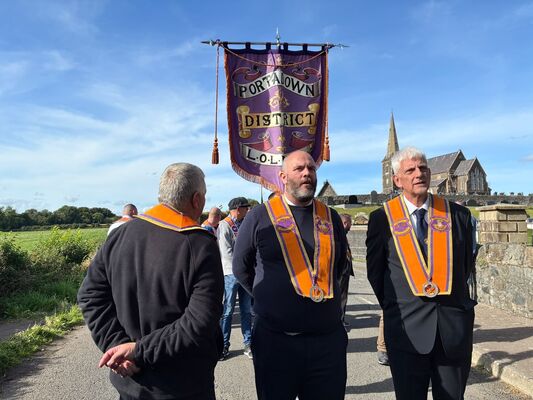
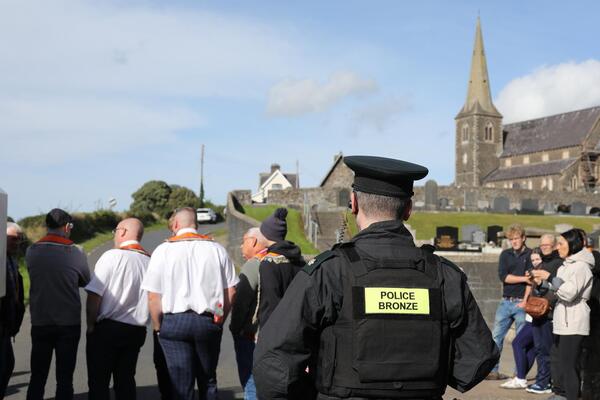
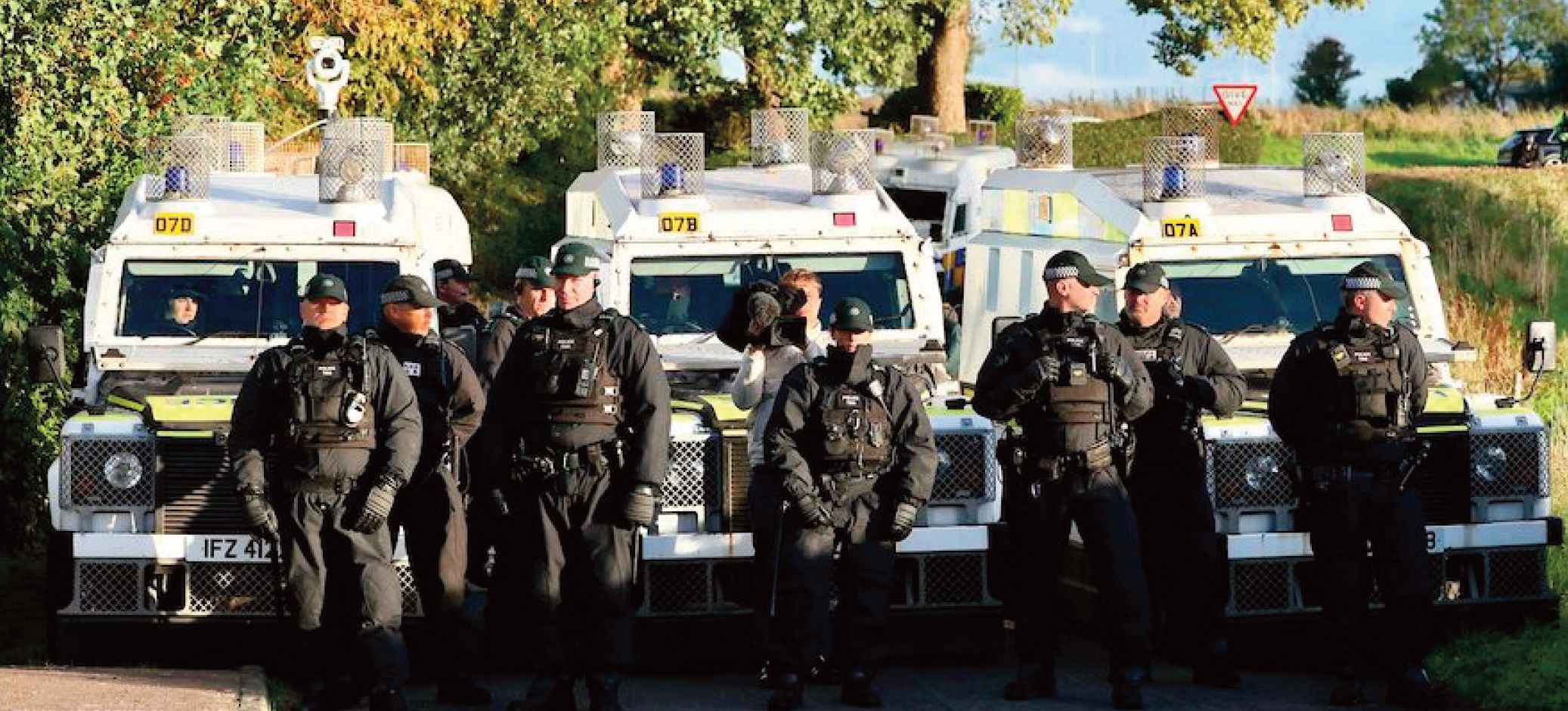
That lack of active planning, however, doesn’t mitigate the bias and discrimination; on the contrary – it massively aggravates them. I’ve been thinking a lot about what we might call passive discrimination in the past month or so as the Portadown District’s battlefield re-enactment of Drumcree ’98 has dominated the headlines in a way not seen since the Bobby Storey funeral of June, 2020, when Loyal Ulster last lost its every marble over Sinn Féin.
How do I know that people discriminate even when their discrimination is neither pre-planned nor deliberate?
Why, because that’s how my discrimination works.
I don’t write columns every week to wind up Gavin Robinson; I don’t tweet every day to get on Jim Allister’s wick; I don’t occasionally go on the radio to have listeners from Ballybeen to Ballymena hurl their teacups at the wireless.
I write and say what I think and I would be a rum cove indeed if I failed to acknowledge that the aforementioned Gavin and Jim aren’t similarly motivated by genuinely-held passions, even if Gavin articulates them with rather more nuance and amenability than Jim.
Which brings me reluctantly to my colleagues in the Fourth Estate; or more accurately, to the broadcast wing of the Fourth estate (because, like the Andersonstown News, the local titles in the inky trade are open about their political allegiances).
TV and radio journalists and presenters affect an air of inscrutability when it comes to matters political.
Or at least, they think they do. The truth is that they are as cheerfully and recognisably tribal as the politicians to whom they so often and so vocally express their undying neutrality.
The difficulty is that if you asked them what they think of the suggestion I have just outlined, they would press the back of their hands to their forheads and reel back on to the fainting couch.
Two words if you’re not buying any of this: Unionist concerns. Unionist concerns are the lingua franca of political reporting, the common coin of current affairs. It has ever been thus, but seldom have unionist concerns been so comprehensively and caringly platformed than during this current iteration of the Drumcree psychodrama.
The leading roles in that drama are taken by unionist politicians and assorted commentators. Nationalist politicians and commentators, meanwhile, are minor characters and extras, stepping forward into the footlights only to provide tone and contrast for the real stars.
The narrative of the standard news item or discussion is wincingly familiar:
1. How does this impact on unionism?
2. What do unionists think about how this impacts on unionism?
3. What do nationalists think about how this impacts on unionism?
The purveyors of this three-pronged narrative don’t jump in the radio car or take to the studio with the express intention of presenting us with The World According to Loyal Ulster, but so immersed are broadcast journalists and presenters in the ethos of their organisations that nobody needs to tell them that the first and most important thing about stories is how unionists will react.
Which pretty much translates as how angry unionists will be about it.
Do broadcast journalists prioritise unionist concerns because their employers are unionist?
Or because the familiar and inevitable unionist fury is infinitely more viewer- and click-friendly? The disappointingly quotidian answer is... both.
The veneration of unionist concerns finds its apotheosis, of course, in the Nolan Show, which in the past week has come in for a bit of unaccustomed stick from politicians and commentators hitherto happy, like the more sensible characters in The Traitors, to remain shtum for fear of bringing attention on to themselves.
The length and volume of the parade of incandescent unionists in recent weeks has been remarkable, even by that programme’s impressive standards; but if the morning phone-in is the flagship of the furious fleet, BBCNI’s wider output is absolutely consistent in its insistence that the temperature of Loyal Ulster must be taken at regular intervals.
None of this is choreographed or ordered, it’s as organic as the potatoes and veg at the Alliance Party conference. It’s just The Way Things Are.
It doesn’t matter if the journalist or presenter are Inst or St Dominic’s (well, it does, massively, but that’s a question for another day), the mission is the same:
Find out what’s happening and see what it all means for Our Wee Country.
The secondary consideration is to divine what Sinn Féin and the SDLP are saying and doing that shapes or changes what it means for Our Wee Country.
Or if it’s the Nolan Show, find out what People Before Profit are saying and doing, because it seems that the big lad has decided that the pulse of the nationalist North is best taken on the wrist or neck of Gerry Carroll, Esq., who’s no more a nationalist than I am and whose politics are – or at least should be – as far removed from the religious and tribal culture war chaos of Auntie’s morning phone-in as it’s possible to get.
But Gerry’s always available for Stephen, whereas the SDLP are often not and Sinn Féin never are. I’ll be honest and say that I thought things would have changed by now, even though I was pessimistic enough to think that others things never would.
I didn’t think the IRA would resile from their ‘not a bullet not an ounce’ position, and I was wrong. I never thought Sinn Féin would go into Stormont, and I was wrong.
I thought that a few years into the peace we’d start to hear people on the TV and the wireless sticking microphones in people’s faces and asking about republican concerns. I was wrong.
Old habits die hard. The minority community may now be the majority community, but it turns out the foregrounding of unionist concerns didn’t take place for all those years because there were more Protestants than Catholics.
It happened because the British in the BBC and the Ulster in UTV were not geographical designations but a political statements.