IF the cuckoo is the sound of spring, what’s the sound of autumn? Dúlra heard it this week – but he’s betting not a single reader did.
Because you have to be standing outside in the darkness. And if you wait long enough, you might hear a low sigh coming mysteriously from the clouds and sky above.
It’s a weeping call that signals the changing of the seasons and the challenging time ahead.
Dúlra’s heard it many, many times over the years – last winter it was often when he had gone out to the back yard to fill the coal bucket. It's a lonesome, maybe chilling call that reveals life above us that we cannot see.
As people hunker down to get through those long, freezing winter nights, wildlife is dealing with it in a totally different way.

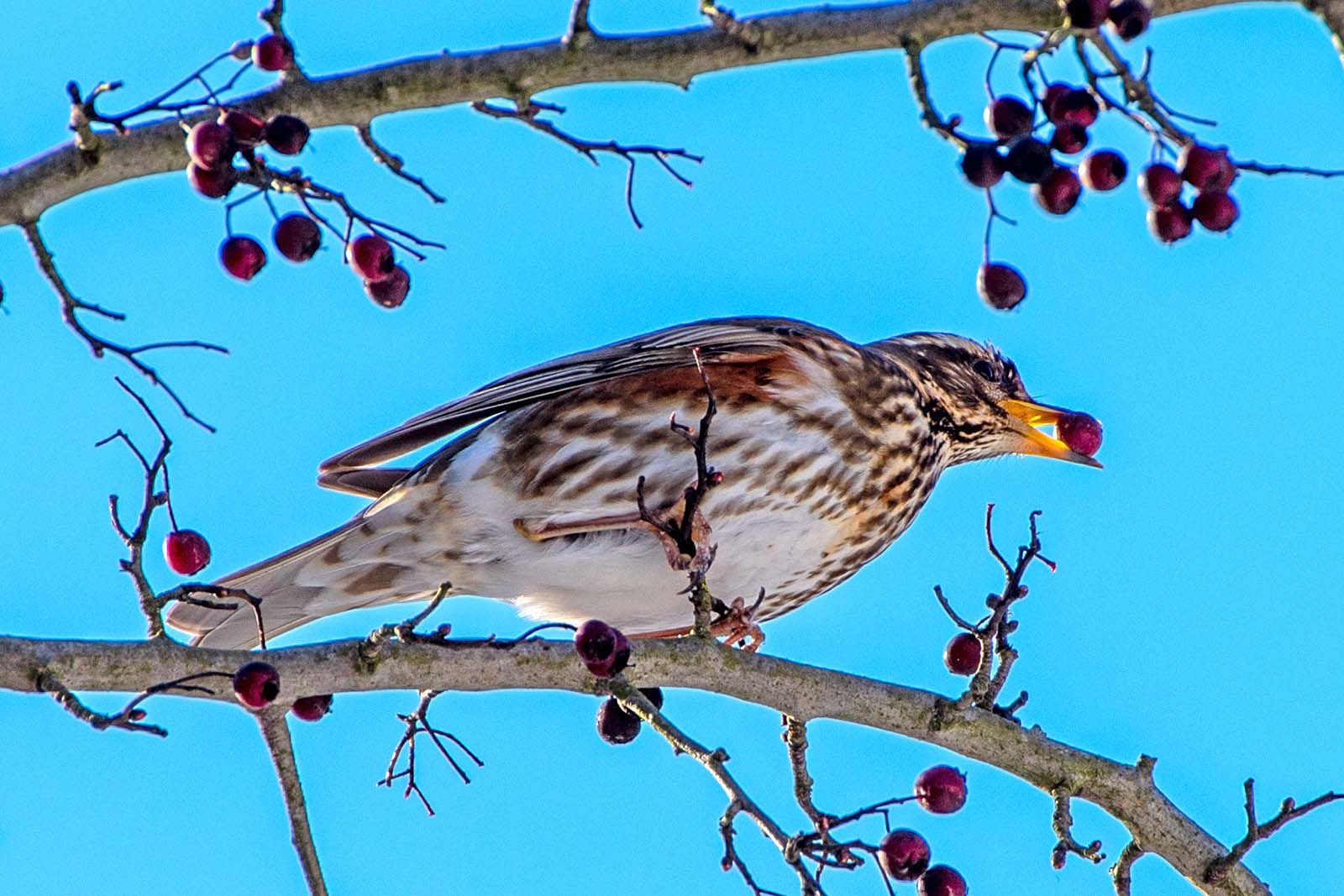
The mysterious call is from a migrating bird as it arrives above Ireland for the first time – redwings, deargán sneachta in Irish.
Tonight they’ll be arriving in their thousands again under the cover of darkness as they have done for thousands of years.
Redwings are thrushes which breed all across northern Europe in the coldest areas from Scandinavia to Siberia. But the ones that will tonight fly over our Belfast homes come from a completely different place – Iceland.
About 300,000 redwings breed in Iceland, and as that remote island has been separated from Europe for so long, the redwings there have formed into a different race – bigger and darker.
And while the European birds head for Scotland and England, and maybe on to France, Ireland is the sanctuary for those Icelandic birds.
They’ll dine on our haw berries in those few hedgerows that haven’t been ‘trimmed’. And they actually like open farmland – of which we have no shortage – where they’ll search for worms and insects. Unlike their fellow winter migrants the fieldfares, the smaller redwings will also join blackbirds in foraging on the forest floor.
Last year Dúlra watched massive flocks of them feeding in an orchard on the shores of Lough Neagh. For whatever reason, this orchard hadn’t been harvested and the thousands of apples had fallen to the ground, proving a feast of biblical proportions.
Last night as he heard that lonely sigh coming from the night sky, he knew many of them would be heading towards that same orchard. Dúlra will be heading there soon too, and just like the birds, hoping that the farmer forgot to get in the harvest once more.
A reader stopped at the beautiful Carraig Fhinn beach beside Donegal Airport and was stunned to see an otter running across the beach and diving into the Atlantic Ocean.
These are freshwater animals – they live in our rivers and lakes, not in the salt-filled sea.
However, they do sometimes head to the coast in mid-winter when the lakes freeze over.
This Donegal otter seems quite happy – in fact when you see the video, it looks like it's playing in the waves – diving into the sea. Of course, there will be no lack of food for it there – but it won’t be able to stay in the sea for long.
Sea salt to an otter is like kryptonite to superman – it permeates that thick fur coat, slowly weakening its waterproofing ability. So that Donegal otter – or madadh uisce, water dog in Irish, will have to head back inland before long, hopefully with a full belly.
If it doesn’t rinse itself in fresh, Donegal spring water, the salt will stick to the fur which will form into clumps. With winter coming, this otter needs to be in pristine condition!
• If you’ve seen or photographed anything interesting, or have any nature questions, you can text Dúlra on 07801 414804.