AS Fianna Fáil this year marks its 100th birthday, where does it stand on the issue of Irish unity? According to its Constitution, Fianna Fáil’s first aim is “To secure in peace and agreement the unity of Ireland and its people.” Very worthy, but has the party in or out of government during the last century actually done anything to achieve it?
Currently, while the conversation on unity is daily taking place, An Taoiseach Micheál Martin is seen by many as the greatest impediment to progress. When asked, he waffles and generally dissembles. He has also repeatedly rejected any suggestion that the Irish government should begin the work of planning for constitutional change. So, in short, Micheál Martin is opposed to planning for the unity referendums.

He frequently turns to the Shared Island Unit as a distraction to this issue. While some FFers point to it as evidence of his and their commitment to unity, his own Minister for Public Expenditure, Jack Chambers, told a meeting of the British-Irish Parliamentary Assembly last March that the Shared Island programme cannot be used to push Irish unity.
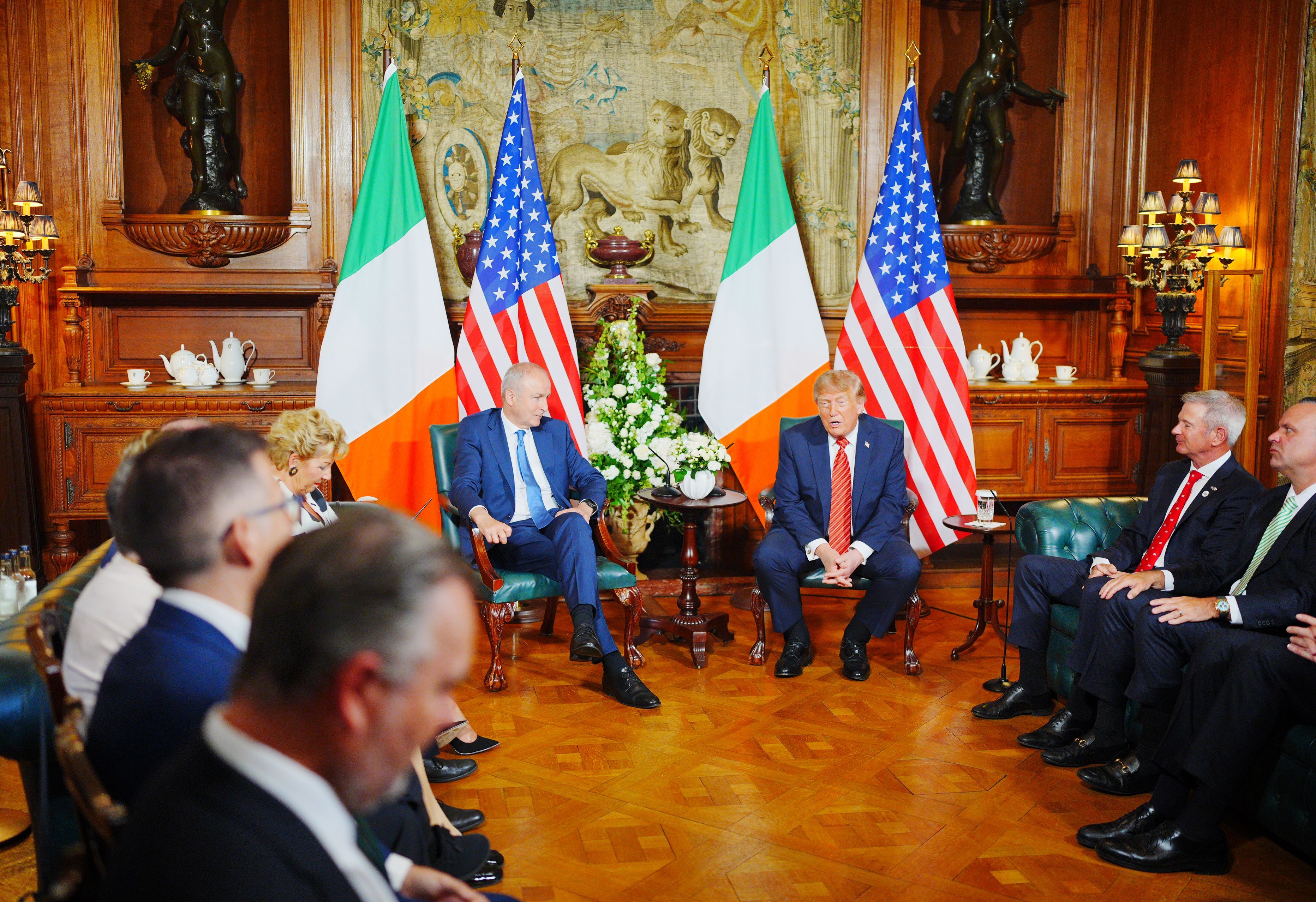
Two weeks ago Micheál Martin unexpectedly seemed to indicate a shift in his attitude when, in advance of a meeting with the British PM Andy Burnham, he said that there needs to be greater clarity about the conditions under which the unity referendum promised in the Good Friday Agreement would be called. Martin said that it was “not satisfactory” that the decision on the referendums should be left to a “judgement call” by the British Secretary of State for the North.
Of course, the Taoiseach knows that no British Secretary of State will make that decision. It will be taken by the British Prime Minister in conjunction with whoever the Taoiseach is at that time. The British Secretary of State is the enabler. He is not the decider. That is the realpolitik.
As it transpired, when the two leaders met last week in Manchester the Taoiseach bottled it. He didn’t do what he said he would. Why not?
No-one among the political parties, civil society groups, academics and individuals pushing the unity case is demanding unity referendums tomorrow. On the contrary, the call has been reasonable and responsible. It’s about preparing for unity. It’s about not making the same mistake the British made on Brexit. It’s about encouraging the dialogue needed to address all of the issues, including the place of unionists in a new Ireland. That is not irrational. It is makes sense.
But not, it appears, for Micheál. His choice of attack last week was his nonsensical criticism of the meeting between Sinn Féin, the SNP and Plaid Cymru. Winning the case for a date to be set for the unity referendums, winning those referendums when they are called, requires not just convincing the electorate North and South, it also means winning international support for that outcome. Including support in Britain. That’s the work also of the Irish government. but sadly, under Micheál Martin’s leadership it’s not happening.
Andytown News Irish columnist latest chapter in a proud story
I CONSIDER it a great honour for me to have a column published by the Belfast Media Group. I don’t know how many people pay heed to my musings but I am grateful to have a platform to write about whatever takes my fancy. That's what the Andersonstown News and The Irish Echo do. They provide an alternative viewpoint to the line promulgated by the establishment media. An inclusive, community-based response.
You don’t have to agree with the editorial line all the time, but I for one, and many many others, have an affinity with our Andytown News that we will never have with other newspapers. A newspaper of its own is a mighty asset for any community to have.
It was particularly so when this community was denied a voice. Belfast Media back issues give an insight into all the twists and turns of over fifty years of our recent history.
As well as a record of events and developments that were ignored by other media. That voice is still necessary and important today. The Belfast Media Group have also been central to other progressive iniatives over the decades.
So, well done to all involved. From the original pioneers who founded the paper, to the modernisers who brought it to its current standards, to those, despite all the challenges, who continue to produce this fine periodical week in and week out. A mighty achievement especially these days when the print media is under pressure everywhere.
From the very beginning, as in most of our local civic and societial advances, Gaels and Gaelgeoiri were involved. So it is great that The Andersontown News/ North Belfast News/belfastmedia. com now has its own dedicated Irish language journalist.
IRISEOIR: Aodhán Ó Baoill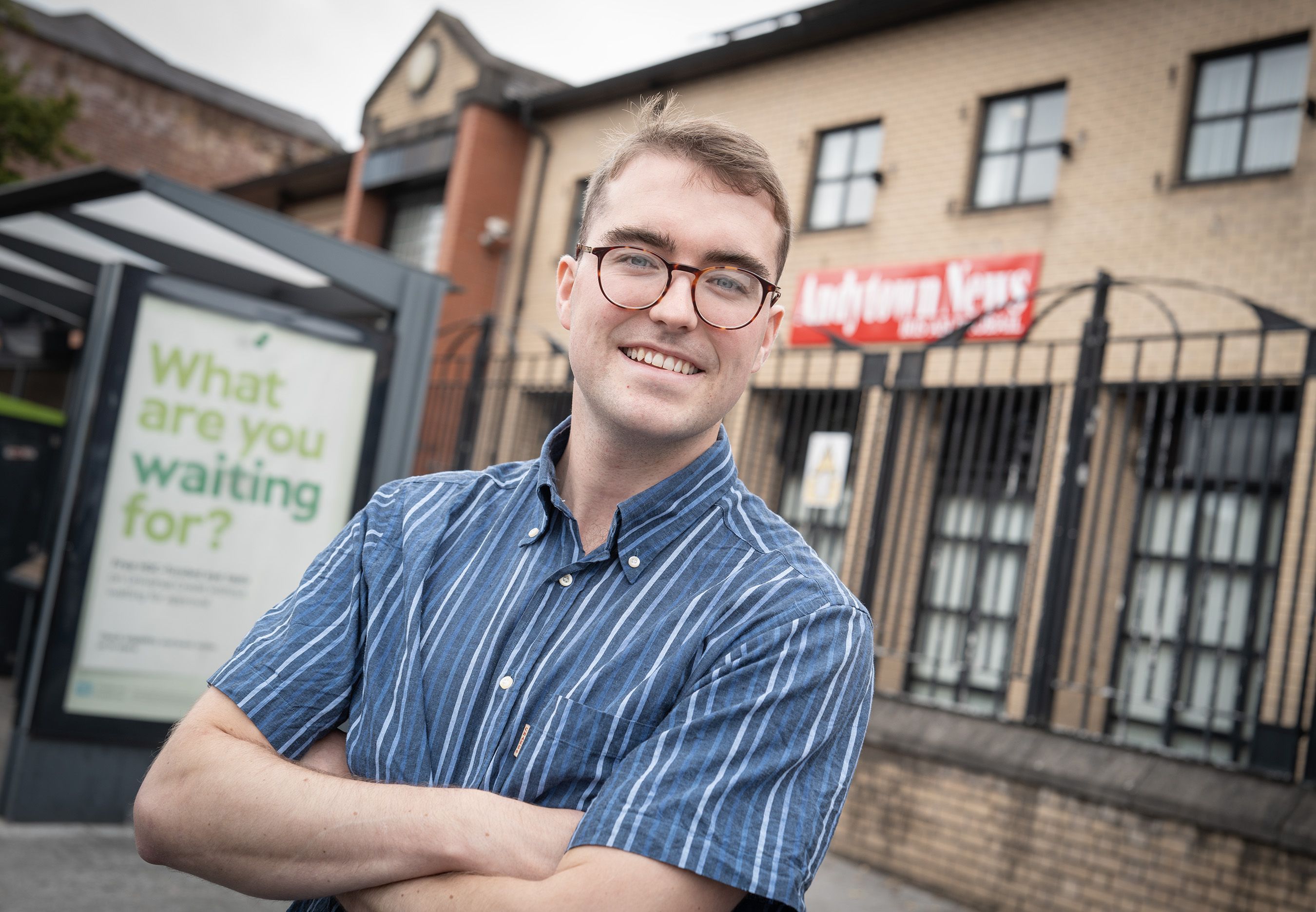

Aodhán Ó Baoill took up that post a month or so ago and the Irish language content is already a wonder to behold. It is comprehensive, very readable and in keeping with the spirit which gave us Lá in the mid-1980s and Ráidió Fáilte, which continues to grow to this day.
Well done to Coimisiún na Meán for their support, well done to the Belfast Media Group, and in particular Máirtín Ó Muilleoir and his co-leaders. Especially well done and good luck to Aodhán Ó Baoill.
Comhghairdeas, buíochas agus ádh mór ortsa.
A state of fear
IMAGINE if at any point during the decades of conflict the RUC and British army had invaded Ballymacarrett/Short Strand in East Belfast and forcibly evicted its residents and systematically destroyed every home, shop, school, Saint Matthew’s, and tore up the roads, sewage and water infrastructure. Imagine too if this policy had been applied to other nationalist areas like Crossmaglen or the Bogside.
This is the reality of life for the Palestinian people of the West Bank at this time. A new report by B’Tselem – an Israeli human rights organisation – is a damning indictment of Israeli aggression and apartheid against the Palestinians. It records, in its detailed 200-page report entitled ‘The Elimination Project’, that as of June this year 64 Shepherding communities have been forcibly expelled from their homes. In the last 20 months the Israeli military has also displaced 33,000 Palestinians from the Jenin, Tulkarm and Nur Shams refugee camps. It destroyed homes, buildings and infrastructure.
The Elimination Project identifies five mechanisms being employed to “dismantle Palestinian collective existence”. These are violence and intimidation; ethnic cleansing and territorial takeover; movement restrictions; economic strangulation; and social and political destruction.
The result is that since October 2023 and up to last month, Israel had killed 1,107 Palestinians in the West Bank, including 245 children. Seventy-five Palestinian communities have been forcibly removed while settler farms and outposts have taken control of 18 per cent of the West Bank. Using some 925 movement obstacles, including checkpoints, gates and roadblocks, Israel is making movement by Palestinians almost impossible.
Israeli policy is also strangling the Palestinian economy, with unemployment increasing from 13 per cent three years ago to over 30 per cent now. And through raids, mass arrests and the closing down of civil society offices, it is suppressing opposition and protests.
The reality is that as Palestinian communities are being expelled and the economy verges on collapse, the Palestinian people of the West Bank are living in fear.
While the recent decision of 12 states to support or consider supporting sanctions on trade in goods with Israeli settlements on Palestinian land is welcome, the decision, like that of the Irish government, doesn’t go far enough.
As the B’Tselem report makes clear, the actions of Israel, its military and settlers in the West Bank are not individual incidents that require individual responses or “piecemeal policy changes.” Taking action, however minimal, against Israeli products coming from illegal settlements is not enough. Disjointed and occasional actions by western governments will not end the apartheid, violence and the forcible expulsion of Palestinian families and communities. Nor will they end Israel’s genocide against the people of Gaza.
Much more is needed. Effectively challenging Israel’s multiple human rights abuses requires an international response which takes a stand against all aspects of Israel’s human rights violations.
The Irish government has a moral and legal obligation to do everything in its power under international law to end Israel’s criminal policies and to protect the Palestinian people.
The B’Tselem report is available online at btselem.org//