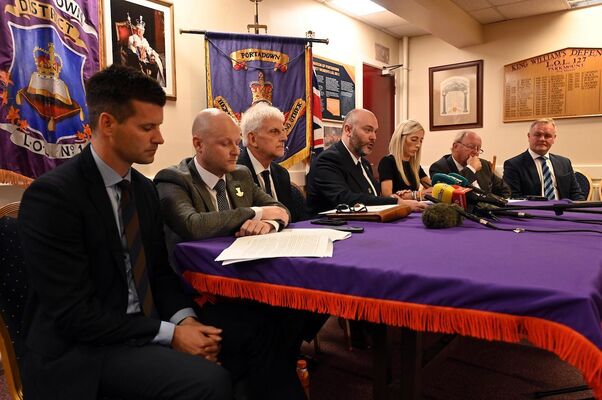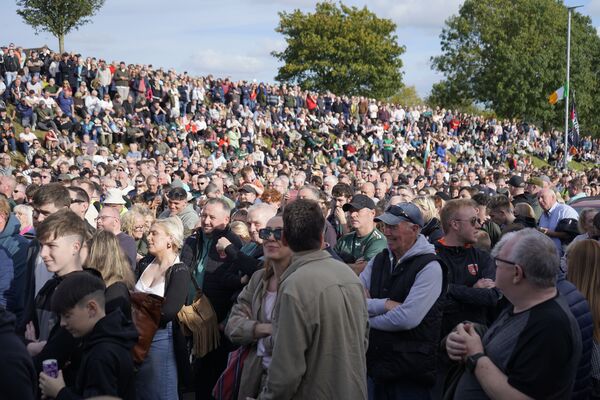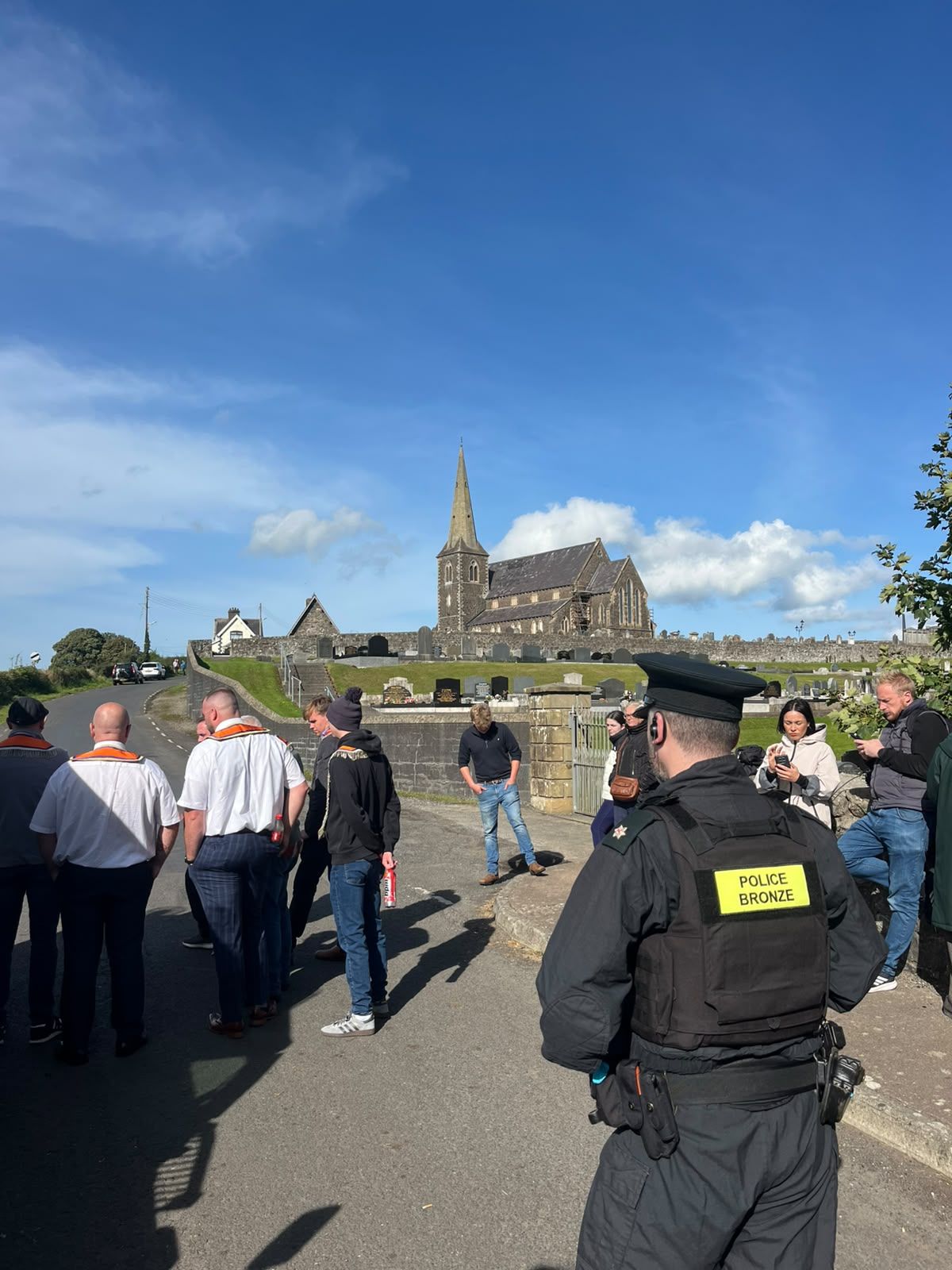
AS I write this column the situation on the Garvaghy Road is no closer to resolution. The Orange Order wants to walk through a nationalist community. The residents say no.
Outside of political unionism there has been widespread anger and shock at the decision of the Parades Commission to make a determination to facilitate that march. In July the Commission had said no to a march. What changed? If it was wrong for the Orange to march in July, or for the past 28 years, why is it okay in September? The Commission needs to explain this. Clearly and publicly.
The PSNI also needs to publish and explain its advice to the Parades Commission. The PSNI Chief Constable has a case to answer.
So too with the British Secretary of State. Flying in from Wales to his castle here to treat us to meaningless NIO double-speak is insulting to us all. Including the Orange. The sooner we get the British government out of our affairs the better. But in the meantime let’s try not to get too angry at the usual NIO-scripted PR platitudes and patronising soundbites.

I was on the Garvaghy Road thirty years ago during all those dark days. I was back on Sunday. Fair play to the folks there, to the Residents’ Coalition and its leaders and to all who made a stand in support of the people of Garvaghy Road. Very well done.
This support is a deep and fundamental rejection of any suggestion that nationalists, or anyone else here, are inferior, second class citizens. The Good Friday Agreement reflects this. And the Drumcree events of the 1990s.
In the Agreement the British and Irish governments affirm that the British government, which currently has jurisdiction in the North, would exercise “with rigorous impartiality on behalf of all the people in the diversity of their identities and traditions and shall be founded on the principles of full respect for, and equality of, civil, political, social and cultural rights, of freedom from discrimination for all citizens, and of parity of esteem and of just and equal treatment for the identity, ethos, and aspirations of both communities.”
The principles underpinning this were spelt out in the Human Rights section of the Agreement and are cognisant of the “the recent history of communal conflict...”
• The right of free political thought;
• The right to freedom and expression of religion;
• The right to pursue democratically national and political aspirations;
• The right to seek constitutional change by peaceful and legitimate means;
• The right to freely choose one’s place of residence;
• The right to equal opportunity in all social and economic activity, regardless of class, creed, disability, gender or ethnicity;
• The right to freedom from sectarian harassment; and
• The right of women to full and equal political participation.
These are all fundamental human rights and freedoms, principles that the governments, political parties, individuals, communities and institutions, like the Parades Commission have a duty to uphold. The citizens who took a stand last weekend, including the First Minister Michelle O’Neill and the other political leaders on Garvaghy Road, fulfilled this duty. Thank you.
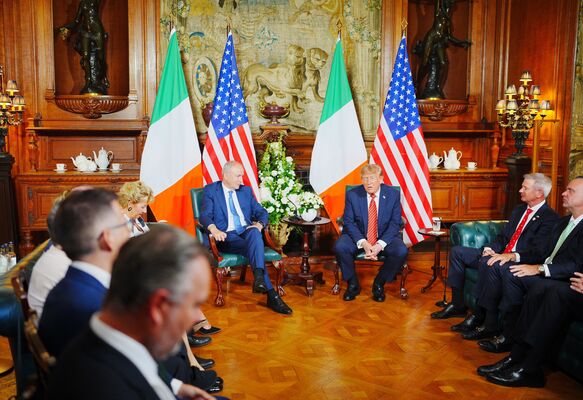
There is a responsibility on the Irish government to stand by the Good Friday Agreement. An Taoiseach needs to make it clear that there should be no Orange march on the Garvaghy Road unless the people there agree to it. If for reasons known only to himself, he does not want to do this then at least he needs to make this clear privately to London.
And the Portadown Orangemen? Get real, my friends. There are thousands of Orange marches. They pass undisturbed. There are alternatives to marching down Garvaghy Road. Use your head. The presence and the outstanding contribution by musicians from the Orange tradition at Fleadh Cheoil na hÉireann in Belfast in August is the future.
Embrace it. It is your future too. The DUP are in election mode and looking for distractions from their own difficulties. The outcome of that will be clear after next May’s elections. They are also trying to undermine support for the growing campaign for an end to the union. A diversion into sectarianism has for long been a tactic of unionism to rally their support. That won’t work this time.
For our part we need to ensure that Michelle O’Neill is returned as First Minister along with the largest possible number of pro-Good Friday Agreement candidates. In the meantime, let’s all stay calm. Anger might be justified. But it’s not a strategy. Let’s stay focused and resolute. And peaceful. The days of Orange supremacy are over. There is no going back. Those who gathered on Garvaghy Road are the guarantors of that.
Imminent Irish budget must make provision for Palestine
IN 2009 I visited the Gaza Strip. The Israeli siege of the Palestinian territory had been going on for around four years. Gaza was at that time the largest open-air prison in the world. Twenty-one years later and it has been blasted beyond recognition by Israel and is now the largest concentration camp in the world. An estimated 75,000 Palestinians are dead, including over 20,000 children. Thousands more lie buried beneath the rubble.
The genocide began three years ago next week. The anger of many in the world at Israel was witnessed last week in the United Nations when many of the delegates walked out when Benjamin Netanyahu got up to speak.
To its shame the Irish government chose to stay. Later in his speech Taoiseach Micheál Martin told the General Assembly that “when the full truth of what has happened – what is still happening – in Gaza is finally known, when the evidence is gathered, when the testimonies are heard, when the true horrors are finally and fully revealed, it will shame the world. Nobody will be able to say that we did not know. Let it not be said that we did not act.”
He was right, and he was wrong. Right in that so many governments, and the EU institutions, have failed to act against Israel’s genocide. Wrong in that the Irish government refused to take the strong action needed to hold Israel to account. Its watered-down version of the Occupied Territories legislation is a case in point.
The genocide is not the past. It is the present. It is continuing every day. Essential humanitarian aid is being blocked by Israel. The attacks on the Palestinian people in the West Bank are escalating. The determination by Israel to block the two-state solution is plain for all to see. Two weeks ago Gaza’s Ministry of Development called urgently for 200,000 tents and 300,000 weather-resistant tarpaulins to replace temporary shelters that have deteriorated so badly that families are increasingly exposed to the exigencies of the weather. The United Nations assesses the number of people needing shelter at almost two million.
If you want to help, find a responsible agency that works in the Palestinian territories, like UNICEF and make a donation – unicef.org.uk/donate/
As it prepares its upcoming budget the Irish government should increase its aid efforts and specifically help to meet the urgent need for tents and weather resistant tarpaulins. Between now and December the Irish state holds the Presidency of the Council of the European Union. It should use this opportunity and its influence to also increase EU aid for the people of Palestine.
Reunification
ONCE upon a time elites ‘read the runes’ as a way of foretelling the future. For some it was about interpreting symbols carved into stones or bones. For others it involved reading the entrails of animals. The practice is called haruspicy and it was about predicting the future.
Today, we have opinion polling to discern the mood of people and their likely attitude to specific issues, mostly but not exclusively in respect of elections.
Hardly a week goes past without a media broadcaster, newspaper or academic institution producing an opinion poll. I have a healthy scepticism of polls. Long experience North and South has led me to question their accuracy, especially when looking at the Sinn Féin vote. However, they can be a useful barometer of the public mood at a given time and of possible emerging trends.
Opinion polls have also focused on the related issues of Irish unity and a referendum on Irish unity.
Last week the Irish Times published an opinion poll conducted by itself in co-operation with IPSOS B&A, which describes itself as one of the world’s leading market research companies. The poll claimed that over two thirds of voters in the South – 70 per cent – were strongly in favour of progress on Irish unity. A similar number – 68 per cent – also believed that the government should prepare now for unity. A significant majority – 57 per cent – want to see referendums on Irish unity by the decade’s end.
Not surprisingly the issue of the cost of reunification is a concern for some and there are also concerns around the issue of the flag and the anthem. However accurate this poll might be, it does reinforce the widespread common sense view that the Irish government should begin planning for unity. Conversation will help address all of these issues and facilitate agreement. It’s time Micheál Martin stopped blocking this sensible approach.