An authoritative tome on the Fenian movement of America which spotlights the role of Black volunteers in this late-19th Century revolutionary movement, is, of course, a must-read for aficionados of Irish history.
But when the author is actually an Irish speaking American immigrant who has made Belfast his home — a latter-day, reverse-ferret fenian, a tabloid headline writer might suggest — then the work deserves pride of place in the front window of every bookshop in any city where green is worn.
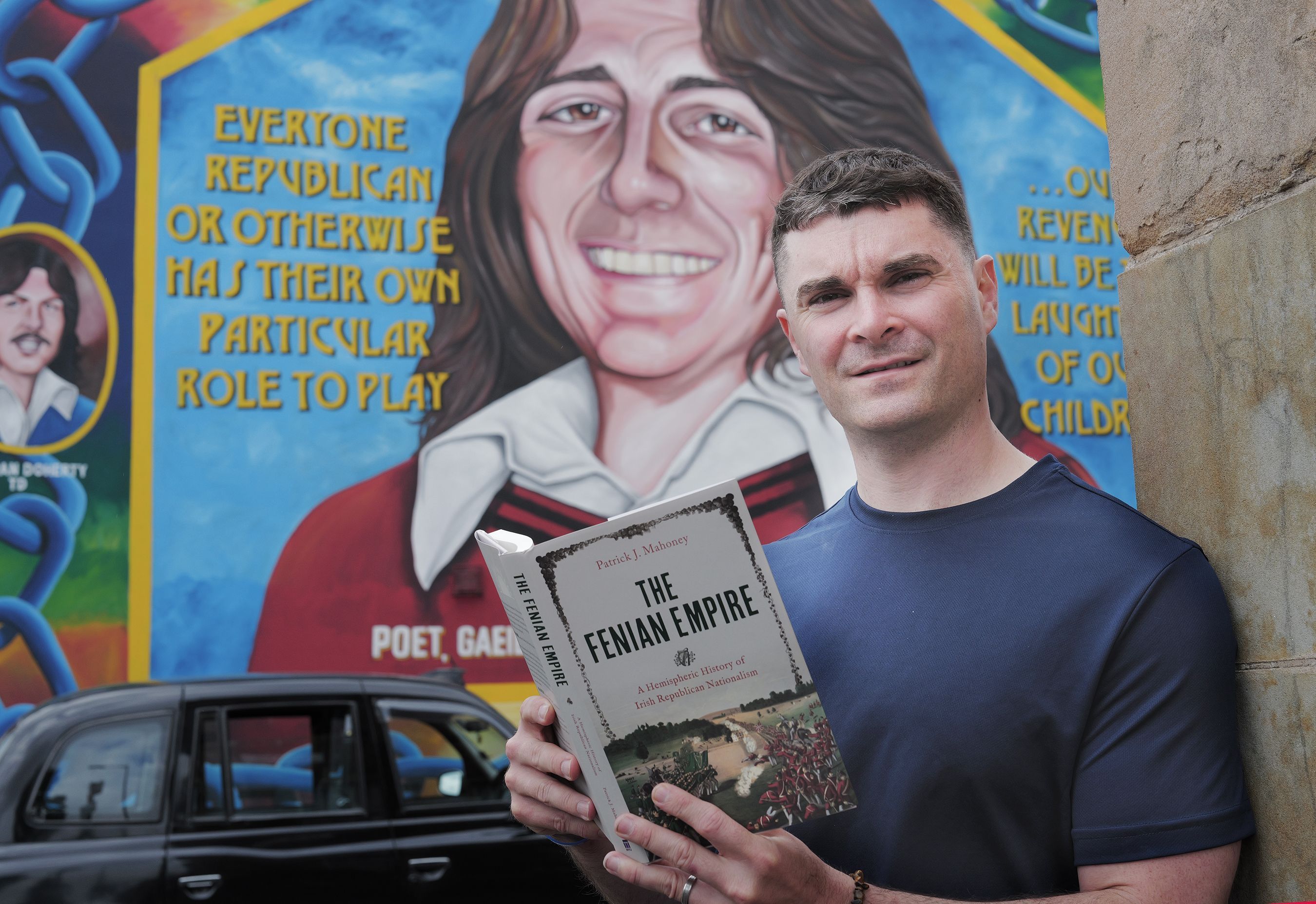
So it is with 'The Fenian Empire' by Patrick J. Mahoney.
Mahoney — Pádraig Ó Mathúna to his West Belfast besties — is a Connecticut native who could speak Irish fluently before he ever set foot in the Gaeltacht Quarter, taking his first language lessons from a former Long Kesh prisoner. Over recent years and moved to West Belfast, he has graced us with compelling books, including a repackaged Western thriller in Irish penned in the US at the turn of the last century.

But with this revelatory exploration of the Fenian movement which, for the first time, gives adequate respect to original archive materials in Irish and in Spanish, Mahoney has moved up a gear.
His clear prose, sympathetic approach and genuine passion for the subject — after all, not every author journeys to far-off Havana to trawl the archive of the Cuban National Library in order to inform their research — gives us a new understanding of this faithful band of patriots.
And what a band of brothers they were - many of the Fenian officers had been born in Ireland and fled post-Great Hunger while their ranks were filled with the sons of those who had been hurt out of Ireland. Both those cadres had fought with distinction for the Union Army in the American Civil War, emerging battle worn and raring for a fight against the old enemy.
To their credit, these heroic Fenians of An t-Oileán Úr never forgot their promise to free the subjugated land they had left behind.
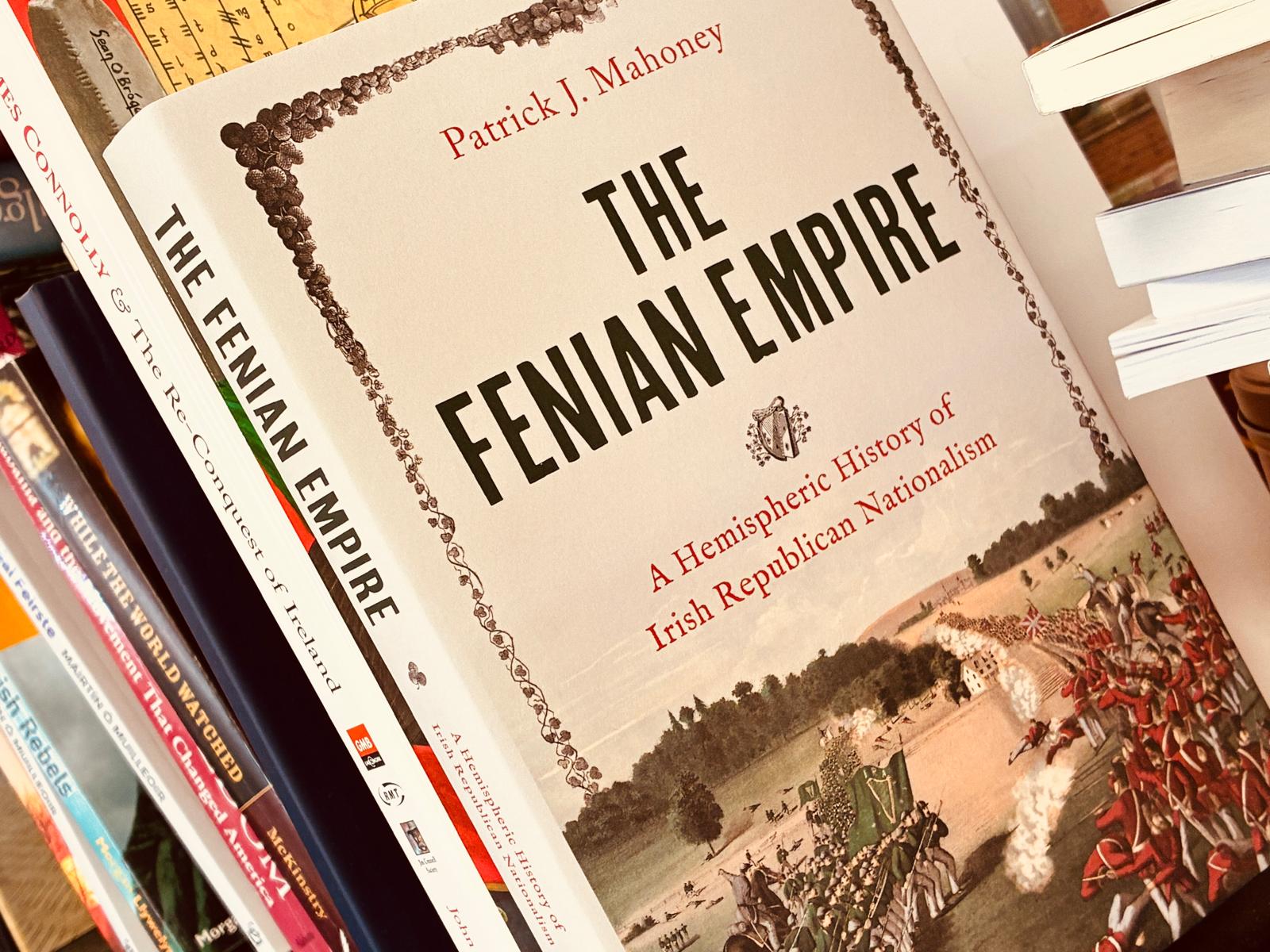

Sadly, however, as Mahoney relates, they also fell foul to politicking and the devils of division. In fact, there were two Fenian Movements in America, not one, and both were easy prey for informants and fantasists. That said, the Fenians did prevail over British forces at the Battle of Ridgeway of 1866 when they crossed into Canada with the wild, or some might say utterly sensible idea, of pressurising the English by capturing their dutiful dominion in the Western Hemisphere. While that ill-fated foray came to nought — not least because the American Government wanted no part in another war with England — that didn't prevent visionary Fenians from plotting fresh revolts.
Sadly for poor old Erin, however, Fenians plotting the invasion of Canada, or of Cuba to oust Spanish overlords, or of Mexico either for or agin European monarchists, required deploying resources and energy to peripheral causes. As a result, the eye wandered far from the prize of Irish freedom.
But it also led the Fenians into unusual and unexpected alliances - chief among those was the collaboration with the freed slaves who rallied to Ireland's call. Mahoney introduces us to the aptly-named Ira Garrett, a gutsy black porter, who joined the Fenians "after hearing of Ireland's plight from his Irish employer" in Chicago. The author also transports us to Cincinnati on St Patrick's Day 1871 when the all-Black Second Ohio Militia Battalion led a procession honouring a Fenian ex-prisoner.
This short-lived green and black alliance will surely go down as one of America's historical what-ifs. For, like much of the Fenian project, this putative partnership was short-lived — though perhaps we can see its echoes in the Rev. Jesse Jackson becoming, in 1984, America's first Presidential candidate to put a United Ireland in his manifesto.
With its original research and unique eye, this account demonstrates how Fenian fealty to the laws of their new country, which had given them freedoms unimaginable back in Ireland, was always in conflict with the objectives of a secret army hell-bent on launching a transatlantic revolution. And of course there was also the push-and-pull inherent in the immigrant experience of searching for work and assimilating into the American melting pot. Which was more important, putting food on the table for a Fenian homestead in the windswept Great Plains or in the Jungle stockades of Chicago as the evening shadows fall, or agitating for the freedom of far-off Ireland?
History answers that question.
But history also tells us that the Irish of America never gave up on the dream of Irish freedom. The truly faithful kept the flame alight, providing resources to fuel rightful Irish rebellion and offering sanctuary to its fleeing fighters — one of whom nurtured the young Mathúnach. More recently, Irish America gave succour to Ireland's academics and poets, making America's top universities hotspots of academic research on Ireland's past. Deane, Heaney, Muldoon and Meehan are just some of Ireland's famous scribes who honed their trade in America, to the benefit of both countries. With the publication of The Fenian Empire, let's add to their cross-pollinating number Pádraig Ó Mathúna, an author who has made the return journey and, with this memorable offering, opened up a new chapter in the story of transatlantic fenian brotherhood.
'The Fenian Empire: A Hemispheric History of Irish Republican Nationalism'. Patrick J. Mahoney. New York University Press. Available from An Ceathrú Póilí in An Chultúrlann, Falls Road, Belfast.