The BBC's cuts to its Irish language unit have been criticised by high-profile figures from across the north, as the controversy continues to unfold.
Earlier this week, a petition was launched calling on people to publicly cancel their license fee "in response to the despicable attacks announced by the BBC and the detrimental impact this will have on the company's Irish language services and staff".
President of Conradh na Gaeilge Ciarán Mac Giolla Bhéin said that the BBC, "seems to be becoming an increasingly hostile space for the Irish language".
"They have no Irish language corporate policy," he said. "They have no dual-language signage on their premises. They have an embarrassingly small library of content for young people and families. They have no Irish language radio station.

"And now they are disproportionately targeting Irish language jobs and reducing an already reduced team. BBCNI will only have two Irish language staff amongst their 650 workforce. Live Irish language output will be decimated as a result of these cuts.”
Speaking in Irish to the Andersonstown News this week, Deputy Chief Executive of Fóras na Gaeilge and former producer with BBC Gaeilge, Conall Ó Máirtín, said that he was hugely disappointed with the news.
"My first thought was one of huge disappointment, and surprise. I couldn't believe how bad the suggested cuts were," he said.
"We knew that bad news was on its way one way or the other in the BBC more generally, and in the north as well, but I never thought that BBC Gaeilge would be touched.
"Why did I think that? Well, I always knew how important BBC Gaeilge is for culture and language here in the north, and I didn't think the BBC would want to damage the incredible progress and normalisation of the language, and the development of BBC Gaeilge."
He said that the cuts were "shocking" especially considering the "growth in population and of Irish speakers in the north".
"You'd think in the current climate that the BBC would want to broaden its outreach of programmes made in Irish. That it would want to provide for the children who are coming through Irish-medium schools in the north, and that it would want to support learners who want to return to the language and need more resources.
"This is a missed opportunity to make more resources available for the BBC, and so we are very disappointed."
Mr Ó Máirtín said that Fóras na Gaeilge have made submissions to the Department for the Economy in the North, and to the Department of Culture, Media and Sport in London regarding BBC's Royal Charter, which sets out the corporation's mission, public purpose, governance and funding. The Charter is currently undergoing a review process and is due to be renewed at the beginning of 2028.
"We have requested that there will be a place for Irish and equality for Irish. We would like funding to be at the same level as BBC Alba and BBC Cymru.
"We want a plan laid out and a broad discussion with the language sector here in the north, and for the role of Irish to be recognised in any Charter published by the BBC in the future."
The Irish Language Commissioner for the North, Pól Deeds, expressed his growing concern after news broke of the BBC cuts.
"It is a cause for concern for me that there are proposals to reduce the internal resources of the BBC's Irish language unit. Irish language broadcasting plays an important role in ensuring that Irish is seen, heard and used as part of everyday life in Northern Ireland.
"The opportunities to hear the language through news, current affairs, sport and entertainment are hugely valuable, especially for a minority language," he continued.
"They help to create a space in which speakers can take part in public life through Irish; and at the same time they inform new viewers and listeners about Irish, they strengthen the confidence of people who use Irish, and they ensure that existing progress continues, with supports given to Irish as a living language."
Although saying that he does not have a "remit" for the media regarding his best practice standards as Commissioner, he said that his contribution is his "own opinion on an issue which has a significant impact on Irish and Irish speakers in Northern Ireland".
"I would strongly recommend that the needs of minority language audiences, and the longterm consequences that there could be for Irish, are considered in full, and that any decisions to reduce core-services in the BBC are reviewed."
Eoghan Ó Néill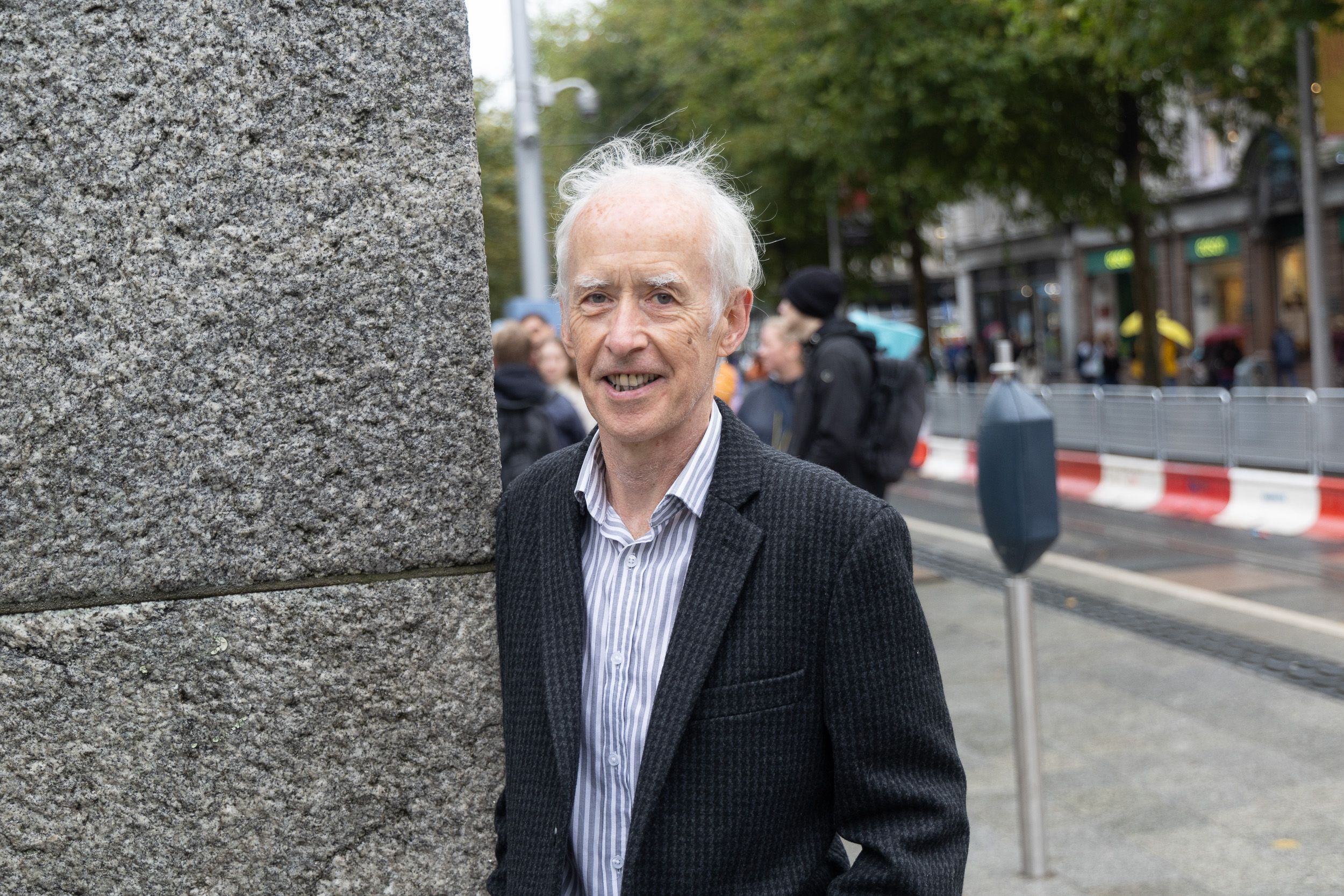

Founder of Raidió Fáilte, Eoghan Ó Néill, said that calls for the BBC to provide more services in Irish go as far back as the 1930s.
"In 1936, Comhaltas Uladh began calling on the BBC to provide Irish language programmes for schools," he said.
"Irish was banned on the BBC from 1924 to 1981. There wasn't a single Irish language programme. And it was banned. It was made known that that sort of programme wouldn't be welcome on the BBC," he continued.
"A pressure group called Gaeil an Tuaiscirt was founded in 1980," he recalled. "They collected thousands of names on a petition and presented it to the BBC. They had meetings with the BBC and called on them to change policies regarding Irish."
Eoghan said that the group continued meeting with the BBC and from autumn of 1981 onwards, the BBC agreed to provide fifteen-minute Irish language radio programme once a week, called 'Anois.' The renowned poet Paul Muldoon produced the programme, and it was presented by Gearóid Stockman.
"A group called Meán came together in September of 1984," said Eoghan. "The advantage of this new campaign was that the BBC were celebrating sixty years of broadcasting in Northern Ireland."
The group organised several protests, including running the motto 'Auntie Beeb is anti-Irish'.
"The campaign was short and sweet. We put out statements regularly and had a very well organised publicity campaign," said Eoghan.
"The most significant thing that came out of Meán's campaign was that we said that the BBC are not willing or able to provide proper Irish language services, so we're going to found our own radio station, Raidió Feirsteach.
"The BBC have again shown this week that they are not interested in providing, or cannot provide, an Irish language radio station."
Fellow pioneer of Irish-language radio in Belfast, Fergus Ó hÍr, has now called for Raidió Fáilte – which developed from Raidió Feirsteach – to be permitted to broadcast across the north.
"This issue of the Irish language unit in the BBC has caused a lot of anger," continued Eoghan. "It's a bad sign that you have to pressure broadcasters to provide services to those who pay their licenses.
"If they're not doing it, we'll do it ourselves. That's how Raidió Fáilte started. We didn't want to found a radio station, but when we realised we had to because the BBC weren't interested, then we did it.
"This week is proof that we cannot depend on the BBC. They never demonstrated any appetite for this, and that meant that we were filling the role that in reality the BBC should have had," he continued.
"Raidió Fáilte is testament to the fact that the BBC were never interested in providing an Irish language radio station. It was founded to pressure the BBC to provide Irish services. They didn't, they aren't now, and they probably won't ever.
"We have to ask why? What is wrong with providing for a section of the community who have all these stories to tell?"
Roisín Nic Liam, who lives in Belfast, has added her name to the petition refusing to pay TV licenses until the BBC provides proper Irish services.
"This is the same old story from the BBC," she said, speaking in Irish to the Andersonstown News. "It shows that Irish speakers in the north still don't have full equality. We still have a long road to go.
"Irish speakers are taxpayers. But despite this the services that we deserve are still being denied. This is a small personal strike to stand our ground in solidarity with the workers who have lost their jobs.
"It's so frustrating. We know that if you look at Scotland and Wales there are much stronger services for minority language speakers there from the BBC. This is another example of Irish speakers in the Six Counties not being treated the same."
A BBC spokesperson said that the corporation "remain fully committed to BBC programmes and services in Irish and want to develop them further.
"Our plans are intended to deliver increased Irish language output on BBC Radio Ulster/Foyle and to develop new ways of working with the independent production sector – reflecting equivalent arrangements for BBC television programmes in Irish," they continued.
"We know that these changes are difficult for the BBC staff involved and will want to work closely with them on this transition and in identifying new opportunities for BBC services in Irish.”
The spokesperson said that a "significantly increased percentage of Irish language programming (across the BBC’s radio and digital platforms, including learning resources) will be sourced from the independent sector, with a consequent reduction in BBC staffing in this area.
"BBC expenditure on Irish and output totals on BBC Radio Ulster/Foyle will remain unchanged. And these plans include the retention of senior in-house staff roles for Irish language services and their integration within a single, cross-platform strategy."