THE NI Executive should do more to encourage and promote Irish, a new survey has found.
The Northern Ireland Life and Times survey (NILT) has shed more light on attitudes to the Irish language amongst voters in the north. The 2025 NILT survey was carried out between 26 September and 14 December 2025. 1,244 adults aged 18 years or over took part. Those who took part were asked questions on a range of topics, such as Artificial Intelligence, Community Relations and Gender-based Violence.
Voters were also asked several questions around Irish and Ulster Scots.
Over 50 per cent of those surveyed believe that Irish adds to the richness and diversity of the north. 18 per cent said that they neither agree or disagree with that statement, with 11 per cent disagreeing and 12 per cent strongly disagreeing. Two per cent indicated that they don't know.

Over 50 per cent also agreed that learning Irish in the school curriculum is beneficial for children at school. 23 per cent strongly agreed with that, with 22 per cent agreeing. 21 per cent neither agreed nor disagreed, with 17 per cent disagreeing and 15 per cent strongly disagreeing. Again, two per cent indicated that they don't know.
Again, over half of those surveyed said that the NI Executive should be doing more to encourage and promote Irish in Northern Ireland. 25 per cent strongly agreed with that, and 20 per cent agreed. 21 per cent neither agreed nor disagreed, with 16 per cent both disagreeing and strongly disagreeing, and 'don't know' again coming in at 2 per cent.
22 per cent of voters responded, 'yes' or 'yes to some extent' to the question, 'Would you describe yourself as someone who speaks the Irish language?', with 41 per cent saying that they would be very interested or somewhat interested in learning or improving Irish language skills in the future. Voters were given a range of options when asked about methods of learning Irish, from formal and informal education, to podcasts, phrasebooks, and visits to the Gaeltacht.
'Informal education,' was the most popular answer to that question, at 68 per cent, including community classes, language cafés, or local courses. Online courses, learning apps, and visits to the Gaeltacht were also popular in that category.
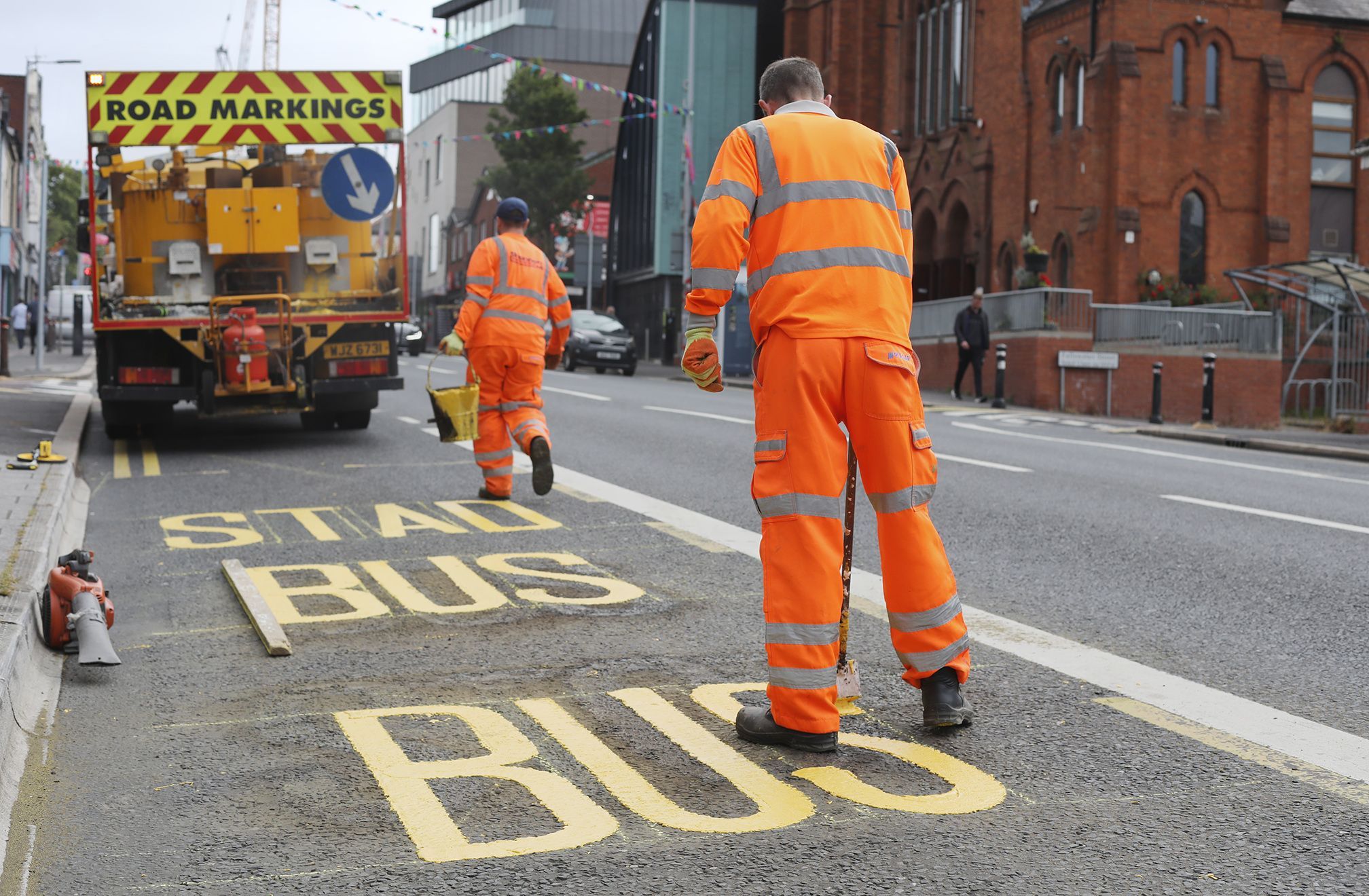
40 per cent of those questioned indicated that they would like to see more Irish being used today, in public, official documents, street signs and TV/radio. 21 per cent indicated they would like to see or hear about the same as now, with seven per cent indicating a little less and 22 per cent a lot less. Ten per cent said they didn't know.
In terms of identity, 27 per cent of respondents indicated that Irish was very important or fairly important to their own identity. 24 per cent indicated that it was neither important nor unimportant, 11 per cent said it was fairly unimportant and 37 per cent said it was very unimportant. One per cent said they didn't know.
The full survey results can be read online on the Northern Ireland Life and Times Survey's website.