WHATEVER the verdict from this week's court challenge against the iniquitous decision to allow an Orange march down Garvaghy Road — and at the time of writing, no ruling has been handed down — one thing is clear: our hard-won peace will be defended.
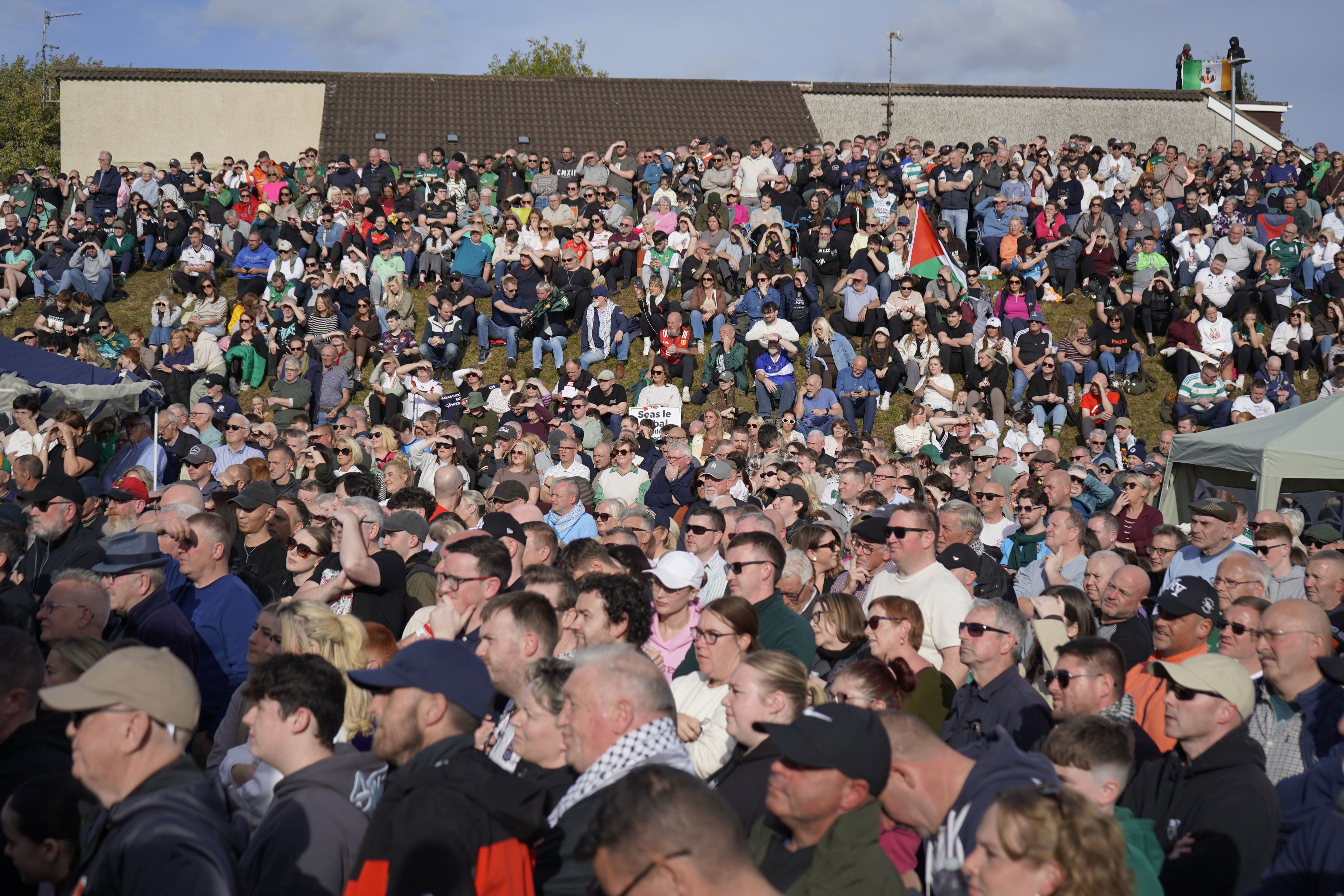
The turnout of protesters on the Garvaghy Road this past Saturday, in solidarity with the besieged residents, was, arguably, the biggest civil rights demonstration in the North since the rent and rates strike of 1971.
Noteworthy was the number of young mothers with children in prams who turned out for Saturday’s protest — probably the first political act of their lives — a sign that the danger to the peace is recognised not just by those who lived through the Drumcree crisis of the nineties but of the younger generation also.

It is worthwhile to quote the tendentious police statement directed at these civil rights defenders: “Anyone found to have broken the law will face criminal justice consequences.”
To brand civil rights heroes from every art and part of Ireland as “criminals’’ not only brings to mind Margaret Thatcher's clueless comments that "a crime is a crime is a crime", they illustrate the gulf between the PSNI and the nationalist community.
There were no masks worn by those who took a stand on the Garvaghy Road on Saturday — unlike the masked men who stood beside DUP MP Carla Lockhart in a recent loyalist protest against pro-Palestinian marchers – and so those attending were making no effort to avoid the consequences of their actions should the PSNI dare to treat them as criminals. More than that, it was a statement of pride in their stand.
In a recent Raidió na Gaeltachta interview, residents' spokesman Breandán Mac Cionnaith said he is content to be the first person put in prison if that is what is needed to prevent this Orange mach along the Garvaghy Road. This paper has no doubt but that the multitudes on Garvaghy Road would gladly join him in order to defend the peace.
Therefore, if the Drumcree shadow of sectarianism is still to hang over our political discourse in the days ahead, let us not talk of lawbreakers or criminals, but instead take great succour in the stance and words of that greatest of civil rights leaders, Martin Luther King.
In his letter from Birmingham Jail, MLK said to his critics: “You deplore the demonstrations that are presently taking place in Birmingham. But I am sorry that your statement did not express a similar concern for the conditions that brought the demonstrations into being.” He went on: “Let us all hope that the dark clouds of racial prejudice will soon pass away and the deep fog of misunderstanding will be lifted from our fear-drenched communities and in some not too distant tomorrow the radiant stars of love and brotherhood will shine over our great nation with all of their scintillating beauty.”
Let that be our prayer also for the people of the Garvaghy Road in this perilous time.