YOU don’t have to look too far to identify the root cause of the tragedy to befall Lough Neagh – it lies across the Irish Sea. Rules that date from colonial times that we thought we had consigned to the dustbin of history mean that the lough is in effect owned by an absentee English landlord.
That ‘ownership’ of the lake was ever claimed in the first place was a historical wrong. That it’s still being claimed today is an affront. That it concerns ownership of the lough bed rather than the water itself is almost laughable.
But it’s no laughing matter.
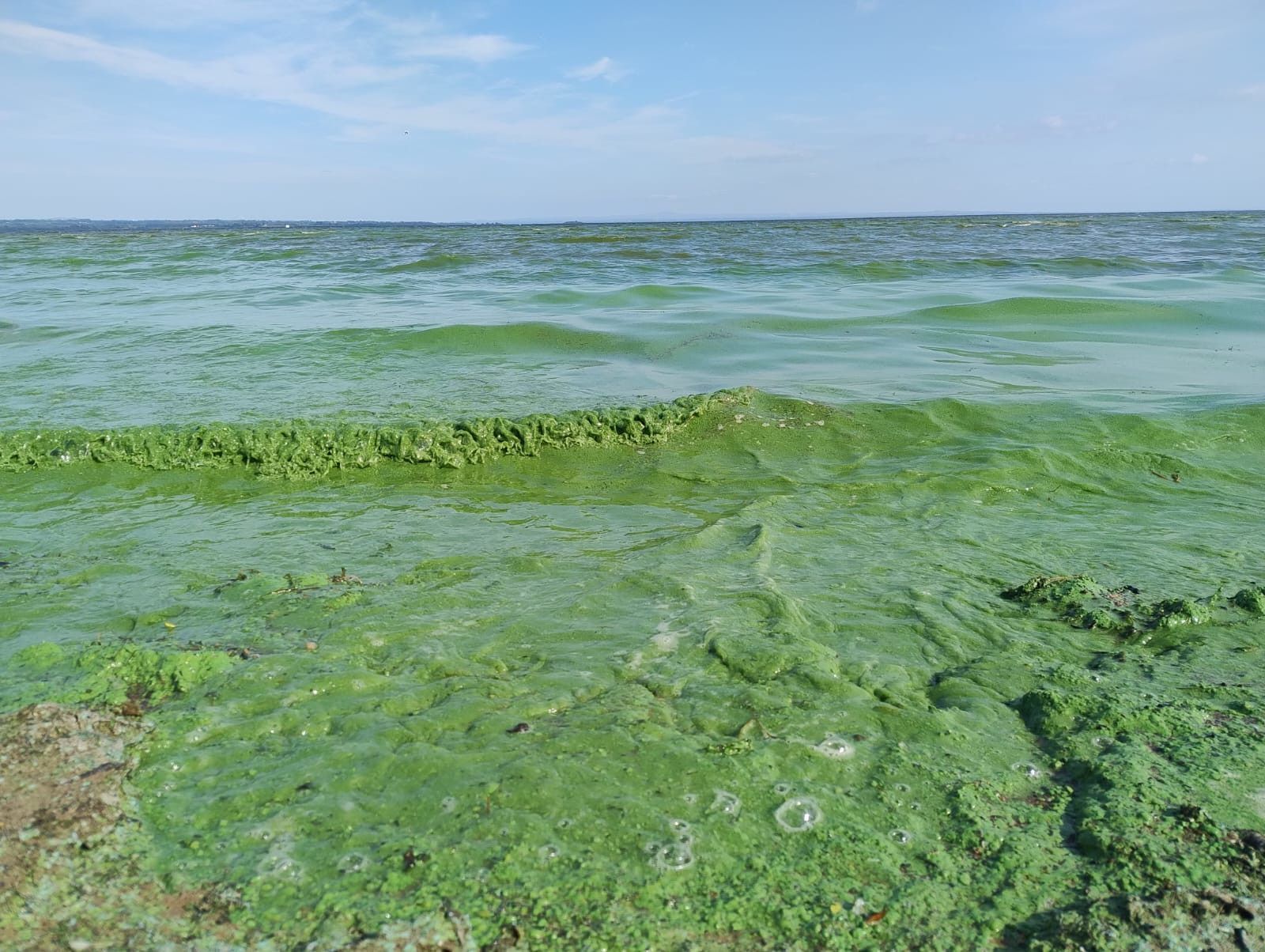
Most especially not for the swans stuck last week in the thick green slime; not for the kingfishers and otters that can’t get through the algae to feed; not for the fishermen and their communities who are forced to quit an industry that has sustained their families for generations.

The lough should be owned by no-one and its protection should be given over to those whose livelihoods depend on it. It’s they who know how best to ensure it’s passed on intact for generations to come.
They have always known not to take too much from it. Traditional cultures across the globe – Ireland’s included – recognised nature as something that offers gifts, but gifts that must be taken in moderation.
Lakes were sacred places – Lough Neagh was named after Eachach, the mythical king who built his home there, but was drowned when the lough was formed.
The mixture of myth, legend and respect meant that the lough was in good hands, but ‘ownership’ changed all that.
In her brilliant book, Braiding Sweetgrass, indigenous American Robin Wall Kimmerer looks back to a time when there were mutually beneficial relations between humans and the Earth, between our species and others. She says we need to learn those lessons once more.
Dúlra remembers a time when the farmers of Hannahstown burned a wee offering to the land after taking in the harvest – the native American equivalent of leaving tobacco as a gift to the Earth.
Kimmerer blames the market economy for destroying nature the world over. But she also says that the market economy is “just a story we told ourselves – we’re free to tell another one or reclaim the old one”.
Gratitude is central to the old way of thinking, in Ireland and around the world.
Lough Neagh used to pack us a lunch every day, and the families it fed were thankful.
On their watch, it would never have been destroyed.
Kimmerer says expressing gratitude – thanking nature when we take something – is really a revolutionary idea, because in a consumer society recognising abundance rather than scarcity undermines an economy which thrives by creating unmet desires. She says that, in fact, we already have all we need.
And it’s about treating the natural world with respect. Only in the prevailing Western tradition is there a hierarchy of beings with, of course, humans on top. That widely-held belief system has us as the pinnacle of evolution, the darling of creation, with plants at the bottom. That sort of thinking has left Lough Neagh facing ecological collapse.
It’s not that we need a new way of thinking – quite the contrary. We need to go back to the old way of thinking.
Let’s be thankful for all that nature offers us on this island without asking for anything in return. We just have to be grateful for it and never take too much.
Last week when Dúlra was on the Belfast Hills he enjoyed a few handfuls of plump blackberries. They were free – an offering gladly given up by nature to us and any other passing creature in the hope we’ll spread the seeds hidden inside that rich juice.
He felt like saying to the mountain: “Really? For me? Oh, you shouldn’t have.”
It just requires us to be grateful – and so he whispered ‘Go raibh maith agat’ to the majestic Black Mountain.
•If you’ve seen or photographed anything interesting, or have any nature questions, you can text Dúlra on 07801 414804.