MONDAY’S Irish Times has an editorial dealing with the possibility of the collapse of the Northern Assembly at Stormont. This is the latest media-driven piece of speculation in recent weeks – based on nothing other than the view of the authors – that Sinn Féin plans to bring down the Executive and Assembly. No evidence is presented to support this opinion.
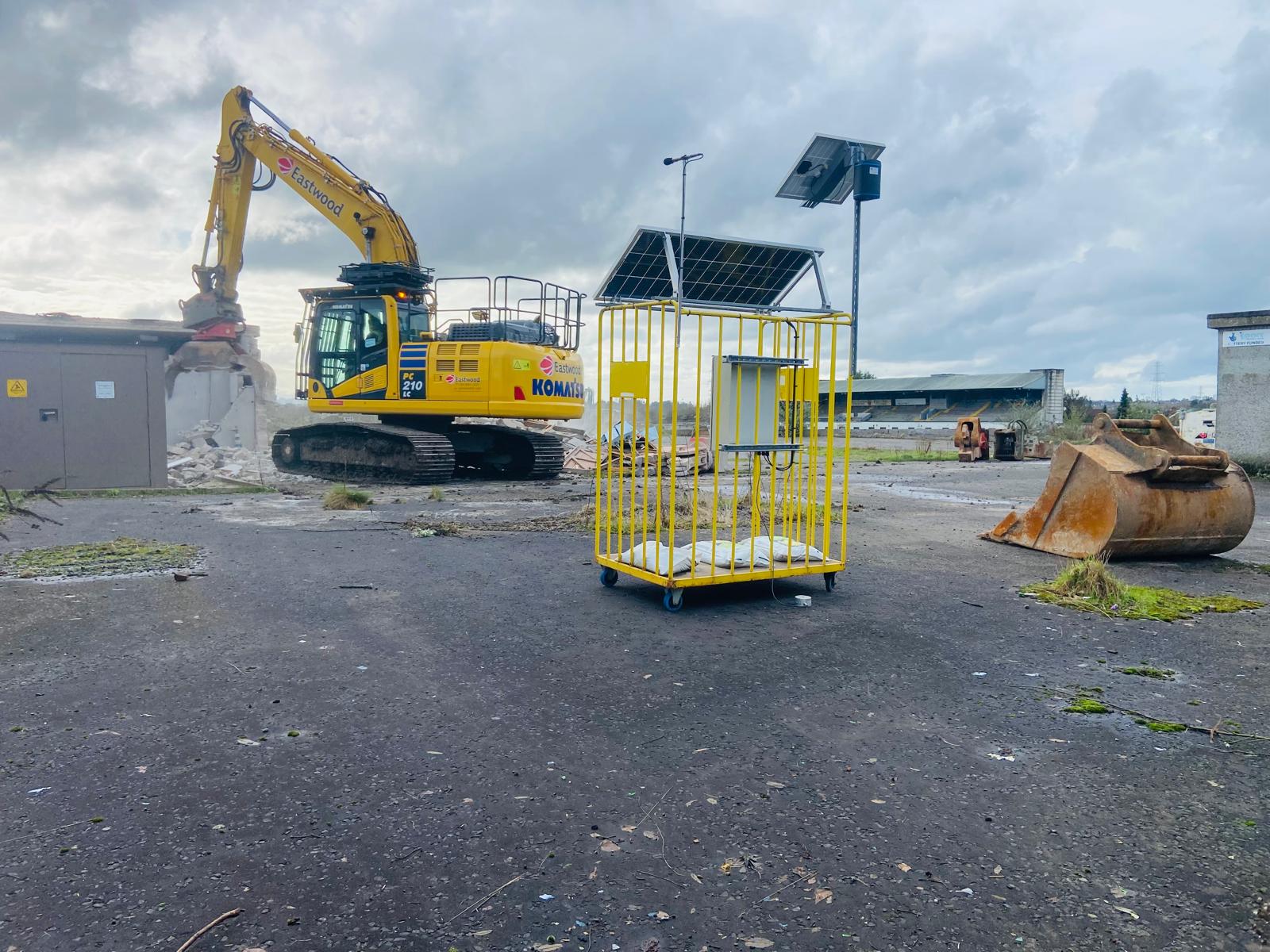
It is true that many republican voters are annoyed at the endless shenanigans of the DUP within the institutions. Obstructionist attitudes to the Irish language allied with the slowness, for example, thus far to build the new Casement stadium, the delays in the development of the A5 and other important matters have angered many, with justification, including this columnist. But anger is not a strategy.

Increasing numbers of nationalists, particularly the new generation, have moved beyond the northern statelet and are now focused on the unity referendums. They have little confidence in the power-sharing arrangements mostly because of the way the unionists play fast and loose with this process. But the unionist attitude should come as no surprise to anyone. Political unionism is fighting for its survival. Where will unionism be without the union. Reared on a diet of ‘What we have we hold’, ‘Not an Inch’, ‘We are the people’ and ‘No surrender,’ it is a steep learning curve for unionist leaders as they adjust to minority status. A far remove from the one-party statelet they used to dominate.
The reality is that political unionism’s fear of change has been part of its DNA for almost 200 years, but especially since partition. So none of us should be surprised by anything they might do. If the Northern Assembly does collapse it will do so because of the contradictions inherent in the continuation of the union with England, the inadequacies of the experimental arrangements at Stormont and/or unionist stupidity.
I for one never thought the Northern Assembly would deal with all our difficulties. We need self-determination to do that, an end to partition and Westminster rule and control of our own affairs. In the meantime, we need to do our best with the interim arrangement that Stormont represents. We need to work with unionists when we can and set out our position clearly and robustly when we cannot.
First Minister Michelle O’Neill has bluntly told the media: “I have no intention of bringing Stormont down.” She asserted Sinn Féin’s determination to try to make it work despite the actions of the DUP “whose approach to everything is to delay and frustrate progress. They’re trying to distract from their own internal issues.”
“I am determined,” she said, “to turn up every day for workers and families because I believe they need us to be there to be the best bulwark against the worst impact of policy decisions that are taken in London.”
So, that’s what those who want to make progress have to do. Keep working as best we can in our Assembly while planning for the unity referendums and preparing for the new Ireland. Turning up every day, doing the work, and demonstrating by our words and our deeds that we are serious about building a real partnership with those who will work with us to build a better future.
International goodwill on unity is key to progress
DECLAN Kearney has published a timely piece in An Phoblacht – ‘Time for a New Initiative on Irish Unity’. He argues for a national consensus and cites the agreement between me and John Hume in 1993. Declan’s proposition led me to revisit a little book I published in 1998, ‘A Pathway to Peace’. It was my view at that time on how to achieve unity; the need for peace with justice; the role of the Irish government; the importance of reaching out to our unionist neighbours; and the need to develop a strategy for Irish nationalists.
The book was informed by our conversation that year with the SDLP leadership and also by our internal party strategising which had seen the publication of ‘A Scenario for Peace’ in 1987. Four years later our party policy evolved with ‘Towards a Lasting Peace in Ireland’. This seminal document was passed by the Ard Fheis in 1992.
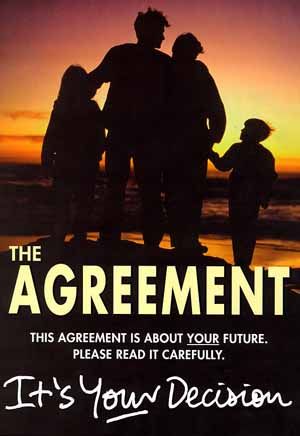

It set out our proposals on creating a peace process to end the decades of conflict.
In 1988 the only party consistently raising Irish unity was Sinn Féin. The Irish government, the southern political parties and the SDLP were locked into strategies which were about defeating Irish republicanism – not about finding common ground.
Today, much has changed. Irish unity is now a daily topic of conversation within the political mainstream and the public discourse.
So, looking back at ‘A Pathway to Peace’, mindful of John Hume’s and my efforts to agree a nationalist consensus, and attentive of the principles set out in the Good Friday Agreement (right), it seems to me that a useful starting point could be agreement to the principle already enshrined in the Good Friday Agreement. It is “for the people of the island of Ireland alone, by agreement between the two parts respectively and without external impediment, to exercise their right of self-determination on the basis of consent, freely and concurrently given, North and South, to bring about a united Ireland, if that is their wish, accepting that this right must be achieved and exercised with and subject to the agreement and consent of a majority of the people of Northern Ireland”.
Already all the parties in Leinster House have signed up in the last Dáil to the Good Friday Agreement All Party Committee Report outlining a way forward. A structure or structures is required to take this forward. Ireland’s Future and others are proposing Citizens’ Assemblies. Some want a Forum. Maybe Fine Gael will favour this?
To be successful, a unity strategy must also be unrelenting in its efforts to ensure the widest possible conversation with northern unionist and northern Protestant opinion and to assure them that their civil and religious rights will be protected. In this respect a Bill of Rights can play a vital role.
The strategy should also seek to employ the enormous international goodwill for Ireland that exists to win support, including in the EU, for the new Ireland.
There should be a particular focus in this respect on the Irish diaspora in the USA, Britain and Australia.
These are just a few suggestions for such a unity strategy. There are many more. However, the key to building the new Ireland is to do it now. Planning for the future is common sense. Agreeing a strategy on achieving unity would be a useful starting point. Others will have their proposals, their ideas for how best this can be achieved, and that is a good thing. The more ideas we have the better will be the outcome.
At the end of this process our goal should be a citizen-centred new Ireland that is united, stronger politically and economically, with progressive international policies and capable of delivering the highest standard of public services and protections to all citizens.
Declan Kearney’s article is available at sinnfein.ie/news/time-for-a-new-initiative-on-irish-unity-kearney/
A COUPLE of weeks ago I had the pleasure of doing a Zoom meeting with supporters who are part of Friends of Sinn Féin International. This is a subscription-based support network for supporters of Sinn Féin. In return for an annual subscription they get a number of benefits, including regular email updates from the party, access to the An Phoblacht archives and a discount from the Sinn Féin Shop; plus briefings during the course of the year with senior leaders in the party.
My briefing lasted around one hour and ranged across the gamut of issues, including and principally how we can achieve Irish unity. Well done to all of those involved. If you are living abroad and interested in keeping up to date with the struggle in Ireland subscribe at fosfintl.sinnfein.ie