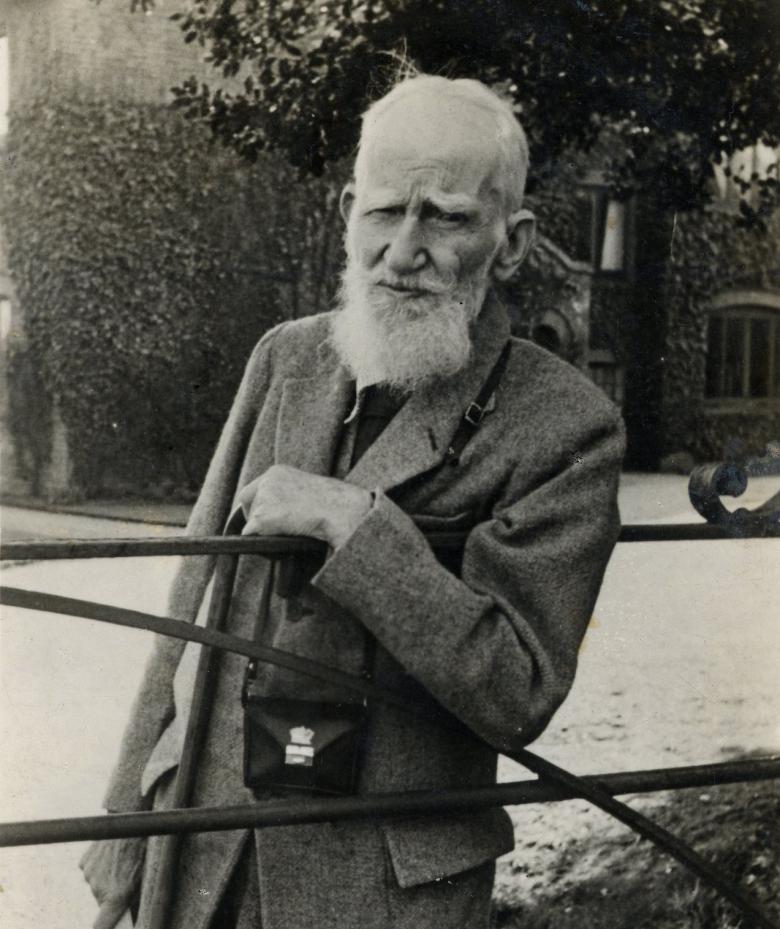
GEORGE Bernard Shaw didn’t think much of teachers: "He who can does; he who cannot teaches." Mark Twain wasn’t behind the door either: “I have never let my schooling interfere with my education.” And then there are those great lines Paul Simon sings in ‘Kodachrome’: “When I think back on all the crap I learned in high school/ It’s a wonder I can think at all.”
All three are singing from the same song-sheet: schools and teacher work against people learning. But none of them explains why this should be so. For an answer to that I have been consulting Ivan Illich, who wrote 'Deschooling Society'.
Illich was born in Austria, was ordained a priest in Rome, quit the priesthood and lived much of his life in the US, writing and lecturing.
Illich argues that schools offer certification, not education. The law demands that everyone attends schools for a number of years, where they are presented with pre-packaged knowledge in a one-size-fits-all. But we are all individuals, and so I’m sure I’m not the only one who looks back on May days years ago, sitting in straight rows of desks with the sun shouting at us to “Come out!” and the teacher yelling “Stay put!” So we all sat in our desks while the teacher droned on about 'Amo, amas, amat' or the intricacies of algebra. Hundreds, thousands of hours of precious time spent in classrooms, caught between boredom and fear of violence.
Of course schools have improved enormously over the decades. But that doesn’t satisfy Illich. He wants to deschool society – take schools at all levels and ditch them.
As his book title suggests, Illich completely opposed schooling. He believed that schools exist on the claim that this is where learning can happen, cut off from the outside world.
Likewise, not everyone can teach – only people who have been properly certified. For example, I taught a Post-Graduate Certificate in Education (PGCE) to graduates in English. If they first hadn’t been certified with a degree in English, and if they then hadn’t attended my PGCE classes, they would not be allowed to teach English in secondary schools.
North and South, Irish children follow a clearly different curriculum. In NEI, schooling is organised, as you probably know, into ‘Key Stages’, with pupils getting GCSE certification at sixteen and A-Level accreditation two years later.
BORDERLINE: The education system in the South is generally agreed to be better than ours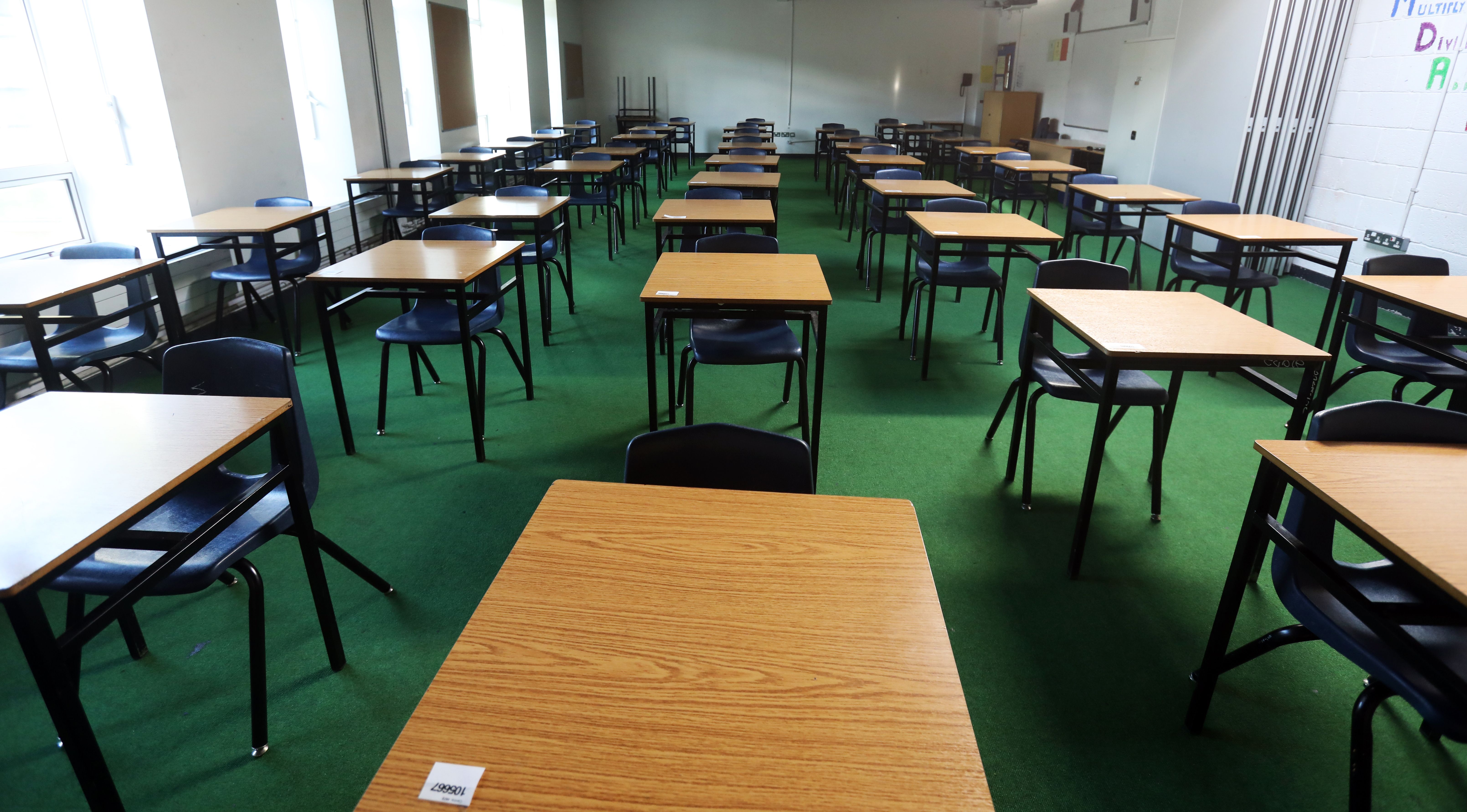

Before all that, of course, we have the dreaded Qualifying Examination at eleven, the results of which determine whether you’ll be funnelled into grammar school or secondary school.
Across the border, things are done differently. There’s no Qualifying Exam; pupils complete a Junior Cycle in the first three years of secondary school, followed by an optional Transition Year, then the Senior Cycle years end in a Leaving Certificate at eighteen.
By and large, the South’s education system is seen as superior, certainly by prospective employers. I suppose not having a stupid qualifying exam at eleven years of age helps.
But here’s the rub: Illich would ditch both systems. He believed that schools by their nature present learning in a tightly structured way, and we only truly learn when we’re following something we have a real interest in. Besides which, outside the school we have all kinds of experiences that provide real and deep and lasting learning than pre-cooked learning inside the classroom.
I remember years back a young lad of about twelve standing at the lights leading to the West Link. When the lights were red, he would move briskly from car to car, selling the Belfast Telegraph. All sales back then were done in cash, so the young man would take your money, calculate at lightning speed how much change to give you, give it and move on smartly to the next car. I don’t know what became of that young man, but I have serious doubts that he went on to become a star in the world of professional finance. That’d because paper boys didn’t get certificates for their work.
Confession: throughout my life I have I put bread on the family table by working as a teacher/lecturer. If you’re a prison guard you probably feel my pain.