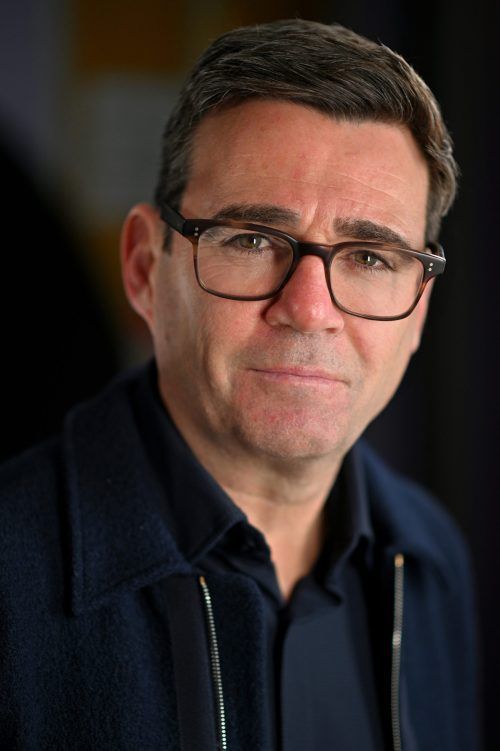
YOU probably know this, but Wayne Rooney, Declan Rice, Jack Grealish and Harry Maguire could all have played for Ireland. Alas, their thoughts were on higher things, like playing for England. Andy Burnham, said to have been a tidy footballer in his time, could not have played for Ireland, even though his great-grandfather was from Cork.
But since last week, Burnham’s eyes haven’t been focused across the Atlantic on the England team – he’s been firmly focused on No.10 Downing Street. You can see why that might be the case.The outgoing Keir Starmer heads a united Labour Party, united in the fact they want rid of him. The sooner Burnham can be smoothed into place as PM the happier the Labour Party will be.

So what can Burnham bring to the role besides a good speaking voice? Well, as a result of his time as Mayor of Manchester, he’s convinced of the need for a more even distribution of power throughout Britain. He can point to his Mayor of Manchester record and show that he reduced the numbers sleeping rough in Manchester. His ‘Beeline’ buses mean Manchester transport is much improved.
And he dealt with Covid as well as anyone might do, arguing the case for a decent wage rather than just clapping for front-line workers.
Andy has his weaknesses too. Many of his plans for Manchester sounded better than they actually turned out to be in reality.
And Irish reunification? In that he’s classic Labour Party – not going to be anything other than neutral. Which some cynics would say amounts to being in favour of maintaining the status quo. As with other British PMs, he will cater to British interests, not Irish interests, in the event of any push towards Irish unity.
What will be interesting to see – assuming he enters No.10 Downing Street – will be his readiness to get involved with Irish political parties on the question of Irish reunification. Because things are happening in the three major Dáil parties.
Leo Varadkar has succeeded in prompting his successor Simon Harris to declare that Fine Gael will come to their November Ard Fheis with a document defining what a unified Ireland could mean in practical terms: politically, economically and societally.
Micheál Martin hasn’t been sitting on his hands either. His Shared Island fund is now spending €2 billion on cross-border co-operation. He believes it’s necessary to push all this money towards reluctant unionists. This money-with-no-constitutional-baggage approach is applauded by those fearful of upsetting Northern unionists.
And of course Sinn Feín will shortly bring a request for a Green Paper on Irish unity and the establishment of a Citizens’ Assembly examining what the terms of a national referendum might be.
Up to now, Andy has shown little interest in the question of Irish unity. Why would he? He’s hoping to become British PM and that usually comes with a set of blinkers in terms of Ireland. If Dublin’s three main parties follow through on their ambitions, Andy will have to learn on the job that, finally, the core element of the Good Friday Agreement is something that all Irish people have an interest in and are at last taking steps to make a reality.