Back in 2015, the late Pope Francis, upbraiding US politicians, insisted that "there is no social or moral justification, no justification whatsoever, for the lack of housing."
Later, he spoke up for the right of families to "decent housing, fitting for family life and commensurate to the number of the members, in a physical environment that provides the basic services for the life of the family and the community."
It's hard to believe that there exists any mainstream political voice which would oppose those sentiments and yet almost 20 years on from the establishment of the DUP-Sinn Féin concordat which ushered in a new era of power sharing in the North, the Executive is failing miserably to measure up to the housing crisis we face.

The figures make for depressing reading for anyone who hoped the bold and ambitious statements of our political leaders would be matched by action.
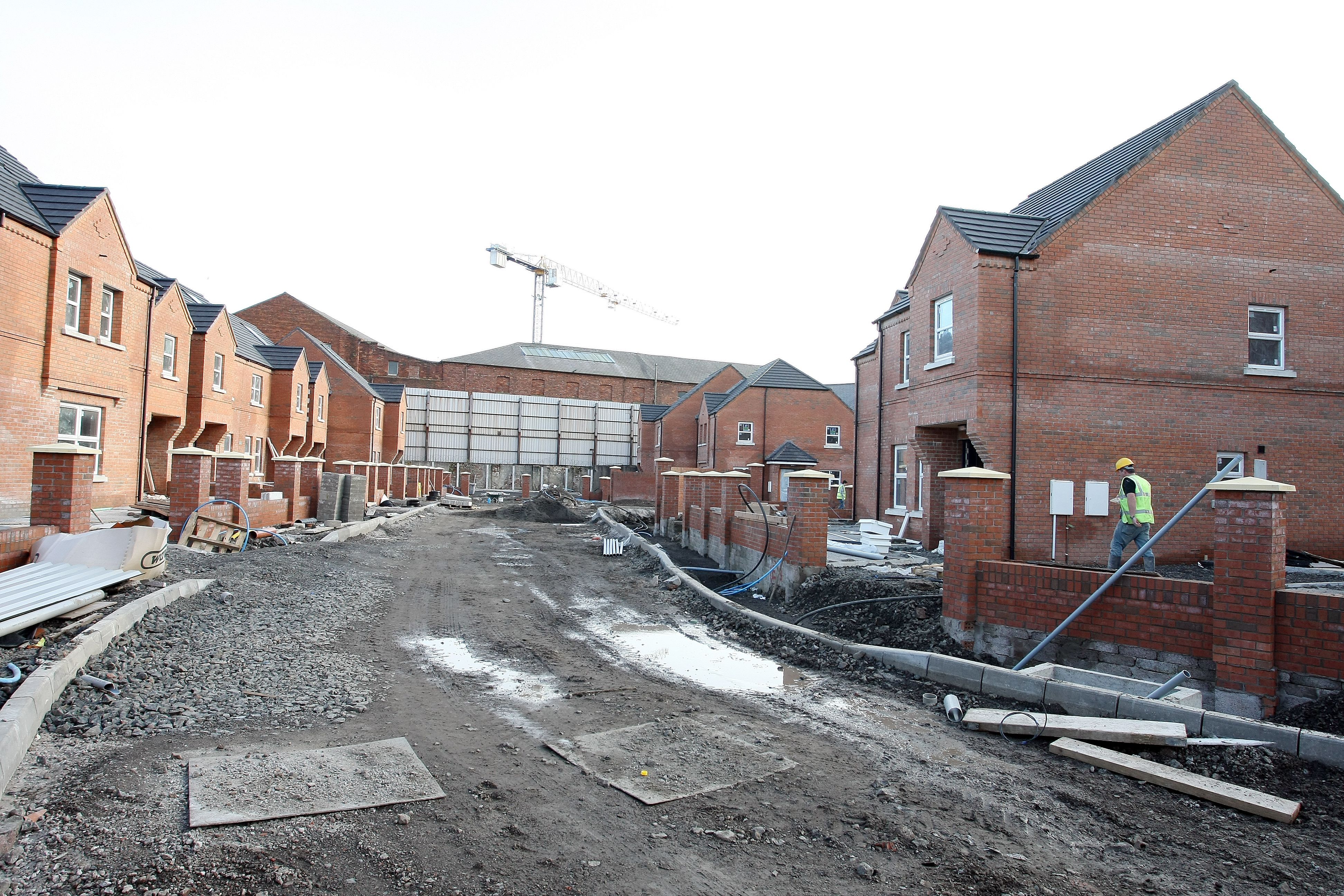
In 2025, just 5,848 homes were completed between the public and private sectors. That's less than was completed in 2024 (6,022) at a time when we are supposed to be in the midst of an all-hands-on-deck push to build housing by the Executive.
Even the old Stormont cabal, God bless the mark, built 13,920 homes in 1971 when the North was on fire. So why is the Executive so poor at either building its own housing stock or facilitating the building of private stock? Both channels – private and social – would tilt the supply and demand equation in the favour of homeowners by bringing prices down. And, of course, greater supply would also help reduce rents which are soaring amid this supply squeeze.
The reasons posited for the blockage are as many and as various as the many groups charged with building homes.
Many point to a chaotic planning system. Ironically, planning was brought in-house to the 11 local councils in the reform of local government back in 2014 with the promise that delays and bottlenecks would be cleared. In fact, those submitting housing plans say the system is as dysfunctional as ever, with numerous nonsensical hurdles which serve only to delay housing applications – sometimes for years – and deter developers.
Then there's the broken water and sewerage systems which have been under-invested over several generations. Finger-pointing between NI Water and the Executive has produced no solutions other than waiting for the equally broken British government to step in with funding. Given that the Brits are blanching at their own supposed water repair bill of up to £100 billion, the chances of Keir Starmer riding to the rescue seems remote. Failure to fix the water system results therefore in fewer homes which in turn means higher rents and higher house prices for the very young people our political leaders say the are fighting for. True there have been welcome but piecemeal interventions by the Sinn Féin Infrastructure Minister to ensure key housing developments could be greenlit in Derry and West Belfast, but the absence of any overall plan to tackle our water infrastructure crisis is dispiriting.
Planning and infrastructure are only two housing headaches among many. There's also rising steel prices and lack of construction sector labour, the inability of the Housing Executive to take on borrowing, ten years after Stormont first vowed to give the NIHE the funds to launch a house building blitz, and Westminster's funding stranglehold.
But none of the above excuse the lack of resolve at Stormont to fix the housing crisis.
Anyone who believes otherwise should ponder just one stark illustration of the lethargy across government on this issue: At Broadway Towers, a plan for 300 new homes, first mooted in 2011, is being stymied by the Health Department's preference to park 300 staff cars on the West Belfast site.
There can be "no justification whatsoever," to quote Pope Francis, for that shameful denial to 300 homeless families of the right to a home. But it tells us much about the dire housing (and homelessness) situation in which we find ourselves.