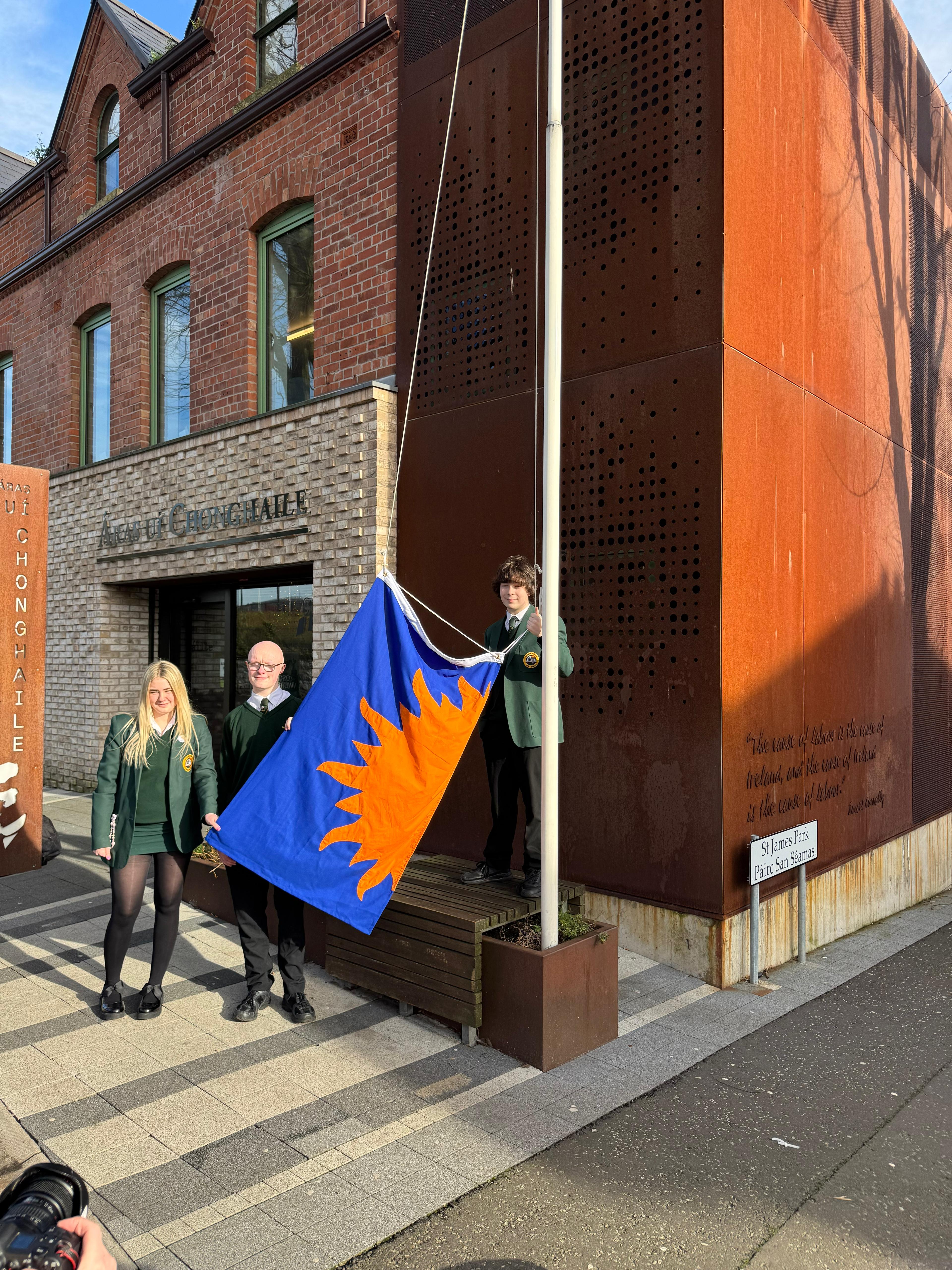
Conradh na Gaeilge’s Ard-Fheis returns to Béal Feirste this weekend for the first time since before the 1998 Good Friday Agreement.
Prior to that, Belfast only hosted the Gaelic League’s Ard Fheis once before, in 1932. The Ard-Fheis of 1996, in the Europa Hotel in the City, was organised under the Presidency of Gearóid Ó Cairealláin, who sadly passed away in December, 2024. Gearóid was described as “the great architect of the modern Irish language revival”. It is fitting that Gearóid’s time as President of Conradh na Gaeilge will be remembered and celebrated during the events of this weekend’s Ard-Fheis.
Béal Feirste, and indeed the north, has seen much progress on the fortunes of the Irish Language revival in the last three decades. There are now 8,000 students attending Irish-Medium Schools across 80+ school settings in the north. That has undoubtedly been the catalyst for the ever-growing Irish language revival in Béal Feirste, which is recognised both nationally and internationally as a unique urban example of grassroots indigenous language reclamation, based on the foundations laid by the pioneers of Bóthar Seoighe.

Over the last decade, Béal Feirste has taken huge strides forward through long overdue progress through Belfast City Council. In 2018 the Council approved its first Language Strategy leading to the appointment of its first ever full-time Irish Language Officer. A new Dual-Language Street Signage Policy, modelled on United Nations best practice, has led to an incredible increase in Dual-Language signage across 600 streets in the city since October 2022, restoring to public view many of our indigenous placenames previously banned from our shared spaces, with a further estimated 1,000 applications in the queue for future signage.
Only last year, Belfast City Council ratified a historic Irish Language Policy which included a comprehensive approach to dual-language signage and services across Council facilities. That Policy has been temporarily paused pending legal action relating to Council standing orders, but the Council has earmarked £1.9m to support its implementation over the coming year.
TÚS ÚR: Baill Chonradh na Gaeilge leis an Uachtarán Catherine Connolly ag an Oireachtas i mBéal Feirste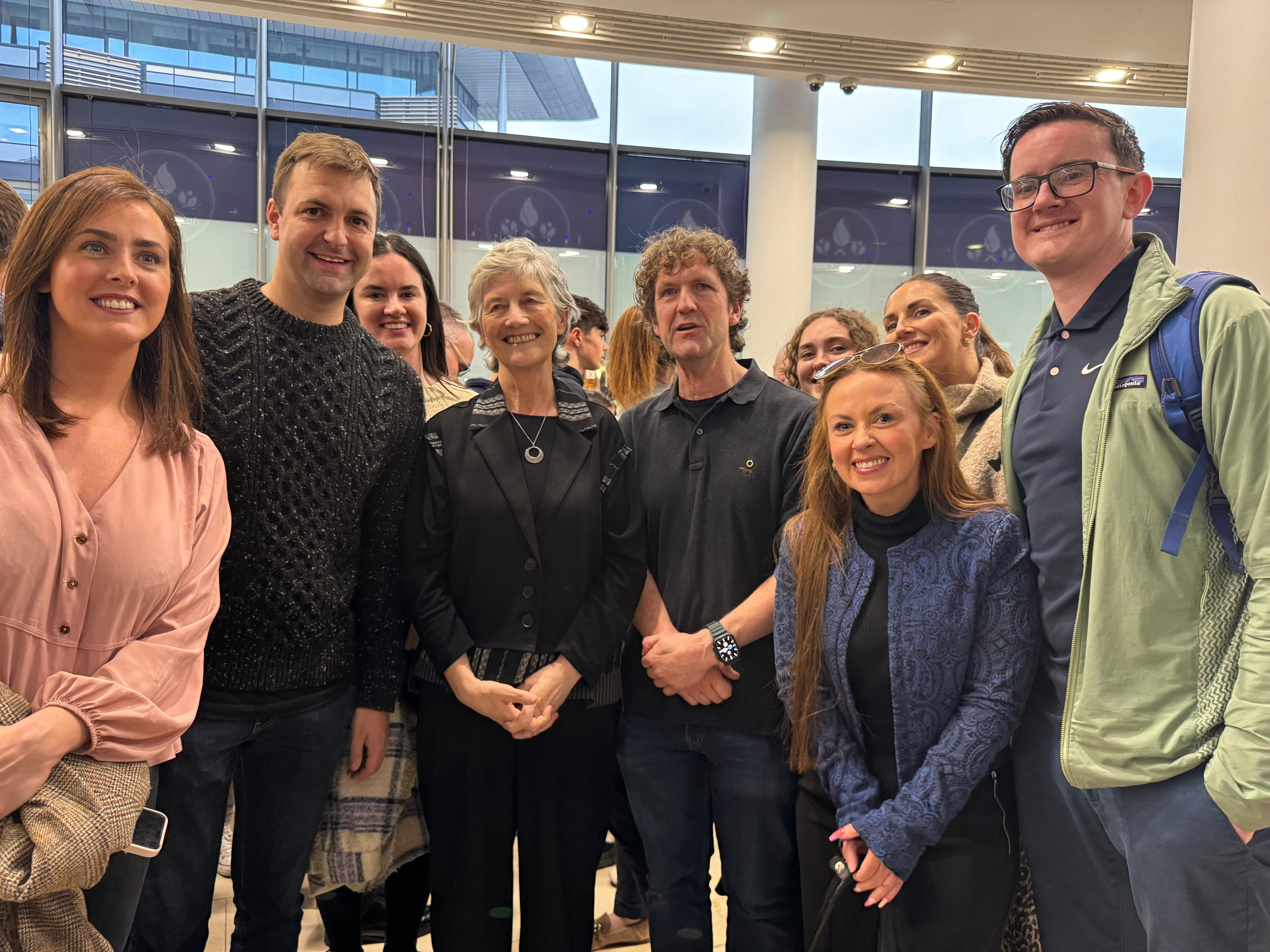

That progress all feeds into the role Béal Feirste is playing in hosting major national cultural events. At Halloween, Oireachtas na Samhna attracted an estimated 15,000 people to the city, which was very much a warm up to welcoming around 700,000 visitors to Fleadh Cheoil na hÉireann this Summer, ahead of an international conference of minoritised language experts in the city in November.
The backdrop to this remarkable renaissance of language and culture is the enactment of the 2022 Language Act and the recent appointment of the Irish Language Commissioner, with the functions and powers within that legislation being legally commenced a few short weeks ago. This new legislative landscape will herald a new era of language rights and policies across our public authorities, following decades of activism that led the way for An Dream Dearg to bring 20,000 people to City Hall for An Lá Dearg in 2022.
It is fitting that the keynote address of the Ard-Fheis will be given by the new Irish Language Commissioner, Dr Pól Deeds, on Friday 20th February in the Europa Hotel. That event will precede a panel debate on the role of the Irish Language in a United Ireland, before delegates and branches of Conradh na Gaeilge convene on Saturday morning to debate and vote on around 60 motions, from Gaeltacht Housing rights, to education reforms and language rights north and south. A motion to amend Conradh na Gaeilge’s constitution to work towards a United Ireland for the benefit of the Irish language and the Gaeltacht will be considered by many to be a significant juncture for the organisation for generations to come.
What unfolds this weekend will echo far beyond the walls of the Europa Hotel. It will be remembered as the moment Conradh na Gaeilge democratically set their course on the future of the Irish Language and the Gaeltacht alongside the future of our island.