THE decision by Micheál Martin last week to oppose Sinn Féin’s ‘Planning for Constitutional Change Bill 2026’ was no real surprise. His opposition to any meaningful planning for Irish unity has been transparently obvious for many years.
Despite Fine Gael spokespersons declaring that Fine Gael would not oppose the Sinn Féin Bill they then chose to support An Taoiseach. No surprise there. Simon Harris is Tánaiste to Micheál Martin’s Taoiseach. For Fine Gael to step away from a united government approach would have likely had serious repercussions for the coalition government.
I spent the day in Leinster House on the day of the debate and it was clear from my conversations with some Fianna Fáil TDs and the Sinn Féin team, who had spent significant time speaking to TDs from other parties and none, that there is a significant number deeply unhappy with ‘The Republican Party’ turning its face against a common sense Bill that would have advanced the discussion about the future.

The vote was 79 against the Bill and 69 in favour. That is a respectful vote and a gap that is not unbridgeable for those of us who seek a legislative process that plans sensibly for a united Ireland. So closing that gap is clearly one of the challenges facing the unity movement.
In the days around the Dáil debate the issue of unity was front and centre in much of the media coverage. Most of it was positive. This is how we sustain the momentum toward the unity referendums promised in the Good Friday Agreement: Conversation, discussion and engagement among all of those who support the aim of unity while reaching out to those, including unionists in the North, who haven’t made up their minds or who are opposed to ending the union.
It’s up to the people. Micheál Martin knows this. That’s why he is trying to hold on to an old agenda. But it’s now clear that there will be unity referendums. The issue is when. Not if. The genie is out of the bottle. Despite An Taoiseach’s protestations the unity conversation is now a key part of the public discourse in the South.
In addition, the Fine Gael leader Simon Harris has reiterated his commitment to working “across party lines... to build the durable consent that would make a new Ireland possible”. He also restated his intention to “publish later this year a new policy paper setting out our vision for the future of this island.” He also committed to “working with party leaders from all parties in government and in opposition to advance the conversation that is under way and will continue on the preparation that is required.”
Mary Lou McDonald will undoubtedly be taking up that offer in the time ahead. In the meantime, our task is to keep raising unity in whatever way we can, wherever we can, and to win the argument.
Gay community’s role in the struggle recognised at new exhibition
ON Wednesday July 22 an important exhibition will open in Áras Uí Chonghaile in Belfast. It examines the relationship between Irish Republicanism and ‘The Gays’.
For those of a certain age who remember in particular the hunger strikes of 1980 and 1981, the support of members of the gay community in Ireland in solidarity with the men on the blanket protest in the H-Blocks and the women in Armagh Prison was evident at many of the demonstrations that took place. Their banners were always front and centre and were well received by the crowds in attendance.
SUPPORT: The LGBTQ community was always present at demos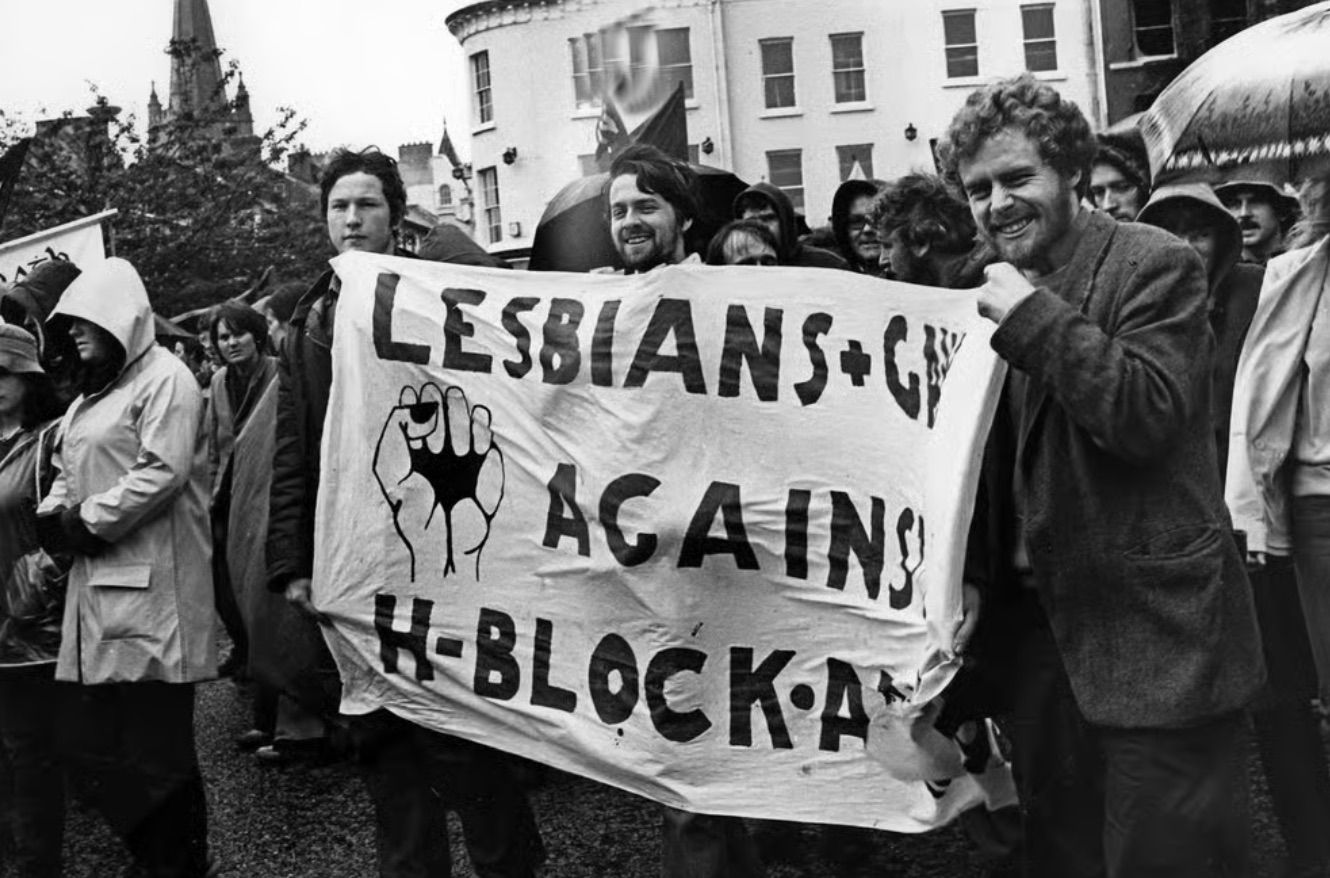

The exhibition records the fact that it was a gay republican prisoner writing in the H-Blocks in 1991 who pointed out that “gay men and lesbian women have been involved in the struggle for national liberation and independence as long as any other section of our people.” He was right.
This current project has only been made possible by a partnership between OUTing the Past (OTP), the Bloody Sunday Trust (Museum of Free Derry) and Áras Uí Chonghaile, Bóthar na bhFál. The exhibition has its roots in Ireland’s first OTP International Festival of LGBT+ History, in 2018.
The authors have spent the last five years focused on collecting information. I recently met Jeff Evans, Research Fellow, John Moores University Liverpool, who has been involved in this project from the beginning. He believes strongly in the importance of social history as a way of understanding society. As he explained, the exhibition does not pretend to offer a ‘history’ but it does provide a growing public archival collection. This is not unusual when efforts are made to study the past of groups that have been largely ignored, such as working-class communities, women, black, LGBT, the Traveller community and colonised people. They have provided a “rich, nuanced and complex understanding of our collective past.”
The exhibition records that republicans have “played a seminal role in many of the advances in gay life in the North.”
The information presented “appears to mark out Irish republicanism as different from other national liberation struggles, one that promoted and created ‘gay spaces.’”
Jeff told me that the exhibition can only showcase a small fraction of the new material it has collected but this is only a beginning.
Well done to all involved and especially OUTing the Past, the Bloody Sunday Trust (Museum of Free Derry) and Áras Uí Chonghaile. Details online at arasuichonghaile.com/events
Game changer
IT’S been announced that the London developer Hammerson had sold the Carlton site on O’Connell Street to Transport Infrastructure Ireland.
Hammerson is the company that owns part of the 1916 Moore Street Battlefield site and the Carlton site connects it to O’Connell Street.
Responding to the news, James Connolly Heron of the Moore Street Preservation Trust pointed out that under the Hammerson plan the former Carlton site was to be the gateway to a shopping mall extending into Moore Lane and Moore Street. This was to include the demolition of part of the terrace, the last headquarters of the leaders of the 1916 Rising. We were told that this was essential for retail ‘footfall’.
James Connolly Heron pointed out: “The sale of the Carlton site renders the Hammerson plan null and void. The whole basis on which it was to destroy much of the historic 1916 Moore Street quarter is gone.”
I had the opportunity to talk to Kevin Boxer Moran TD, the Minister with Responsibility for the development of Moore Street. I told him of the importance – in light of the recent decision about the Carlton site – of the State purchasing the entire 1916 Moore Street battlefield site and develop it as a cultural historic quarter. This makes sense for lots of reasons, but especially because the State and Dublin City Council already own between them seven of the fifteen buildings making up 10 to 25 Moore Street.
The State owns 14, 15, 16, 17 and part of 18, while Dublin City Council owns 24 and 25.
Ironically, almost two decades ago when the economy crashed the whole site was taken under the control of the State through NAMA. In a short-sighted decision the State, again through NAMA, sold it off to Hammerson. Now Hammerson have in turn sold the two-and-a-half-acre Carlton site off to Transport Infrastructure Ireland.
This pass-the-parcel approach by government and developers has seen no progress on the development of the national monument and the only people making money are the developers. The government’s priorities are all wrong. It’s time for it to buy the rest of the site and to implement the plan produced by the Moore Street Preservation Trust for a 1916 Quarter. That will develop the Moore Street battlefield site into the international, economic and cultural powerhouse it deserves to be, as well as a fitting memorial to the women and men who fought in 1916.
The Twelfth...
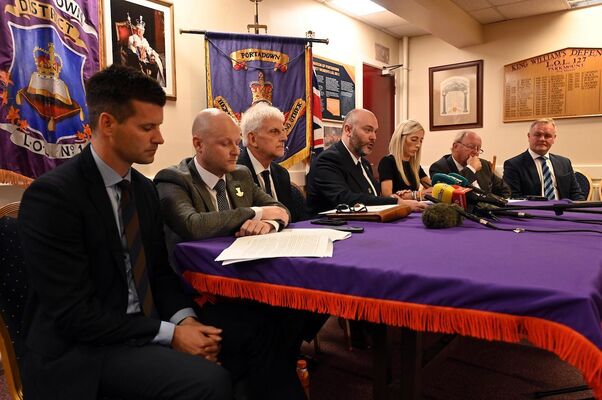
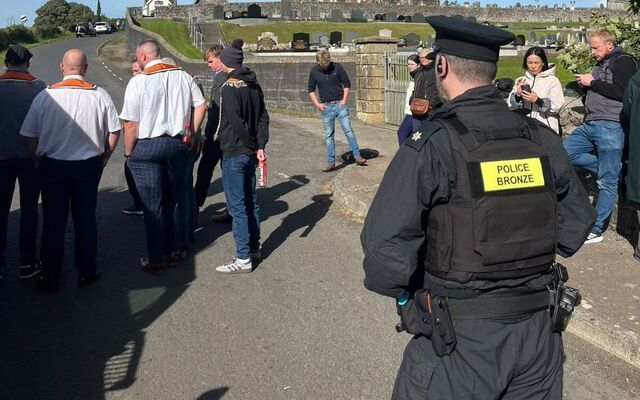
Now that the Twelfth has come and gone it is long past the time for opinion makers within unionism to chart out a course to regulate the building of Twelfth bonfires so that they are safer, legal and community-friendly.
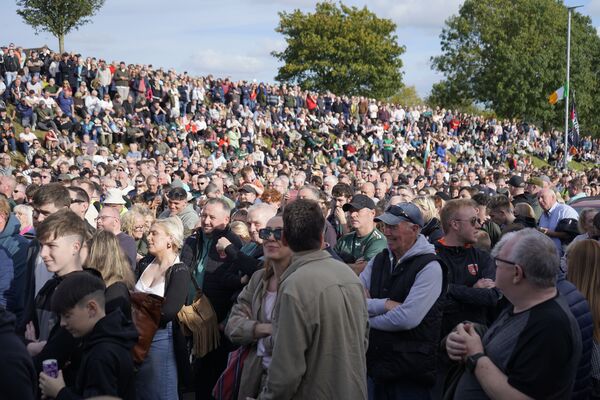
The Orange Parade in Rossnowlagh in Donegal should be an example to the ‘Loyal‘ Orders of what is possible. Is anyone out there within the Orange or unionist leadership up for that challenge?