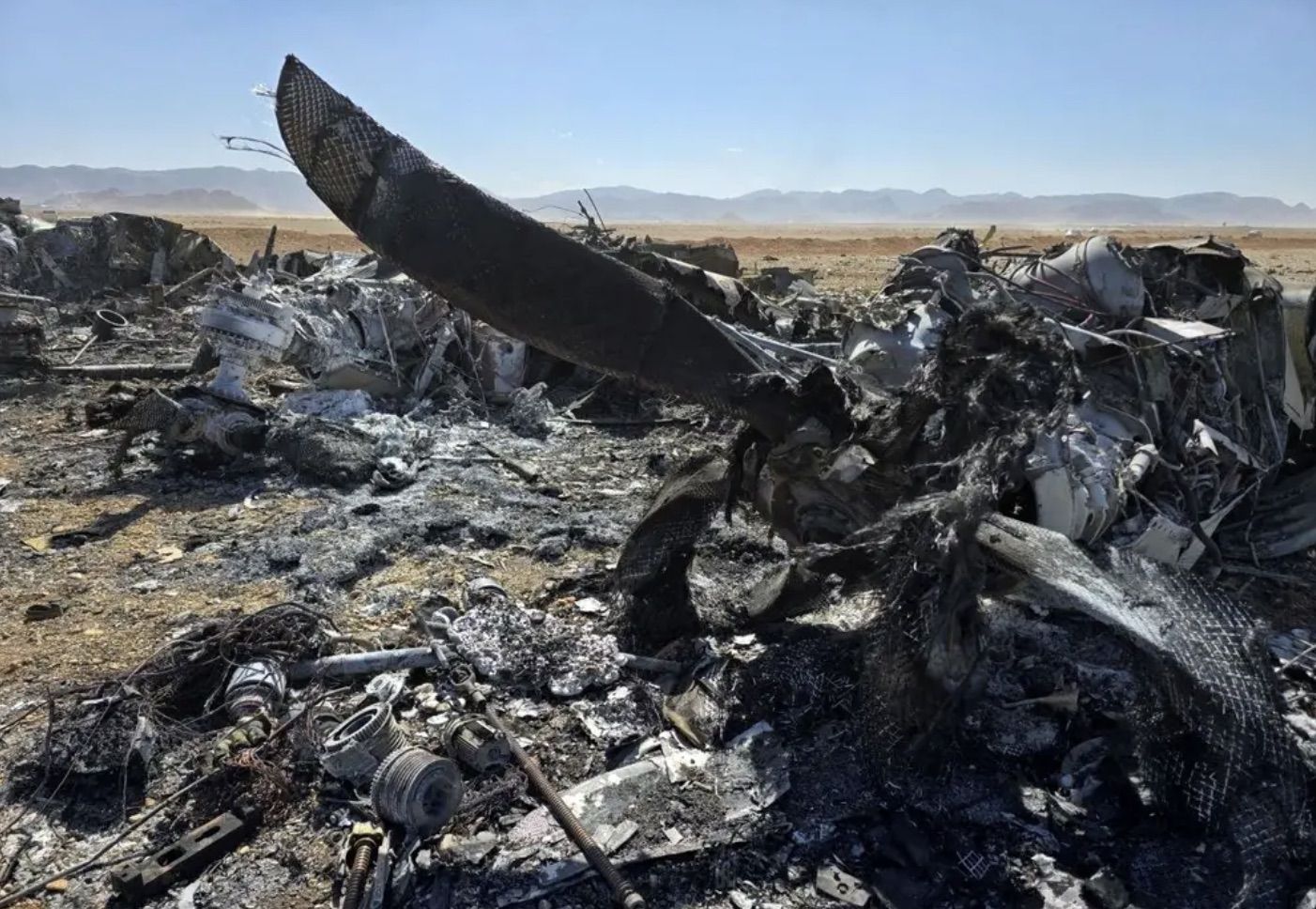
IT was a neck-and-neck race to recover the airman shot down by Iran in Iran. The Americans won the race, much to their relief. Had the Iranians found him first, he would have been put on display as someone several thousand miles from his home, part of the attacking American forces intent on conquering a country that has faced attack and division for decades. Today, Trump’s boast is that they’ll be bombed “back into the Stone Ages”
The attack on Iran, launched by Trump, the man who thinks he deserves the Nobel Peace Prize, has a history. In 1951, Iran’s Prime Minister nationalised his country’s oil. Two years later (yep, you guessed it) there was a coup backed by the US and the UK. The Prime Minister, Mohammad Mosaddegh, was put on trial by a military court and sentenced to three years in prison. After his release, he was kept under house arrest for the rest of his life. Members of his government were imprisoned or executed. This blatant assault on Iran fuelled long-term resentment of the West’s interference. In 1979 the Shah, who had been supported in office by the West, was overthrown. Iran became an Islamic republic, the West was kicked out and a theocratic Islamic state established.
In February 2026, the US and Israel launched a unilateral attack on Iran, killing the supreme leader, Ali Khamenei, his daughter, his son-in-law and his grandson. A girls’ school in southern Iran was hit, killing over 165 schoolgirls.
Trump had hoped internal opponents in Iran would join the US and Israel to bring down the theocratic regime. Bad guess. The US-Israel attack brought the country together, more united and defiant than ever before.
Sounds familiar? It should be. The US has, contrary to its intention, fused the different factions in Iran, just as Bloody Sunday in Derry led to people queuing to join the IRA. Later, the grim chant went: "Fourteen dead but not forgotten/We got eighteen and Mountbatten."
Now Iran is busy building drones and missiles. Their arsenal of such weapons is the biggest in the Middle East. Far from being reduced to the Stone Age, Iran can target places and people 2,000 kilometres away.
All of this slaughter and destruction is appalling, but entirely predictable. It’s very difficult to win over people when you’ve bombed parts of their country and killed many of its people.
When he began to hammer targets in Iran, Trump forgot that Iran had one super-weapon: the Strait of Hormuz. As I write, it’s inaccessible to Western vessels and the results are already biting hard and deep. Countries like Japan, South Korea, India and parts of Europe that rely on Gulf oil are facing higher costs in fuel, electricity and heating. This feeds into global inflation with production costs increased and consumer spending reduced.
Iran can’t defeat the US militarily, but it’s found other ways to fight back. They can damage US bases throughout the Middle East and they have already damaged the world economy.
Over a century ago, Terence McSwiney died on hunger strike. His best-remembered statement? “It is not those who can inflict the most, but those who can suffer the most who will conquer.”
Such an idea is too subtle to penetrate Trump’s thick skull. Instead, he rants and raves and splutters obscenities. He can’t put American boots on the ground, because he’d promised his followers exactly the opposite – no more foreign wars. So as Iran puts a choke-hold on the Western economy, it’s dawning on Trump that maybe his attack on Iran with his Israeli buddy wasn’t such a whizz of an idea after all.
Trump likes to talk about opponents as people of "very low IQ". I suppose he is an authority on such people: every morning when he looks in the mirror he sees one.