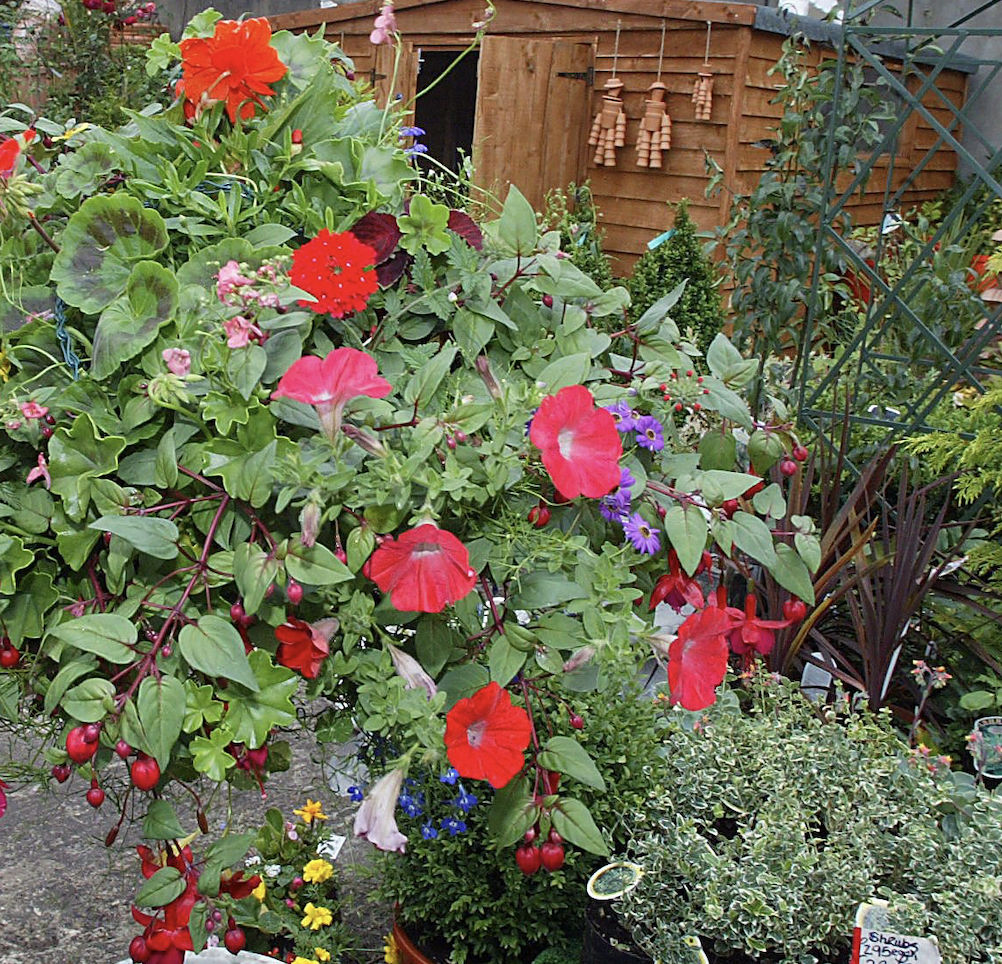
WHILE tending my garden recently, pulling weeds and deadheading flowers on a quiet afternoon, I found myself thinking about monuments. Living in West Belfast, monuments are never far from our minds. Murals, memorials, statues, plaques and commemorative gardens all tell stories of people, struggles and events that have shaped our community. They stand as reminders of our history and identity. Yet, as I worked among the flowers, I began to wonder whether nature teaches us something that monuments cannot.
Monuments are built to endure. They are designed to preserve memories and to ensure that certain moments are never forgotten. There is great value in that. In a place like West Belfast, where history lives close to the surface, remembrance matters. Monuments give form to collective memory and offer future generations a connection to the past.

Yet monuments also invite judgement. We assess their size, their artistic merit, their political meaning and their place in history. People can disagree about what they represent or whose story they tell. They often speak to the intellect, encouraging reflection, debate and interpretation.
Flowers offer something different. As I looked around my garden, I noticed how each flower simply expressed itself without any need for recognition. The rose did not compete with the lavender. The daisy did not wish to be a sunflower. Each bloomed according to its own nature. There was no comparison, no ambition and no desire to leave a lasting legacy.
In that sense, flowers seem to possess a quiet wisdom. They remind us of a way of being that is increasingly rare in modern life. We live in a world filled with noise, technology, deadlines and constant pressure to achieve. We are encouraged to build reputations, accumulate possessions and leave our mark. We often become so focused on proving ourselves that we forget how to simply be.
A garden gently invites us back to ourselves. Among flowers, there is no need to perform. We are free to slow down, breathe and pay attention. The simple act of noticing a blossom opening to the morning sun can bring a sense of peace that no grand monument can provide. Flowers speak directly to the heart rather than the mind.
They also teach us about impermanence. Unlike monuments, which are built to resist the passing of time, flowers embrace it. They bloom, fade and return to the earth without complaint. Their beauty exists precisely because it is temporary. In a culture that often fears ageing, change and loss, flowers offer a different lesson. They show us that there is dignity in every stage of life.
Perhaps this is why flowers accompany us through life’s most important moments. We bring them to births, weddings, funerals and places of worship. They communicate comfort, love and presence without the need for words.
As I finished working in the garden that day, I realised that monuments and flowers both have something valuable to offer. Monuments help us remember where we have come from. Flowers help us remember who we are beneath all the stories, labels and ambitions.
In West Belfast, where history is written on walls and carried in memory, perhaps we need both. But if monuments teach us about remembrance, flowers teach us about awakening. They remind us that beyond the weight of the past and the demands of the future, there is beauty in simply being present, here and now.