IN Mountjoy Jail, on 8 December 1922, during the height of the Irish Civil War, four men were executed in what was to be a highly controversial episode in modern Irish history.
Their names were: Rory O’Connor, Liam Mellows, Joe McKelvey and Richard Barrett, prominent republicans and IRA leaders. All four had publicly opposed the Anglo-Irish Treaty. All four had been imprisoned by the National Army shortly after the defeat at the IRA’s Four Courts garrison at the beginning of the Civil War.
The execution was an illegal reprisal, with the men put to death for an event none of them had a part in: The assassination of pro-Treaty TD, Seán Hales, by members of the IRA.
Most well-known of the four in the jurisdiction of what became Northern Ireland was Joe McKelvey. Originally from Stewartstown, Co. Tyrone, McKelvey moved to Belfast in his late teens, where he subsequently joined the IRB and the Irish Volunteers (later the IRA).
Of note, his father, Patrick, original from Donegal, was at one point an RIC constable stationed in Springfield Road Barracks, off the Falls Road. As a young man, McKelvey became involved with several leading nationalist organisations, such as the GAA and Na Fianna Éireann.
In 1920, McKelvey was centrally involved in planning the defence of Catholics in the Belfast pogroms. When appointed commandant of the 3rd Northern Division of the IRA in 1921, McKelvey then opposed the Anglo-Irish Treaty. McKelvey, along with the other three men with whom he was executed, became a central leader of the anti-Treaty IRA.
After a brief dispute within the ranks of the anti-Treaty IRA, McKelvey became chief of staff and replaced Liam Lynch. McKelvey was then captured by Free State forces several days after the opening shots of the civil war.
Joe McKelvey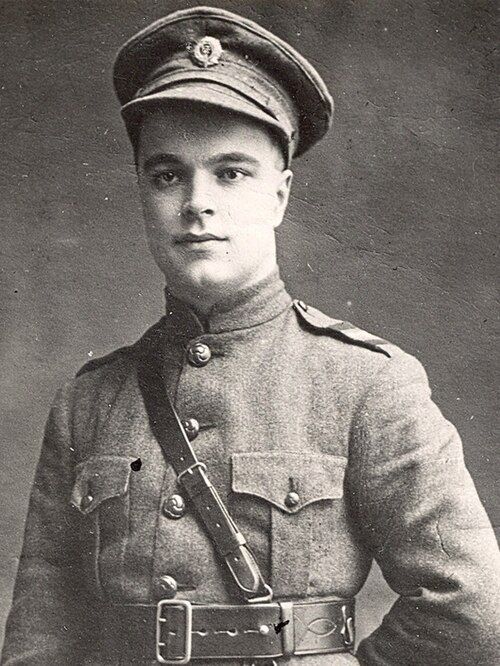

In a final letter to his mother, McKelvey wrote: ‘I feel quite happy, and I hope God will accept my sacrifice for himself. I feel very much the fact that it is my own country men who have sentenced me to death, but I pray God that the deaths of those of us who are to be executed this morning may open their eyes to the dreadful crime of going against their own better natures, against everything they once held dear, and at the bidding of our one enemy, England, waging such cruel and relentless war against the Republic which once they would have died to uphold.’
After McKelvey’s execution, his remains – along with other executed republican prisoners of the conflict – was not reinterred until late 1924. According to newspaper accounts of the time, there was a huge turnout on the Falls Road for the funeral following the Mass being held in St. Mary’s Church, Chapel Lane, before McKelvey’s later burial in Milltown Cemetery. The tricolour that covered his coffin can be seen on display in the Eileen Hickey Republican Museum. McKelvey’s legacy looms large for republicans in Belfast, with the Sinn Féin office on the Falls Road named after him and a GAA club founded in his name in 1924. Of note, James McVeigh wrote a major biography on McKelvey’s life, entitled ‘Goodbye, Dearest Heart’ – the title words from the final letter McKelvey wrote to his mother.
His comrade Peadar O’Donnell observed of him: ‘Joe McKelvey was a Belfast man of Donegal stock. He was sturdy in build, of enormous strength and reckless courage. He was an unyielding opponent but not a dangerous enemy for he was quite incapable of deep hatreds. He was pre-destined to be a martyr in a revolutionary movement … for he would not dodge and he could not bend.’
On 2 April 1922, he addressed members of the anti-Treaty Dublin Brigade IRA in Smithfield, in which he said those present ‘were there to declare that they would defend the Irish Republic, against its enemies, whether foreign or domestic’. (Private collection)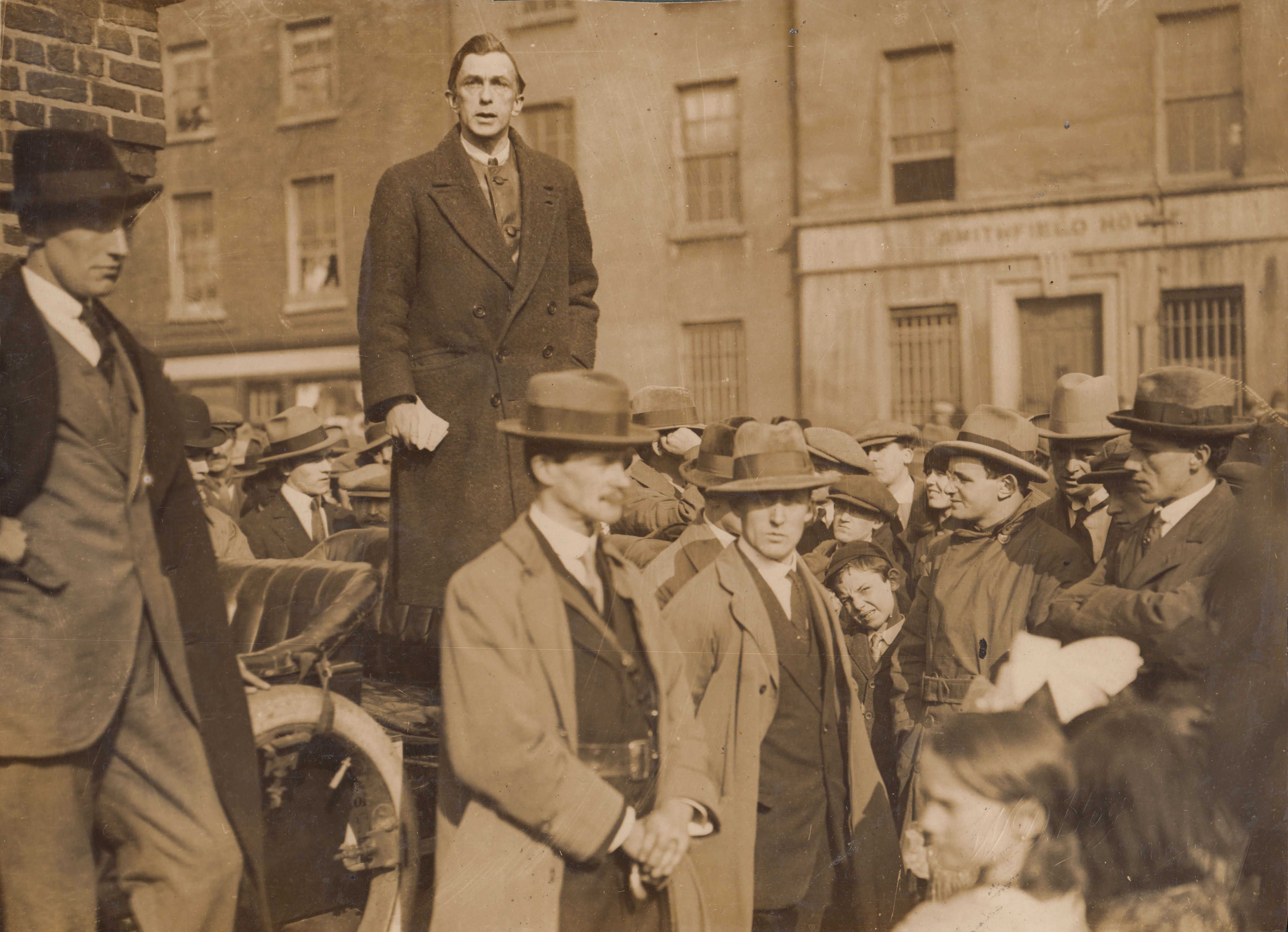
More ambiguous in popular memory and commemoration is his comrade, Rory O’Connor. Ironically, at the time of his death, Rory O’Connor was perhaps the best known publicly of the four men to be executed. His background suggested an unlikely revolutionary, the son of a wealthy, prominent, Dublin-based solicitor. O’Connor had risen in the ranks of the Volunteers and became the IRA’s Director of Engineering. He also masterminded several high-profile prison escapes of republicans and IRA operations in Great Britain. O’Connor was also the first of the IRA’s General Headquarters Staff to oppose the Treaty. In April 1922, O’Connor would direct members of the IRA’s Dublin Brigade to seize the Four Courts complex on Dublin’s quays in defiance of the new pro-Treaty government. The Four Courts would become the garrison where anti-Treaty IRA leaders such as O’Connor and McKelvey would operate.
Alongside McKelvey, O’Connor was involved with what is often referred to as the ‘northern offensive’ which was to be carried out by both anti- and pro-Treaty sections of the IRA from May to June 1922. This offensive, with its chief architects being Michael Collins and Liam Lynch, had its roots as a response to the extraordinary wave of sectarian violence against the minority Catholic populace in the first few months of 1922, primarily in Belfast.
A major aspect of the plan involved swapping weapons that had been given to the newly formed pro-Treaty forces by the British with those used by republicans, including those in the Four Courts garrison. The Four Courts weapons were to be sent to Northern IRA units for planned attacks against British forces there, as the Northern IRA could not be seen to be using the British weapons supplied to the pro-Treaty Irish government against British forces. The idea was that any anti-Treaty republicans in the south who sent their arms north would have them replaced with these British-supplied arms.
The northern offensive saw units from counties such as Cork and Kerry given arms and munitions on arrival at the Four Courts, before being dispatched to the border to aid the northern IRA. An initial proposed series of widespread attacks on barracks in the North was scheduled for 19 May but collapsed, chiefly due to poorly communicated orders, and the resulting attacks were limited. At the heart of the continued confusion was the exact nature of what to be achieved. The historian Michael Hopkinson has highlighted the uncertainty among IRA members over whether the attacks were just to create a ‘nuisance’ or in fact bring down the northern government, such was the confused nature of what was planned.
The most notable episode of this northern offensive was the gun battles that resulted along the Donegal/Fermanagh border from 27 May to 8 June, with the IRA fighting against both the British Army and B Specials. These took place primarily around the towns of Pettigo and Belleek and resulted in casualties among their ranks and some prisoners being taken. This was the last time pro- and anti-Treaty IRA Volunteers fought alongside each other. Ultimately, the British Army defeated the IRA men and for the next several months set up a ‘neutral’ zone in the area, from which both the IRA and B Specials had to withdraw immediately. As a result, all future such operations planned were halted, and as means to possibly unite both factions of IRA, it failed utterly.
Later, from captivity in Mountjoy, Rory O’Connor excoriated his former comrades in a private letter. O’Connor was so far as to claim being told ‘as long as we held that place [the Four Courts], the war against north-east Ulster would be attributed to us. We, of course, had no objection. From this you see the real reason why we were not asked to evacuate the Four Courts.’ O’Connor was clearly bitter from the reversal of fortune for his garrison, when the Four Courts was bombarded by the pro-Treaty military forces with the beginning of the Irish Civil War on 28 June 1922.
A full understanding of the events of the ‘northern offensive’ was lost with the extra-judicial deaths of the four men ordered by the Irish government.
Kevin O’Higgins’ wedding to Brigid Cole on 27 October 1921. Standing from left to right: Éamon de Valera, Kevin O’Higgins and Rory O’Connor, who was best man. Seated from left to right: Molly Cole, Brigid O’Higgins and Irene O’Higgins. (Courtesy of the National Library of Ireland)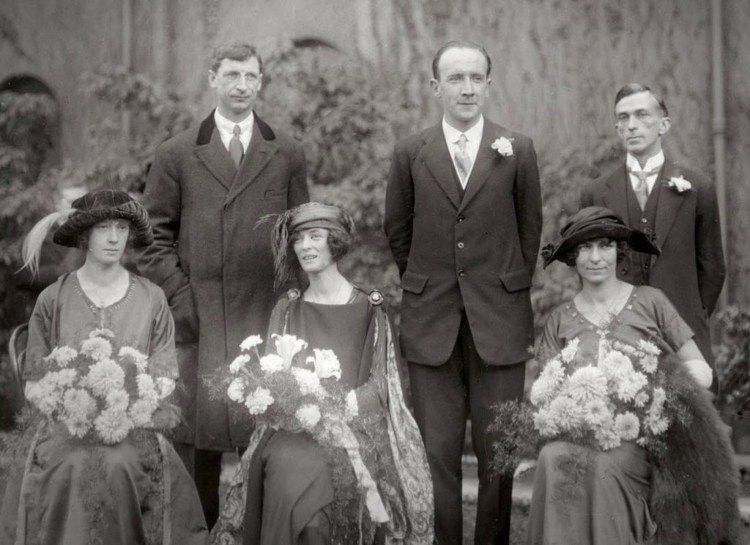
Most poignantly, one of those ministers who was part of the Irish government that approved their executions was Kevin O’Higgins, then Minister for Home Affairs. Only over a year before, Rory O’Connor was the best man at O’Higgins wedding – several weeks before the signing of the Treaty. Both men shared a genuinely warm and close friendship. Days after O’Higgins’ wedding, he wrote to O’Connor and referred to him as ‘the bestest best man that ever rounded up a bridegroom’.
Months later, O’Higgins agonised over the decision to execute the four men. There was no signing of a death warrant as persists in popular memory, but O’Higgins was part of the collective cabinet decision, and the death of the four men became a central component of his legacy. Nearly five years later, and four years after the end of the civil war, O’Higgins was assassinated by members of the IRA’s Dublin Brigade while walking the streets of south Dublin – a particularly violent result of the executions on 8 December 1922.
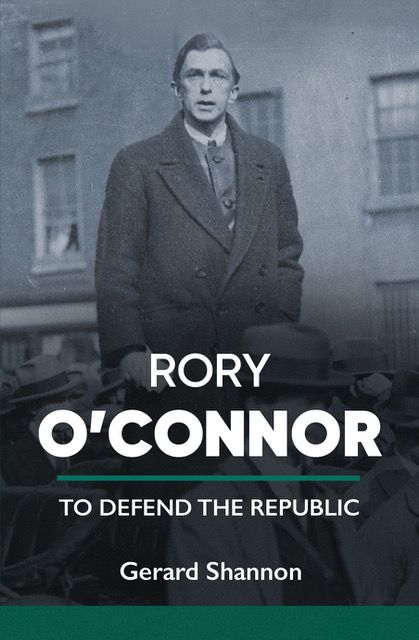
Gerard Shannon is the author of ‘Rory O’Connor: To Defend the Republic’, now available from Merrion Press, price £17.99.. The book will see its Belfast launch on 14 May in Áras Uí Chonghaile.