THE Gaelscoil revolution is only just beginning, a discussion was told this week.
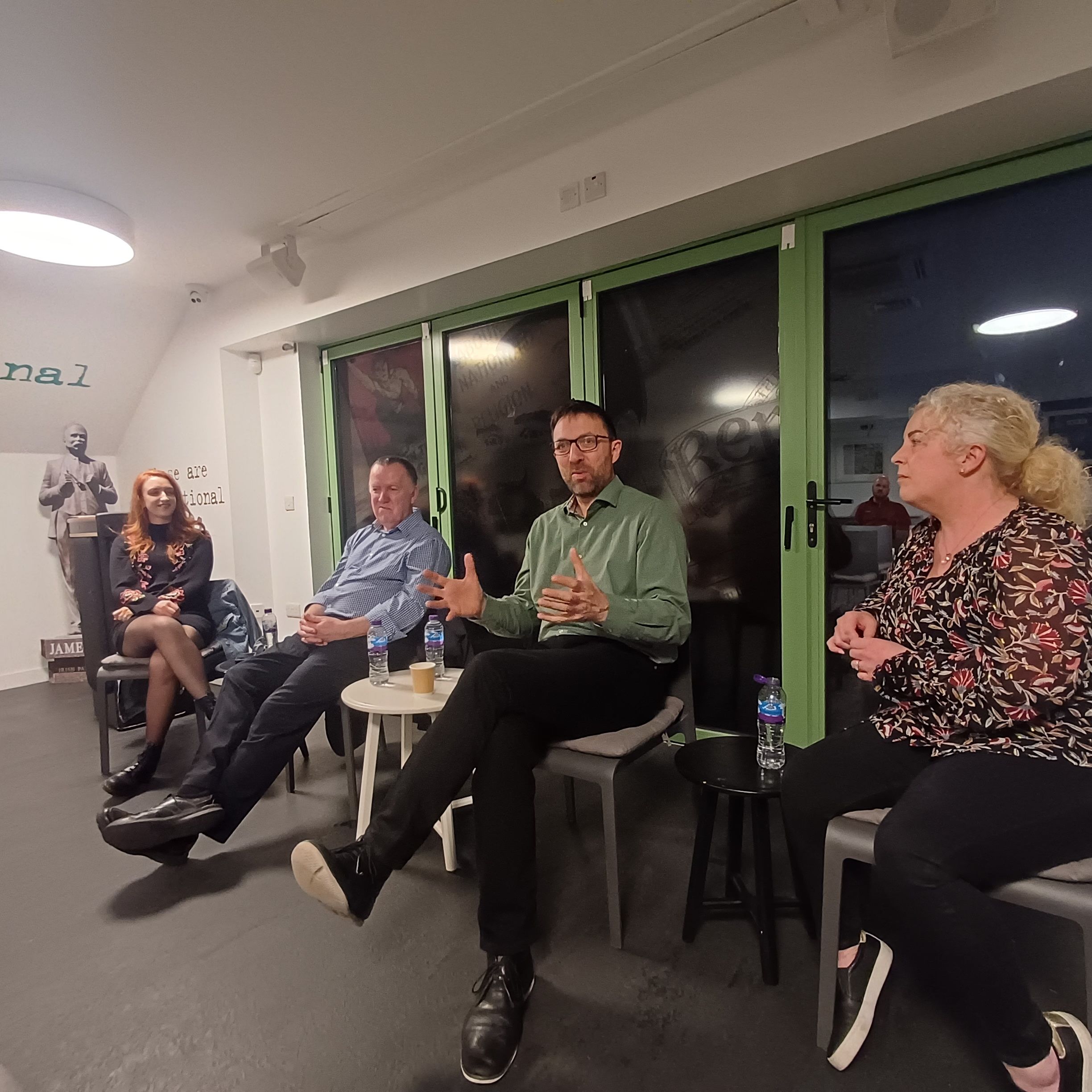
Three stalwarts of the revival spoke at a bilingual event – Gaeloideachas: An Tús ’s an Todhchaí, Gaelic education, the Start and the Future – at Áras Uí Chonghaile on the Falls Road.
Maighréad Ní Chonghaile, principal of Gaelscoil Éanna in Glengormley, was joined by the principal of Gaelcholáiste Dhoire in Dungiven Diarmaid Ua Bruadair and Pilib Ó Ruanaidh, director of Iontaobhas na Gaelscolaíochta, which helps build new Irish-medium schools.
Maighréad said the community that forms around a Gaelscoil makes them special. “I think it’s about passion – it’s about Gaelsaolaíocht and Gaelscolaíocht going hand in hand.

“Nobody in Irish-medium edition would be happy with a nine-to-three job, it’s about building that living thing around the school.
“It’s about giving extra because it’s not just a language, it’s our language. It’s national identity, that sense of pride in who we are and where we come from.”
Talk chair Clíodhna Nic Bhranair said that as a student in Coláiste Feirste, campaigning and activism were central to school life. “We understood, even at that young age, that this was about not only our rights but our very existence,” she said.
Diarmaid – who was brought up in the Shaws Road Gaeltacht – said that although the achievements of previous generations were to be celebrated, he preferred to concentrate on the present and the future.
“We have come on since 1971 with those seven or eight kids going to school in a shed at Bunscoil Bhóthar Seoighe to seven or eight thousand pupils now having their education through the medium of Irish.
“It’s our time now – even with Gaelcholáiste Dhoire we have ten years under our belt, but there’s more we want to achieve."
Pilib said there were still structural deficiencies in the Irish-medium sector.
“There’s a massive problem in education in terms of capital underspend and those problems cut deeper on the Irish sector because they are newer schools – we’re the newer sector and most of those schools were set up on sites that were not fit for purpose,” he said.
“There’s only two custom-built Irish schools outside of Belfast. Many are still in the same huts that were built when they were set up more than 25 years ago.”
Maighréad said Gaelscoileanna had never been state-dependent. “The same story could be told about any school across the North. In 2004 Naíscoil Éanna was set up in a spare room in a house, and when I went in in 2008 we had ten children in the primary school, now there are 220-plus. And that story has been replicated across the North.
“We’re not there yet, but we should take the time to celebrate the growth that has never been funded enough.
“The Department of Education have never invested a matchstick in our school. The community infrastructure that’s around the school – breakfast clubs and after-schools clubs and weekend events, discos – that’s what makes the Gaelscoil movement special.”
Maighréad, Diarmaid, Pilib agus Clíodhna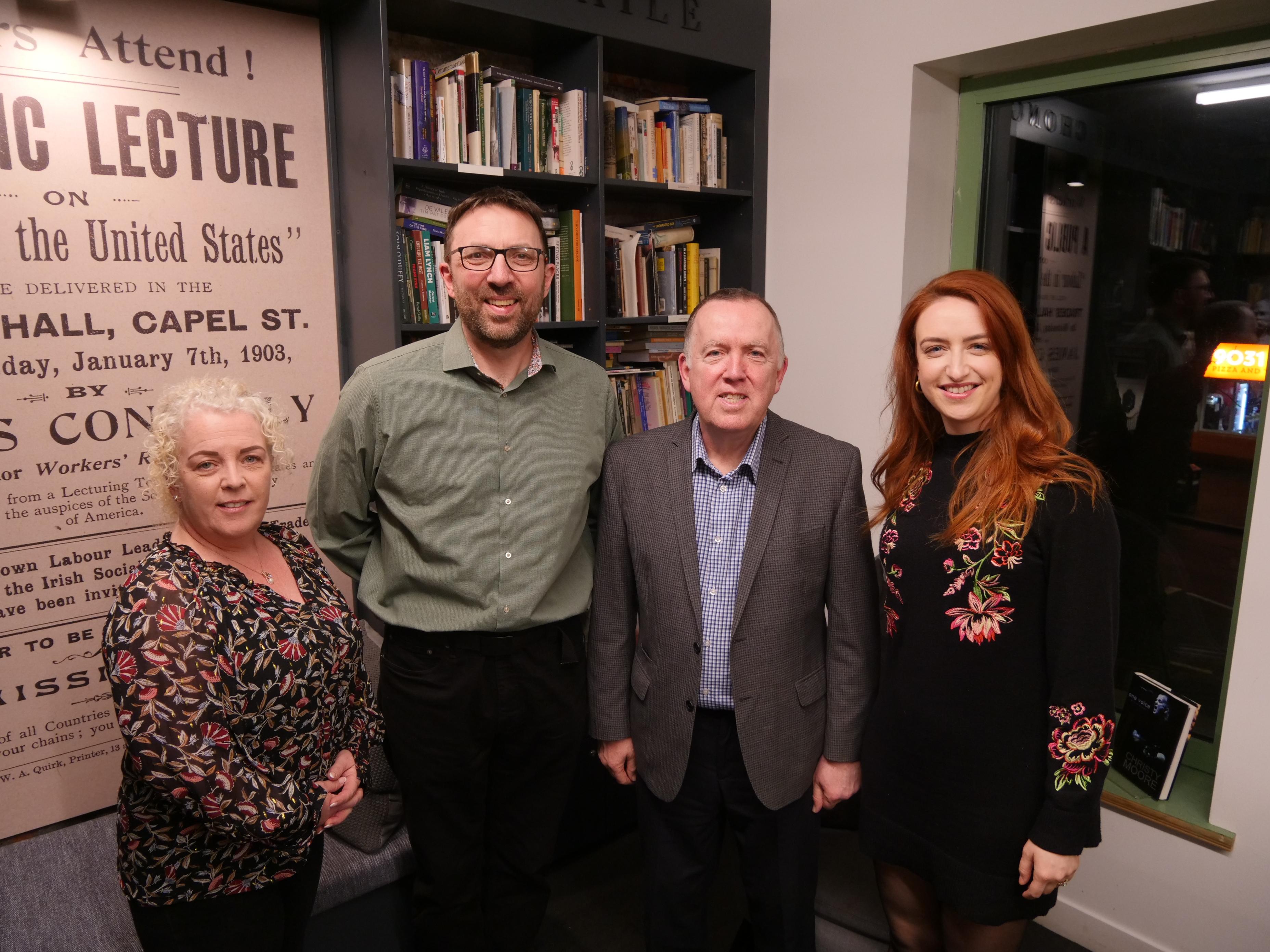

Diarmaid pointed out that there was still official opposition to the Irish language sector. “Back in the 1970s, it was threats, the families of Bóthar Seoighe were told if you set up that school you’ll go to jail. Now the authorities accept the fact that we are here and we are not going anywhere."
He added: “The open day is very important for all Gaelscoileanna. People get a feel for a school as soon as they walk through the door – and in a Gaelscoil it’s all about the pobal, the school community, and the atmosphere – so many people say that.”
Maighréad said Irish language post-primary schools like Coláiste Feirste and Gaelcholáiste Dhoire were a great leap forward.
“A fluent 11-year-old doesn’t make a fluent 18-year-old,” she said.
“There are people right across the sectors who choose other options, and that’s understandable. We will love the children until the last day in June no matter where they are going.
“We have to be respectful that it’s down to the individual choice of parents.”
Diarmaid added: “Irish-medium education can be for anybody but it might not be for everybody. You have to be realistic about that.”
Clíodhna said her own experience in Coláiste Feirste still inspired her: “You get so much more than education, you get all the community and support, whether you’re academic or not you are celebrated for who you are.”
Diarmaid said even the practice in Gaelscoileanna to call teachers by their first names was important.
"We all call each other by our first names – the children just call me Diarmaid, and some people say to me that’s strange – they don’t respect their teachers. I say it’s the opposite, they do respect their teachers but we respect them. It breeds a respect for a person no matter who they are," he said.
“And it gives the children a bit more confidence in themselves.
“When people say there’s something nice about your school, it’s by design. It’s not by accident – and you can see that in all the Gaelscoileanna.”