Civil rights icon the Rev Jesse Jackson, who passed away earlier today,made two impactful visits to Belfast, on each occasion nurturing civil rights, bridge-building and racial harmony.
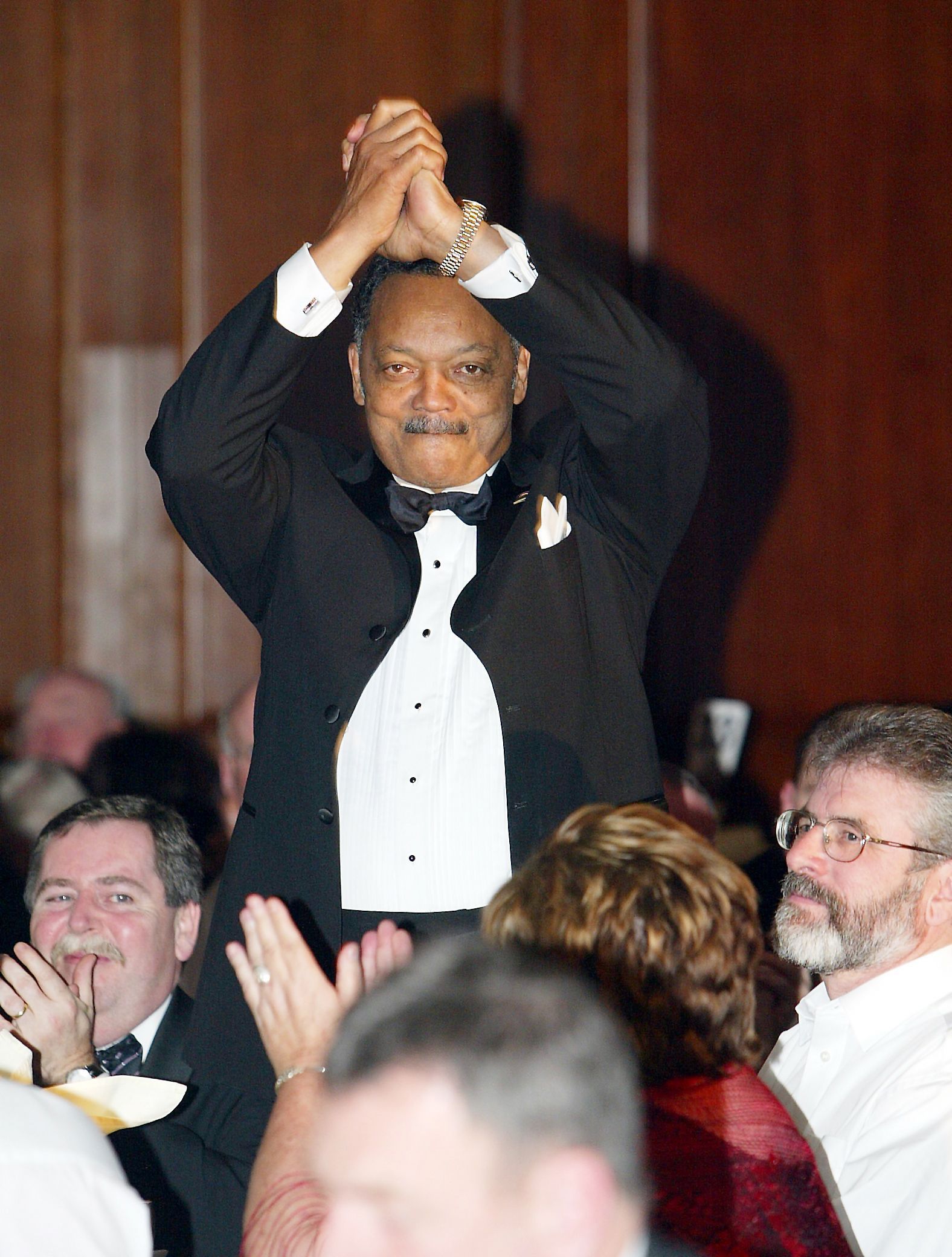
His first visit to Belfast came in 2004 when he addressed the Aisling Awards and presented the Person of the Year award to the family of Emma Groves who had been blinded by a rubber bullet in her Andersonstown home in 1971 and went on to become a life-long justice campaigner.
While in Belfast, the Rev Jackson visited Coláiste Feirste on the Falls Road, where he donned the school's football Jersey and took part in a Gaelic football workout. Later, he journeyed into East Belfast where he was presented with a Glentoran scarf by veteran peacemaker and unionist politician Sammy Douglas.

GLENS FAN: Sammy Douglas and Rev Jackson in East Belfast 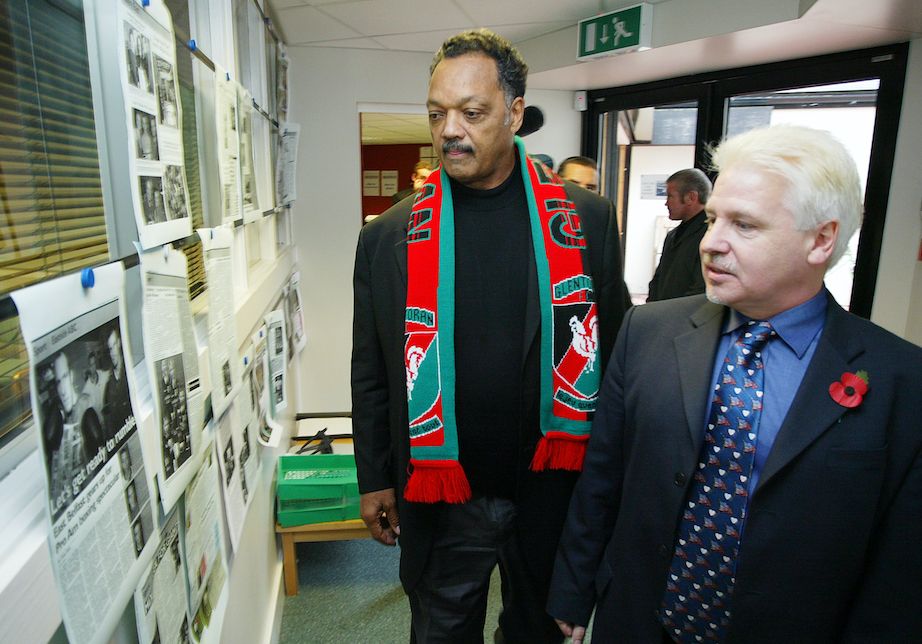

"When Jesse Jackson arrived in Belfast he immediately pulled on a Coláiste Feirste sports top, grabbed a hurley, and opened his heart to our students," said Coláiste Feirste Chair of Board of Governors Seán Mitchell.
"He immersed himself in the history of our school, and encouraged our young people to use their energy to push the Irish language movement towards a future which few thought achievable; a future no longer defined by angry men who cling to power through prejudice and discrimination.
"It is still remarkable to think that this giant of civil rights and justice was standing in what was and still is the only Irish Medium Post Primary in Belfast. When Jesse spoke of simple acts of self-help and collective action he found a ready audience here. It was easy to see why he was so popular because he embodied an idea of how ordinary people can make a difference.
AISLING VISION: Jesse Jackson jr., Alex Maskey, Rev Jesse Jackson and Lord Mayor Tom Ekin back in 2004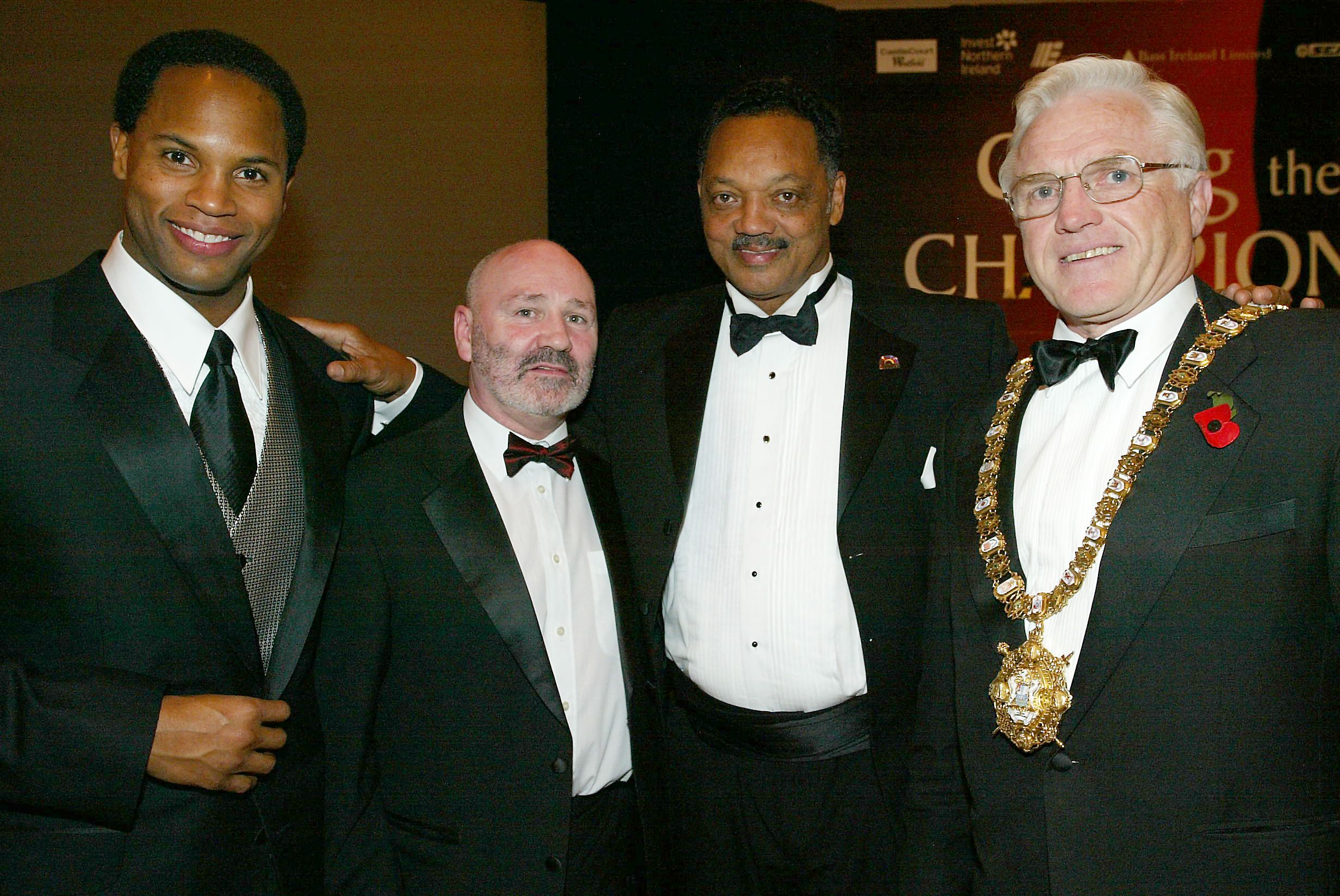
"Today, we continue to build an inclusive future through these values and the commitment that there is something for everyone at Coláiste Feirste. Through Spórtlann na hÉireann we recently delivered the annual Irish Language Anti-Racism Week, Fáilte 26, which saw thousands take part this year. Fittingly, our closing event finished on the pitch where Jesse lifted his hurling stick and our hearts. Football teams and players of all backgrounds – including from Ghana, Sudan, Nigeria, Syria and Zimbabwe – reminded us that people in all their diversity are a treasure to uphold and protect."
In his address to a packed Aisling audience at the Europa Hotel in November 2004, Rev Jackson spoke out against racist attacks which had been taking place at that time on the Roma ethnic minority of Belfast, recounting the Biblical story of the Good Samaritan, himself an immigrant.
During his Belfast stopover, he met with victims and survivors of state violence in the Beechmount Leisure Centre, coming down from the stage to pray with bereaved and wounded families.
The veteran civil rights leader returned to Belfast for a brief visit in 2011, meeting victims and survivors of the 'Troubles' from across the community in the Europa Hotel and visiting St George's Boxing Club in the Market where he squared off against Irish champ, schoolgirl Christine Gargan for a brief bout.
Recalling that visit, Alex Maskey, then MLA for South Belfast and a former Mayor of Belfast said the Chicago-based civil rights leader, was clearly moved by his visit to the inner-city club.
SECONDS OUT: The Rev Jesse Jackson with Irish champ Christine Gargan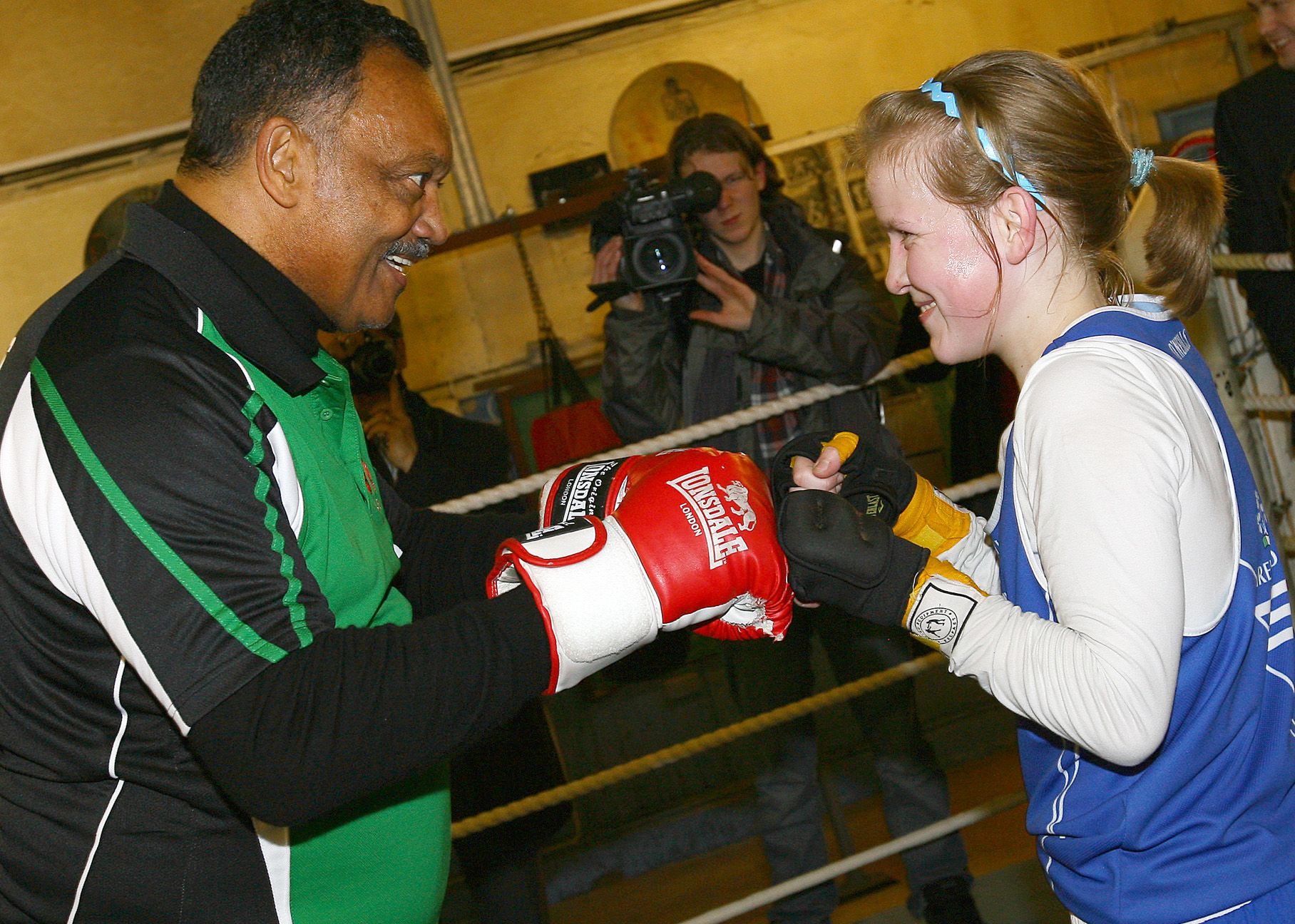
"Jesse was very impressed when he visited St George's Boxing club," he said. "He understood the legacy of community based stalwarts like Jim Clinton sr. He immediately recognised the role being played by boxing coaches who were also at the very heart of their community and felt at home amid the strong community spirit he witnessed in the Market."
The following day he travelled to Derry to meet the Bloody Sunday families in the fledgling museum which had been opened to commemorate the January 1972 massacre — and pledged to return to perform the official opening.
The Rev Jackson fulfilled that promise in his final visit to Ireland in 2017 when he cut the ribbon on the new Museum of Free Derry.
When he stood for the Democratic candidacy for the US Presidential election in 1984, the Rev. Jackson became the first politician to add Irish unity to his platform — much to the chagrin of the Irish Government which at that time was banning Sinn Féin from the airwaves.
Expressing regret at the Rev Jackson's passing, Gerry Adams recalled that he had met the civil rights leader many times in both Ireland and the USA.
"He was a fearless and inspirational civil rights leader and a tireless advocate for equality and justice in the USA and elsewhere, including Ireland," he said.
"Rev. Jackson also understood the significant influence that the Civil Rights Movement in the USA had on the Civil Rights Movement in the North in the 1960s.
"In 2020 Rev Jackson sent a video message (above) to an Irish-American conference in New York. He said: 'We're not going backwards; we're not going to give up. It's a healing time, it's hope time. I stand with people of Ireland and Irish Americans and Irish in Ireland. Fred Douglass was there, and I've been there. I look forward to coming to Ireland again. Please let me come back. I love you guys very much.'"