ONE of the many confusing Middle East events in recent weeks has been the way Iran attacked Arab countries in the region. Why so? Doesn’t it have enough enemies, with the US blowing to pieces their Supreme Leader, Ayatollah Alikhameni, as well as Iran’s army chief of staff, its defence minister, the Revolutionary Guard commander and a senior national security adviser? By all the normal rules, that should have reduced Iran to its knees, clutching a white flag and begging the US to stop.
But the normal rules don’t work in the Middle East. In response to the US slaughter of its top people, Iran launched attacks on the neighbouring states of the United Arab Emirates, Oman, Saudi Arabia, Kuwait, Iraq, and of course Israel.
That on the face of it seems self-defeating. Mightn’t Iran have hoped it could form some alliance with these neighbouring states? After all, it wasn’t they who slaughtered the Iran leadership cohort, it was the US. Wouldn’t Iran’s first thought perhaps have been that the people who live in the Middle East should form a united front against the outsider invader, the US?
Ah, but that’s where we forget that the US is an empire. And an empire, by definition, finds ways of straddling the world. The US has military bases in Bahrain, Qatar, Kuwait, United Arab Emirates, Jordan, Iraq, Syria and Oman. And if your enemy has bases in nearby countries, of course you’re going to attack them, if you can.
And while the US may have decapitated the Iranian leadership, it seemed to forget that Iran has the largest stockpile of ballistic missiles in the Middle East. It’s got somewhere around 2,500 and it can produce more – some say it can double the number it has within a year.
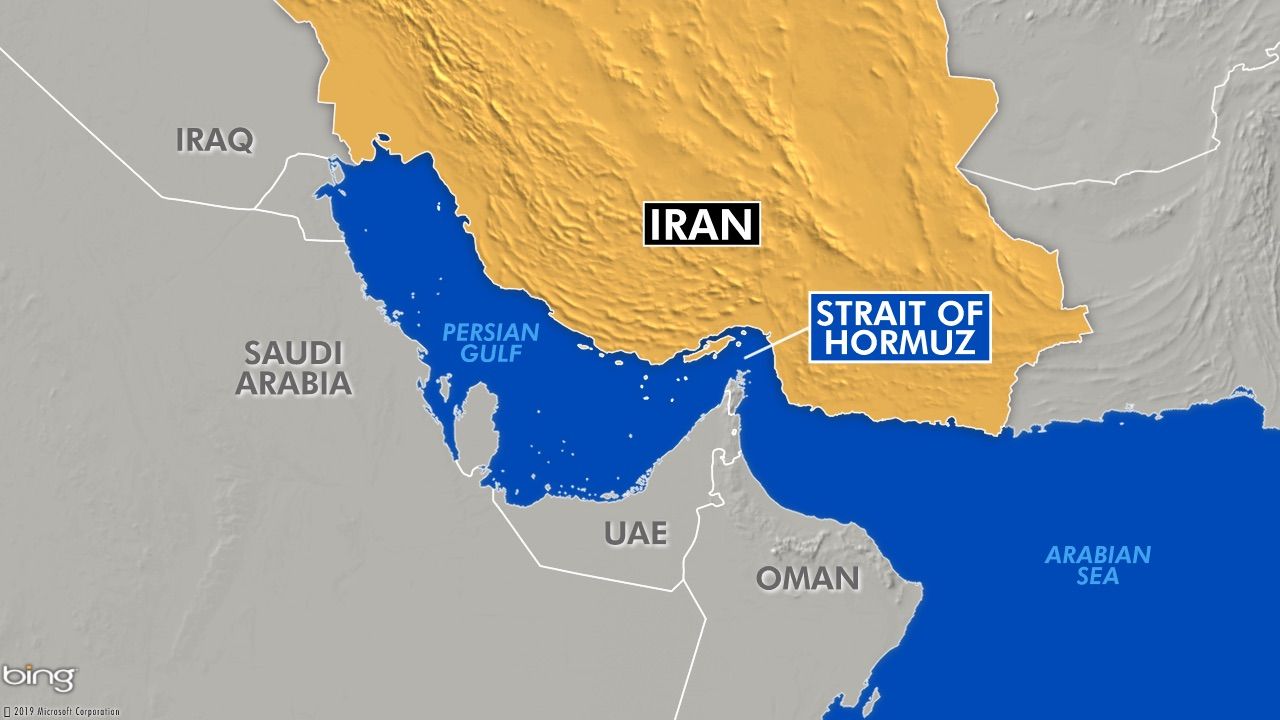
And then there’s the Strait of Hormuz. If your sense of geography is like mine, you won’t know where it is or why it matters. It is, I discover, a very important ‘choke-point', a narrow sea passage between Iran and Oman, and it connects the Persian Gulf with the Gulf of Oman. It’s important because roughly 20 million barrels of oil per day move through it. Iran can disrupt or block any ships passing through it – that’s why you’re paying so much more for filling your car at the pump. Blame Iran.

An obvious question might be, did the US not think of this economic response before it blew to smithereens the top leaders of Iran? Almost certainly Trump didn’t, and even if he had he might have hoped the Iranian people would rise up against the Iranian rulers that were left after the US’s assassinations. Either way, the US went ahead and wiped out the rulers of Iran and now it’s faced with an oil-choke that, if maintained, will drive US consumer to wonder if this is really making American Great Again. Campaigning for the November mid-terms is in full swing, and that in turn will affect Republican hopes of retaining the White House in 2028.
Shakespeare’s Lady Macbeth, consumed with guilt, utters the plaintive line, "Who would have thought the old man to have so much blood in him?" The US must be muttering similar sentiments about Iran. Yes, the US can slaughter and has slaughtered Iran’s leaders; but it miscalculated the blood of resistance coursing through Iran’s veins.
It would be harsh to call the US leadership mad, even though it seems to have forgotten its total failure to control Iraq and Libya a few decades back. But it’s certainly a slow learner.
That said, if you listen to one of Donald Trump’s many rambling and incoherent speeches, you might think he at least has gone a bit bonkers. And his mission?
MAMA – Make America Mad Again.