BACK in the day when Catholics still went to Confession, the story was told of Mickey who visited his local church to ask and receive forgiveness. When he returned home his wife Maggie, a woman concerned with her husband’s eternal welfare, asked him if he had told all his sins.
“I did of course,” Mickey told her.
She replied: “Did you tell the priest about that car with the serious oil leak which you sold Andy Treacy and him knowing nothing about it? Did you tell the priest about that?”
Mickey, filled with indignation, teeth gritted, replied: “I went to confession to tell the priest my sins, not to tell him my business!”
The humour in this is the fact that in this one instance at least, Mickey’s sin was his business. We all get the joke immediately. In real life, we don’t always get the joke as quickly.
If we supplied a neighbour with a gun so he could shoot dead his next door neighbour, we’d see it as very serious and would know full well our complicity in the murder. Even if we’d simply dropped him off at the neighbour’s house, we’d realise we’ d had a part in the murder.
With those small matters in mind, let’s look at last week when there was an International Armoured Vehicles Conference at Farnborough.
This event is proudly described by Britain as “the largest, most influential gathering of the global armoured vehicles community.” It had the latest in armour technology. Among the many countries attending were the Irish Defence Forces and the Irish Department of Defence.
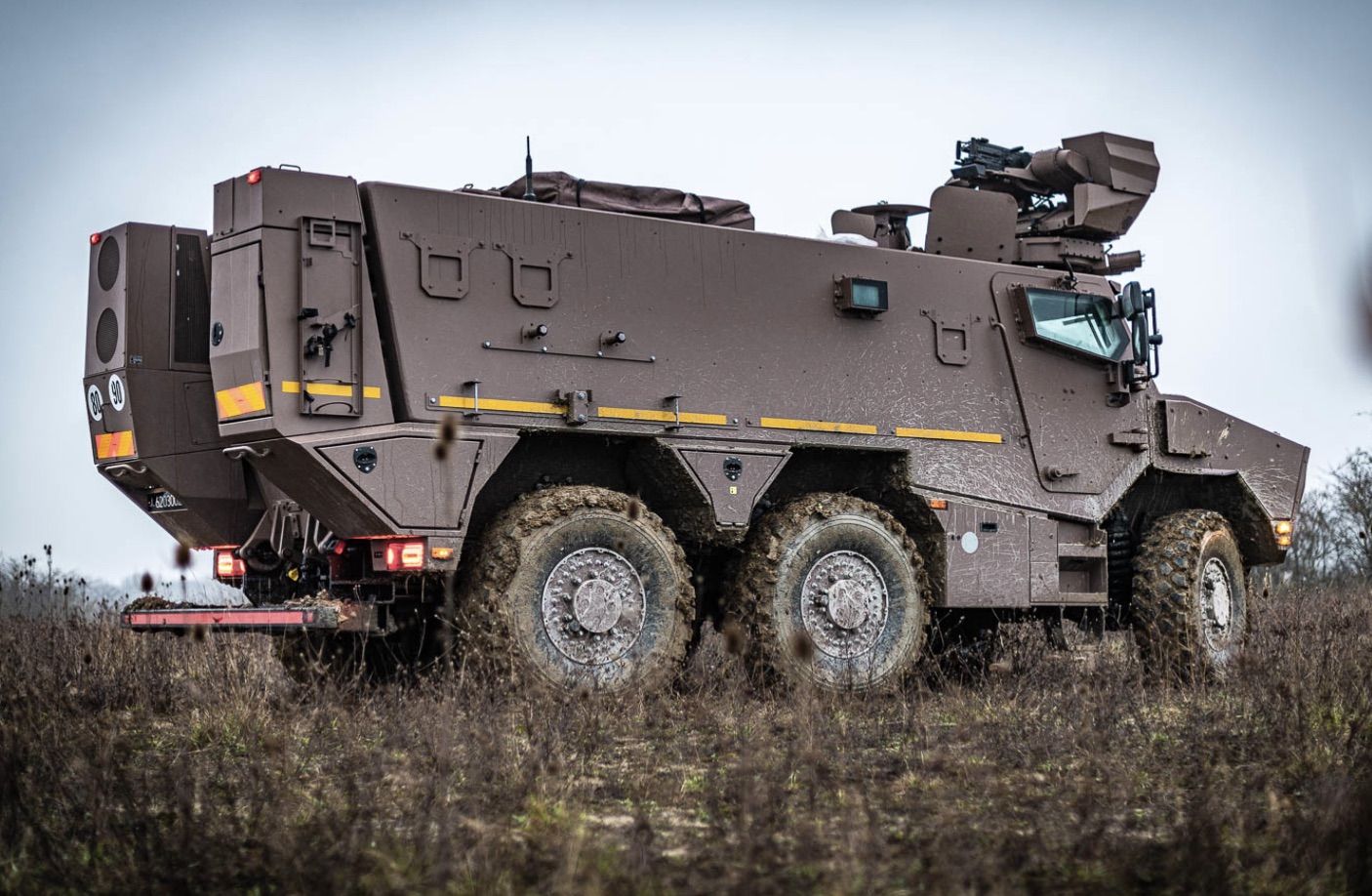
The Irish delegation paid particular attention to some French-made vehicles. These included the Griffon, a gigantic six-wheeled armoured personnel carrier; the Serval, a smaller four-wheeled armoured car; and the Jaguar, described as an "armoured fighting vehicle” equipped with a large turret gun. All are manufactured by the Versailles-based manufacturer KNDS France.
If the South concludes the planned deal, they’ll receive the Griffon, the Serval and the Jaguar, and pay as much as €500 million. Two years ago the French arms manufacturer got €70 million from the South of Ireland, and last year they bought €60 million worth of military equipment. Needless to say, the South has bought considerable armaments from other countries in past years as well.
They’re not asked, but if they were, the South’s government would reply that we live in a dangerous world, and the South must follow the example of other states and do business with arms manufacturers so that it’s locked and loaded for any eventuality.
Yet if a group of people (okay, Virginia, a drugs gang) had purchased weaponry on a much smaller scale – say body armour and a consignment of automatic weapons – the South and most of us would have cried out in horror. They would have distinguished between private individuals buying death-dealing weapons. We’d have been outraged and rightly so. But if it’s the state that’s doing the buying with the people’s money, it’s seen as a sensible investment. I mean, you have to defend yourself.
Where does neutrality fit into the South’s shelling out all this money to buy weapons and vehicles of war? Donald Trump is something of a madman, but even a stopped clock tells the right time every twelve hours: Trump has officially changed the name of the US Department of Defence into the US Department of War. The South too could use some transparency in its use of public money to buy death machines.