A LEADING doctors' spokesman says “trying to do too much” with the health service means “we are not doing the basics well”.
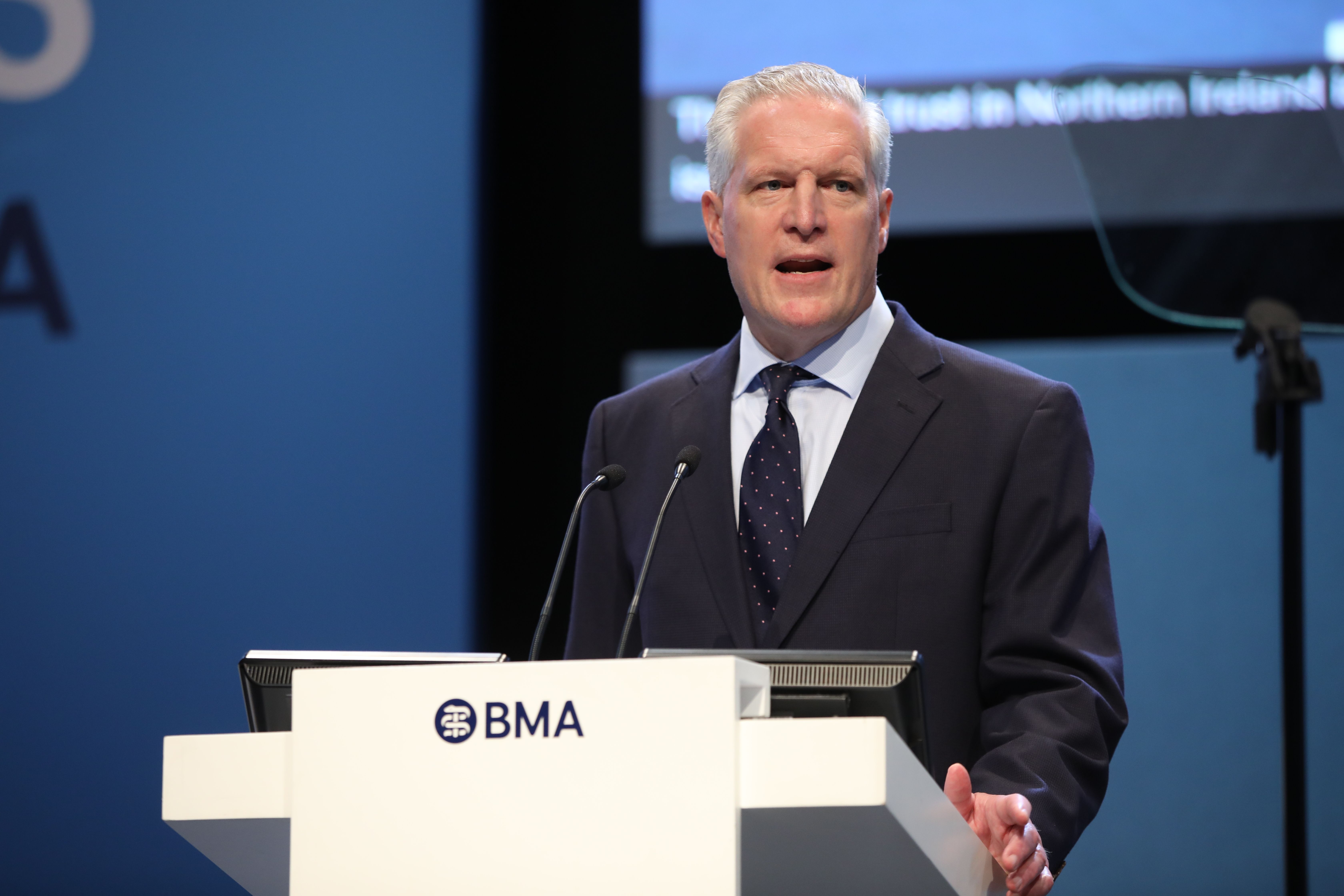
Alan Stout, a Belfast-based GP and BMA chair, who represents the doctors' trade union and professional body, told this newspaper addressing a small number of priority areas would be “a good start”.
Dr Stout said: “Health has become so enormous. We are asking where do we go with the health service? What should we expect from a public health service?”
Dr Stout believes getting four “front window” areas right would make a big difference to people’s lives.
“Access to a GP, the A&E experience, being seen for cancer, and mental health.
“If we hit those four points we would be off to a good start as these tend to be areas people judge the health service on.

“If we are walking to a front door of a house, and the driveway and potted plants are in order, you can get away with a few weeds.
“Of course other areas matter too.”
He noted that recent industrial action and “resident (formerly known as junior) doctors striking is about getting a world class work force”.
“We are in trouble without it,” he said.
“We simply are not competitive with Scotland, England and Wales, or Sláintecare, when it comes to terms, conditions and pay. That has to change.
“We have Assembly elections coming up next year so what people say is important, and how they create their opinion of the health service. We need to get the foundation right and build on top of that.”
Dr Stout was part of the expert panel which fed into the 2016 ‘Systems, Not Structures: Changing Health and Social Care’ report, chaired by former Basque minister Professor Rafael Bengoa, which was commissioned to overhaul health and social care in this part of the world.
It has not been put into action.
“Where do we go with the Bengoa report?,” he said.
“It has been a decade since it was published.”
He also believes we should be building what is known as the “Neighbourhood Model” of health and wellbeing.
It is about delivering greater levels of collaborative care to citizens in their local communities.
“We need to see a shift, and get stuff out of hospitals and into the community.”
He added: “Health inequalities are a widespread problem but particularily in cities and urban areas.
“The postcode differences around mortality and life expectancy, and deaths of despair (suicide) need focus.”