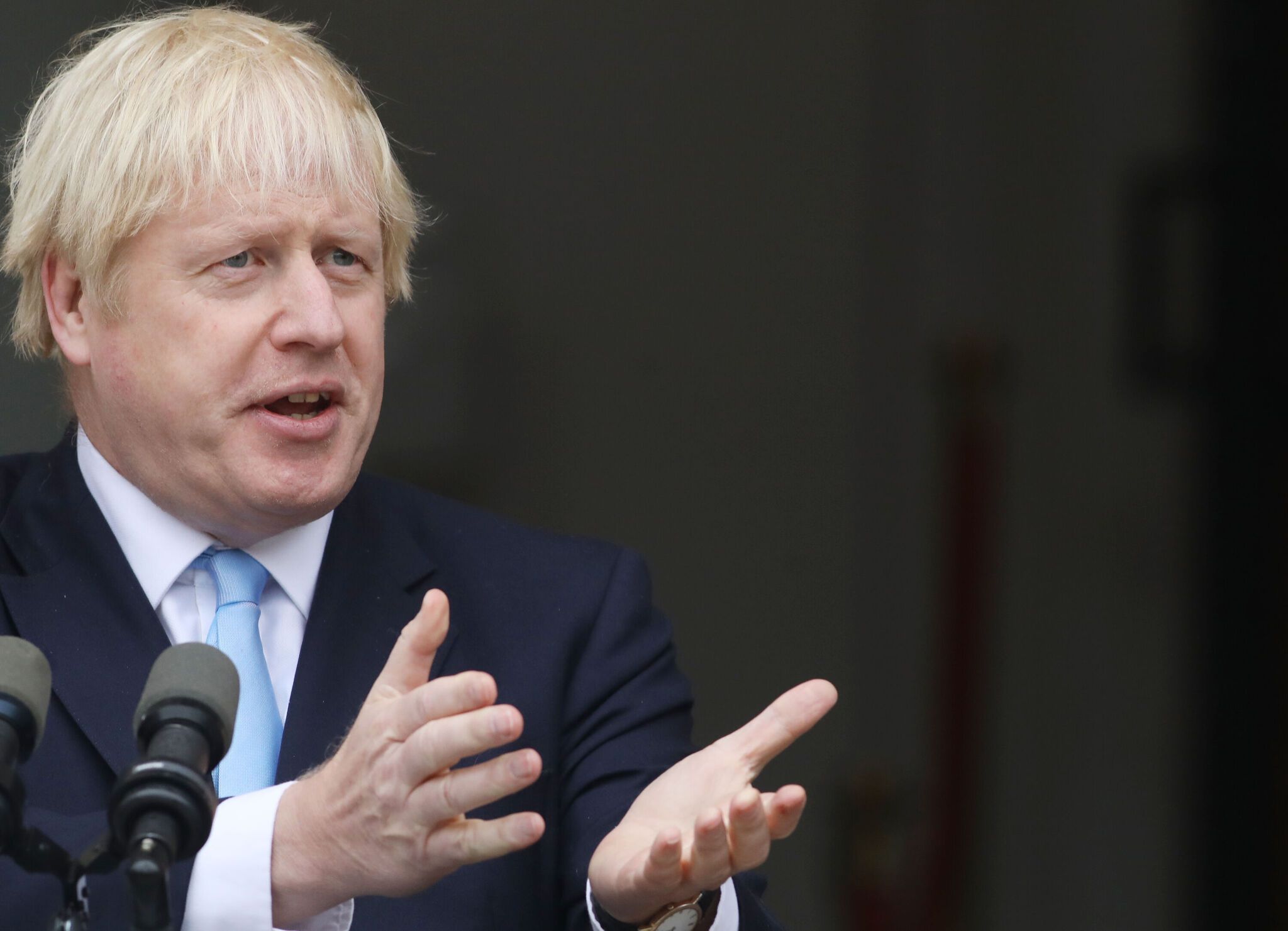
FOR those deluded souls who really believed Boris Johnson's encomium about the "sunlit uplands" of Brexit this really is the worst of times.
For far from ushering in a new era of Empire, the English who opted for Brexit have seen the chlorinated chickens come home to roost.
The Great British state finds itself £100bn per annum worse off in face of the sort of anaemic or non-existent growth which comes from cutting yourself off from your closest and largest trading partner. In fact, in April, as latest figures show, the economy actually contracted by 0.1 per cent.
And then there is the higher immigration from the former colonies as the skilled workers of the EU's eastern states flee the spendid isolation of Great Britain and its odious 'green card' system for EU nationals. As any serious student of UK politics observed, Brexit was about stopping immigration of non-white peoples, but in fact the percentage of immigrants of colour has gone up since Brexit "got done".

For many of the pro-Brexit majority in England who dragged Scotland and the North of Ireland out of Europe against their will, the motivating force was the dream of returning to the days of an Empire on which the sun did not set; a time when black and brown people know their place, and that place certainly wasn't Birmingham, Bury or Bradford. That dream has begot the nightmare of racist rage and toxic xenophobia — as seen, shamefully, in Belfast two weeks ago.
Johnson's promised Brexit bonus hasn't been felt by old or young as UK students are denied the opportunity to study abroad in the EU's wildly popular Erasmus programme while healthcare is no longer offered by right to Brit pensioners who have retired to, actually sunlit, Spain.
In short, the UK is a much-diminished place since that fateful Brexit vote on June 23, 2016.
But there is one part of the disunited kingdom which, courtesy of the steadfast refusal of all the EU governments, led, let it be said, by the Irish Government, has avoided the hard Brexit dreamed of by the DUP.
That's the Six Counties, which has enjoyed an economic surge since Brexit. Here the economy grew 16.5% from 2015 to 2023, while overall in the UK, the economy grew by just 11 per cent. Additionally, the levels of cross-border trade are at the highest level seen since Partition. Far from a hard border, we have had a surge in all-island economic activity, bolstered by funds from an Irish government which finds itself awash in money; just this week it pledged €230m to the local rail network.
Via the border in the Irish Sea, the North has one foot in the EU (membership of the Custom Union and the Single Market) and one foot out, and thus enjoys the status of a special economic zone (even if this advantage has not yet been properly leveraged to create thousands of jobs and deliver great prosperity).
For unionists who thought Brexit would prove a bulwark to Irish unity, the opposite has proved true. Since 2016, nationalists have swept to power in all the local institutions, with unionists now a minority in the Assembly and, according to the latest Census figures, a minority of the overall community.
And with more and more of those from a Protestant background turned off by the nativism and nationalism of a broken Britain — not to mention our local home-burners — the willingness to explore the advantages of, to use the Fine Gael term, a "unified island' has grown.
It's worth asking, when the Border Referendum is held, how many of our unionist neighbours will vote 'yes' to unity, more to regain membership of the European Union than to break the link with England.
Either way, Brexit has spelt disaster for those unionists who championed it — yet another mistake by political leaders who claim the World Cup Golden Boot for own goals.
The ten-year anniversary of Brexit is not, however, a time for resting on laurels. Nationalists no longer enjoy representation in the EU Parliament and enjoy only a second-class European citizenship. Putting that to right ultimately requires a vote for Irish unity and reaccession to the European Union, but in the meantime there is much that can be done at every level of society to build bridges to those European countries which stood by us in our Brexit hour of need.