WITH every passing day, the evidence of two diverging economies on the island becomes all the clearer – a Southern government awash in money looming over a Northern Executive which is effectively bust.
And it's not only in the big ticket items — health, education, infrastructure — that this disparity is clear, but also in the more esoteric but essential elements of life such as the arts and music.
Indeed, in just one investment in the arts sector – the £82m renovation of the Crawford Art Gallery in Cork, Ireland's third city – the Irish government has allocated a sum to a single project equivalent to nine years of Arts Council funding north of the border.
That miserly approach to the arts, a consequence admittedly of strapped budgets courtesy largely of HMG, is felt most severely in the music sector.

From the Ulster Orchestra to the world of traditional arts, our musicians find themselves fighting for scraps from the budgetary table.
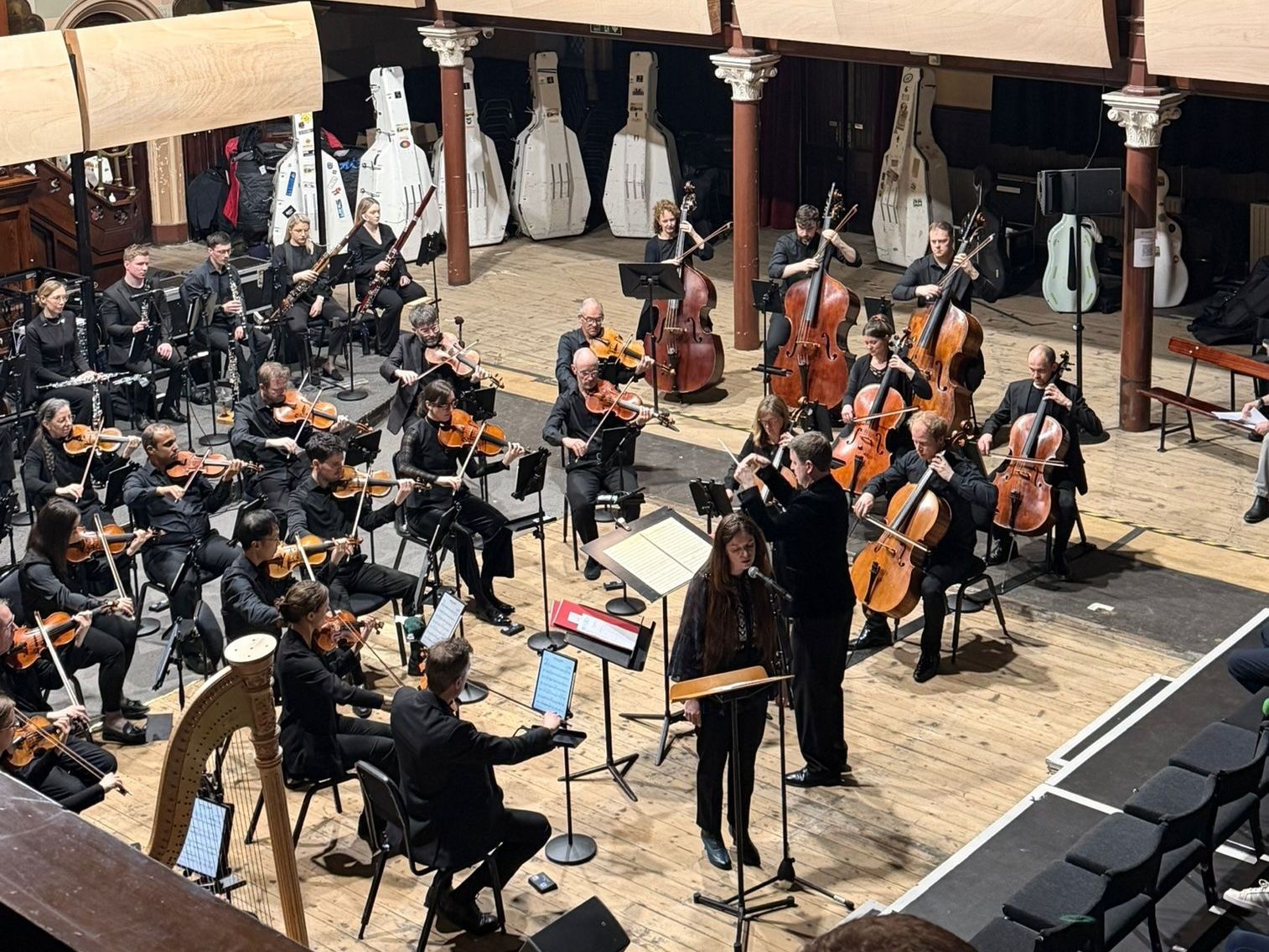
This week, the Ulster Orchestra, reborn in its new Townsend Street Presbyterian Church home, itself one of the finest listed buildings in the west of the city, staged a stunning tribute to the trailblazing 'blind bard of Belfast', German-Irish composer, Gaeilgeoir, music collector, linguist and creator of braille for Gaeilge, Carl Hardebeck. The supremely talented orchestra musicians made possible the first salute to Hardebeck, a giant of the Irish music scene and one-time Divis Street denizen, since 1970. In the process, the orchestra underscored its ongoing commitment to enhanced engagement with its neighbours.
And yet this uplifting performance came in the ramshackle surrounds of a much-loved but dilapidated church building which requires £15m to bring it up to the standard of the rehearsal rooms of the great city orchestras of Europe. At a time of straitened budgets, that funding is unlikely to come from Stormont, short of a fresh approach to taxation.
The situation for traditional arts is even worse. Traditional arts are among our most potent cultural strengths – accessible, community-rooted, cross-cultural and internationally acclaimed. In fact, it is courtesy of our amazing traditional dancers and musicians that Belfast this week received news that it will host Fleadh Cheoil na hÉireann, not just this year but in 2027 as well. For the record, that's a £160m-plus economic boost to the city economy.
And yet traditional arts receive around just two per cent of Arts Council funding. In fact, since 2013 the Traditional Arts Officer post within the Arts Council has been reduced from full- to part-time.
No wonder so many of our greatest artists have to ply their trade outside the six counties.
Despite the funding woes, no-one can deny that the traditional arts sector – witness this year's mini-TradFest and the Féile 140-session celebration of St Patrick's Day – punches above its weight.
Ditto, the Ulster Orchestra.
In a time of pressing demands on pubic budgets, how can more funding be found for our musicians? One solution, oft-proposed yet serially ignored by government, is to introduce a hotel room (and, indeed, AirBnB) tax with the proceeds going to the arts. It won't be a panacea but it would be a start.
The alternative is to see our ebullient trad musicians and our unionised Ulster Orchestra professionals fall further behind their colleagues, not just across the border but across Europe.
Whether it's stirring traditional air, The Foggy Dew, collected, preserved and arranged by Carl Hardebeck, or Mozart's fifth symphony, it's time we raised our voices to the rafters in support of the musicians who are the beating heart of Belfast.