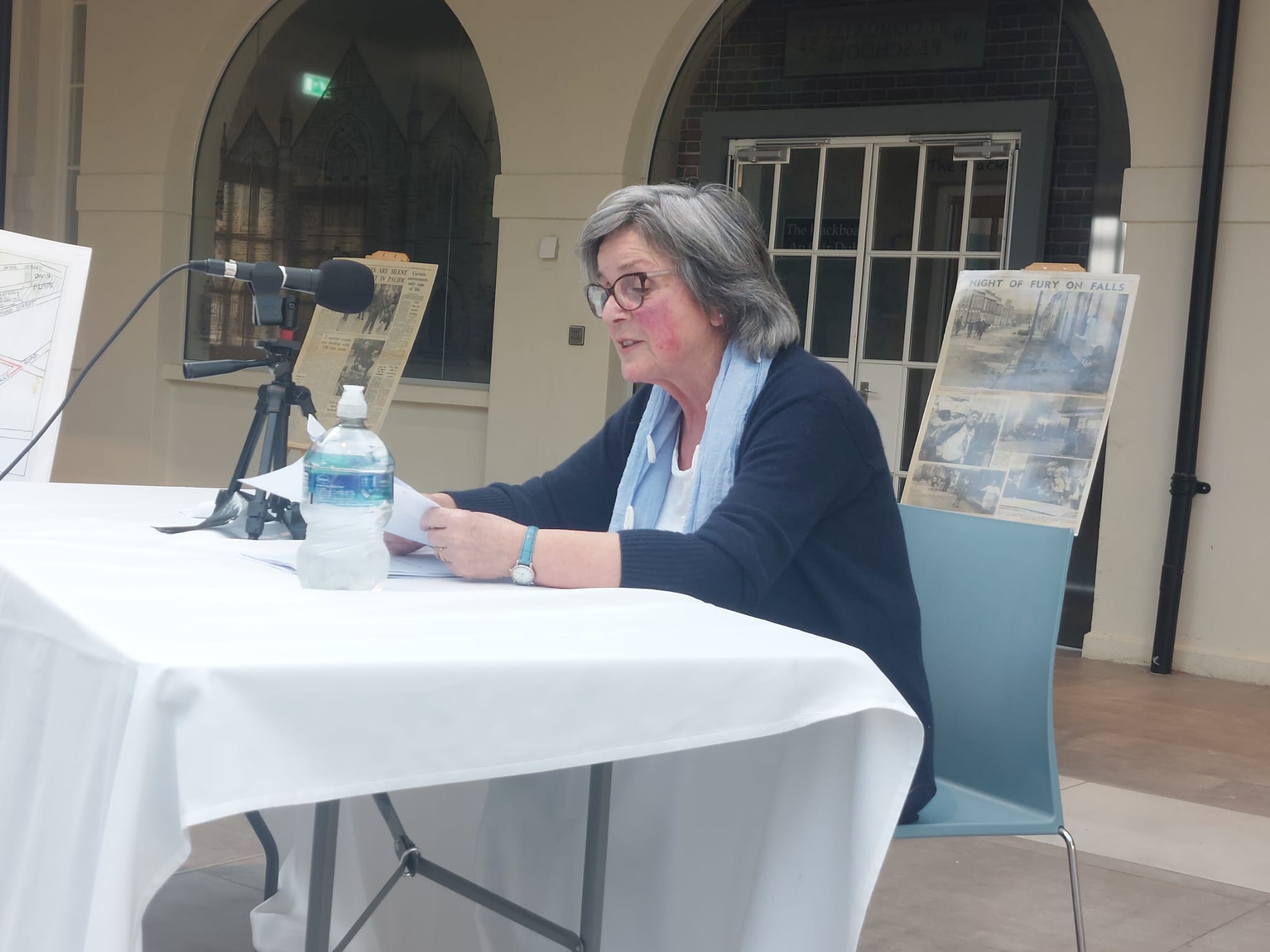
ONE of the women who took part in the historic march which ended the Falls Curfew has told an inquiry how the women broke through British Army lines to eventually bring the three days of shootings and house raids to an end.
Sheila McVeigh had turned 19 the week before the Falls Curfew, which took place between July 3 and 5, 1970. Four people were shot dead by the British Army and 78 people were injured, with hundreds of arrests made and countless homes raided over that weekend.
The four people who were shot dead by the British Army were Charles O’Neill (36); William Burns (54); Patrick Elliman (62); and Zbigniew Uglik (23).
Sheila was speaking on the third sitting of the Independent Panel of Inquiry into the Falls Curfew. Previous sittings of the inquiry have seen family members read out pen portraits of those who were killed, as well as eyewitness accounts from Falls residents about the events of that weekend.
Chaired by Michael Mansfield KC, the panel – along with solicitor Pádraig Ó Muirigh – have questioned the witnesses during sessions in St Comgall’s, Divis Street.
Sheila said there are very few women left who took part in the July 5 march, but those who did take part “didn’t know what we were walking into with armed soldiers that particular day".
"But we knew we had to rescue women and children in the Falls and we didn’t care. We were going in to get our people out of there,” she added.
Sheila said that at the time of the Falls Curfew she was a shop assistant in Woolworths and lived in the St James’ area with her mother, father and 12 siblings. With St James’ outside the curfew boundary, Sheila said the events of Friday 3 and Saturday 4 had little impact on her life as her brother was getting married on the Saturday and the preparation for the wedding at St John’s church dominated the family's attention.
However, that changed the next day.
“On Sunday the 5th of July my father told me to get ready and go down the Falls Road with the rest of the women,” she recalled. “He told me to go to the bottom of the Whiterock Road and join in with the rest of them. I didn’t know what was happening, but I did as my father had asked.
“At this time I didn’t know what curfew meant. When I got to the bottom of the Whiterock Road there were lots of other people there. It didn’t seem to be organised. There didn’t appear to be anyone taking responsibility.
“When we got to the bottom of the Whiterock, people were also coming from the Andersonstown direction and people were joining in when we walked along the march.”
Sheila said many of the women had brought food supplies with them such as bread, milk and sugar as they knew that those under curfew had been unable to leave their homes and all shops had been forced to close. As the women marched along the Falls Road, she recalled, other women came out from their homes and joined them.
“When we got to the Springfield Road corner the British Army had put barbed wire across Dunville Park. Once we saw it was sealed off we made a U-turn through the Grosvenor Road and then in through the side streets of the Grosvenor, into the small streets.
“The food and the supplies were given to the people as they hadn’t had anything from Friday. At different times the soldiers tried to give a speech and turn us back but nobody listened to them and the women pushed the soldiers out of the way.”
Sheila said there were emotional scenes when residents eventually started emerging from their homes.
“Women who had come out of their houses invited other women in to have a look at the damage that was done to their homes and they showed the women that the British Army had shot through the eyes of the Sacred Heart pictures and the women all seemed to be very upset. Other information was filtering down the line that houses were smashed in and people had lost items and things were stolen from their houses.”
She added: “I didn’t see the British Army retreating or getting into their lorries. I just know that we didn’t leave the people with the British Army still there.”
Sheila said the events of that day politicised her and other women who took part in the march.
Prof Tony Blockley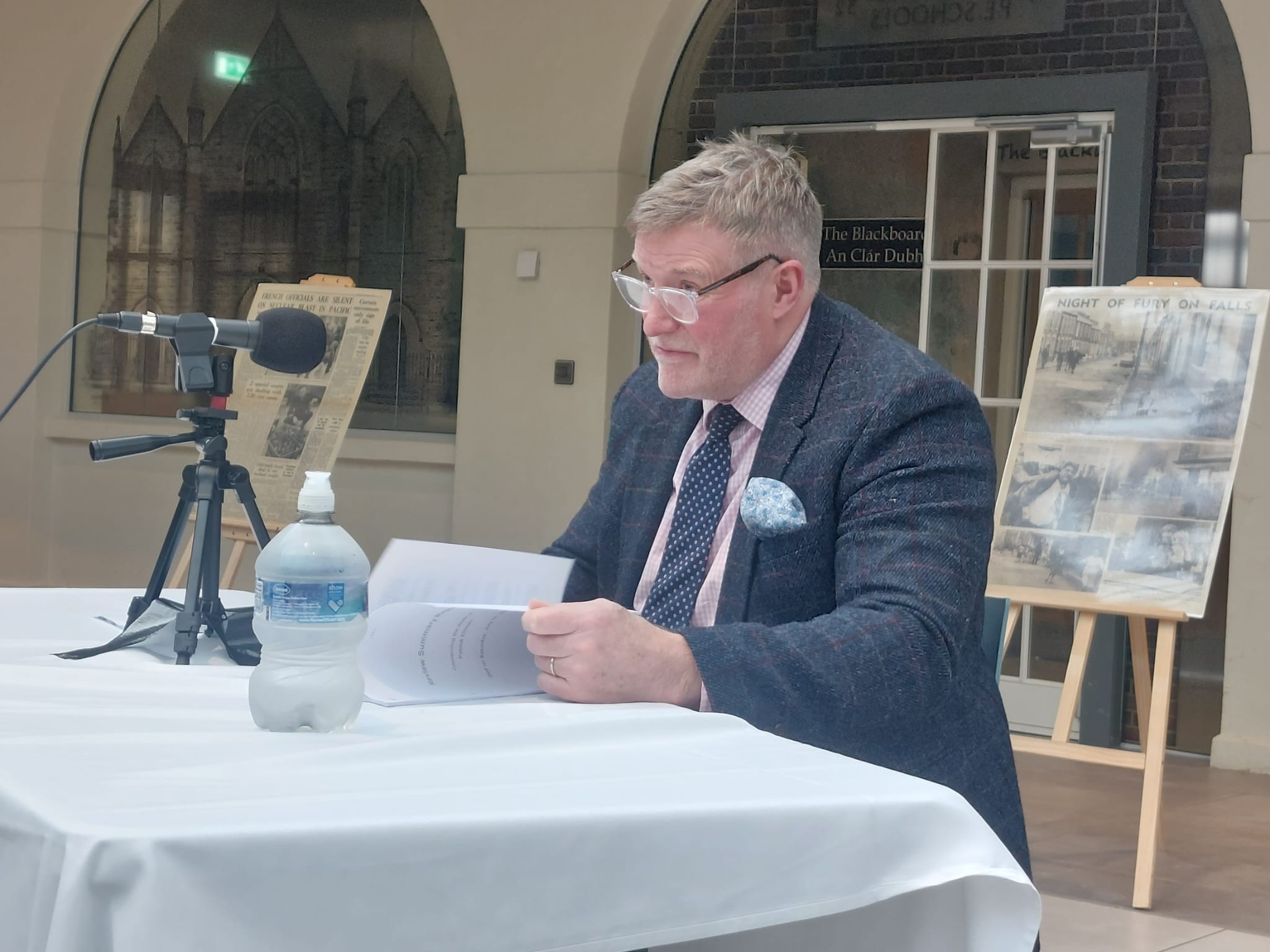

Earlier, the panel heard from Professor Tony Blockley of Leeds Trinity University, a retired English policeman who was part of the Historical Enquiries Team (HET) review into the death of Falls Curfew victim Paddy Elliman, shot dead by a British soldier on the evening of July 3, 1970. He told the panel he worked for the HET between 2011 to 2014.
Professor Blockley said the purpose of the HET was to revisit deaths “with a fresh pair of eyes” and consider the evidence by current standards as opposed to the standards of the 1970s “which were very, very different”.
The HET report concluded that 62-year-old Paddy Elliman – who was shot at the corner of Marchioness Street and Cullingtree Road – died after being shot by 'Sergeant R'. Sergeant R was not interviewed by military police until October 2, 1970, 13 days before the inquest.
“The HET can not explain why that is the case,” Professor Blockley said, reading from the report’s findings. “The investigation was rendered ineffective because neither the police nor the RMP SIB [military police] took the lead in it. The reality is that many important questions remain unanswered despite this review.
“Paddy was a 62-year-old man who had no connection with any terrorist organisation. He was in his carpet slippers getting fresh air when he was shot.
“The HET concludes that Paddy was an innocent man.”
The inquiry continues.