IT'S a striking reflection of this era of misinformation, disinformation and non-information, that, in their reporting of the death of the Reverend Jesse Jackson, none of our mainstream media reported on several consequential visits he made to this benighted backwater.
That's probably because during his visits he rubbed shoulders with communities which would easily fit the description he gave his own constituency in the US – "the desperate, the damned, the disinherited, the disrespected and the despised".
And yet, those visits, in 2004, 2011 and finally in 2017 were all history-making in their own way and left a legacy of activism and advocacy we continue to enjoy.
In his first 'Seal the Deal' visit in 2004, the Chicago-based civil rights icon, who had been at Martin Luther King's side when an assassin's bullet claimed his life in 1968, pushed pusillanimous politicians both here and in London and Dublin to take the final steps in the peace journey. He also took a trenchant stand on the two most troubling local issues of that era — unionist-nationalist reconciliation and racism. It was as a Baptist minister, rather than an international statesman, that he travelled into the heart of East Belfast, meeting the oft-bruised community of the east on their terms, donning the colours of the Cock and Hens and preaching the Gospel without using words. His famous phrase, "I Am Somebody" was as relevant in working class East Belfast as it was in East Harlem.

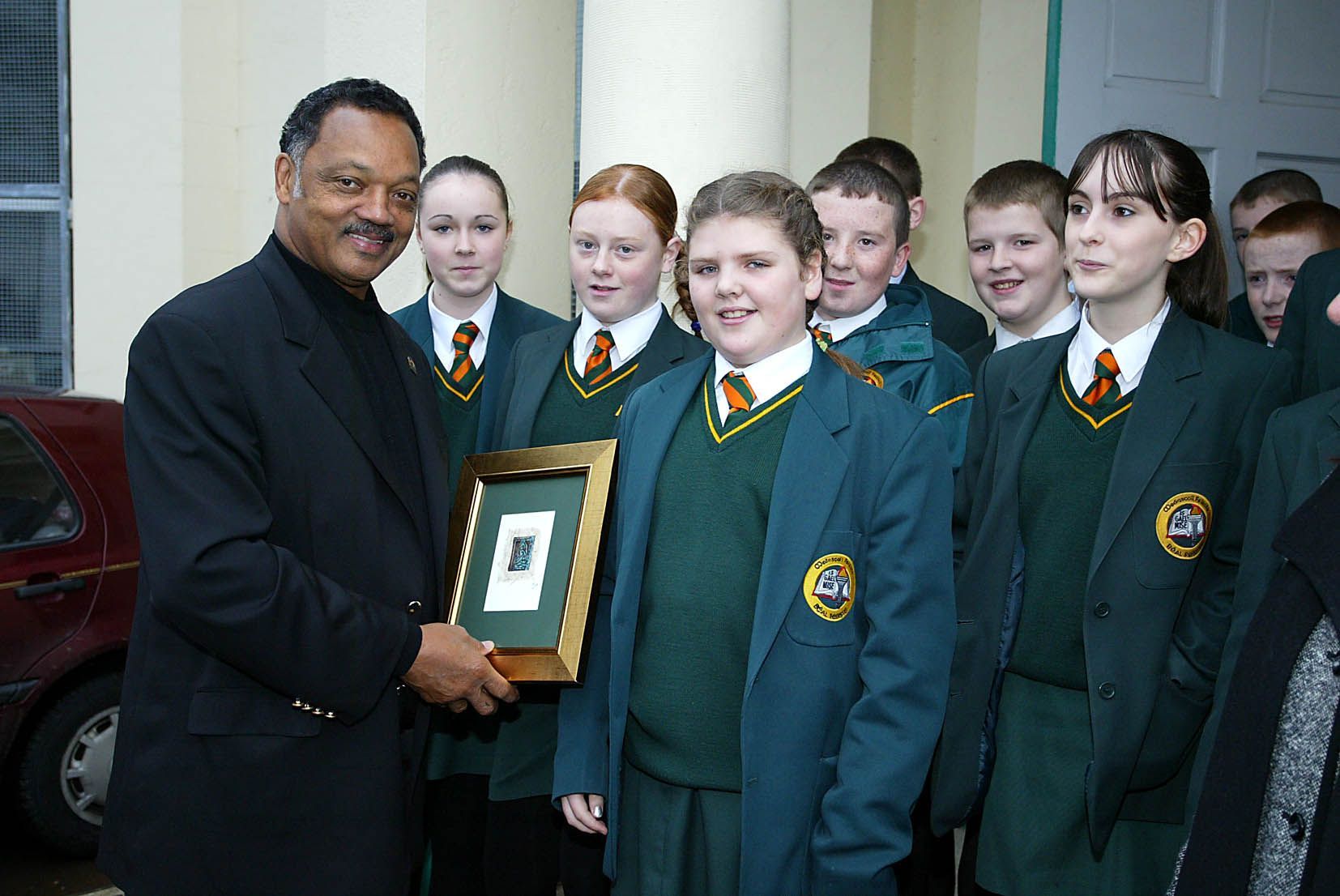
His visit to the then still nascent Irish medium secondary school Coláiste Feirste in the West of the city was also seminal. More than a few of the young people he met that day have gone on to take up senior roles in the Irish language movement which is at the very vanguard of the continuing battle for civil rights.
As a young man, Jesse Jackson was denied access to the local library in his South Carolina hometown and witnessed separate water fountains for blacks and whites. Students at his university in North Carolina were among the first to sit in at a café which refused to serve African-Americans at the counter.
Who can deny the echoes of that awful bias in how Irish speakers of the North are treated in their own land? Take, for example, the recent arrest of a Belfast grandmother for speaking in Irish to the police. Indeed, 28 years after the Good Friday Agreement promised "resolute action" to promote the Irish language, the spanking new £300m+ Ulster University building in York Street (just yards from Irish medium primary school Bunscoil Mhic Reachtain) boasts not one bilingual sign. That discriminatory, disrespectful and dismissive attitude to a language spoken in these parts for over 2,000 years is a hangover from the days of 'No Catholics Need Apply' Stormont policies.
Thankfully, the young Gaeilgeoirí who met the Rev Jackson amid the mobile huts of Coláiste Feirste are as undeterred by the enduring enmity of the powers-that-be as were the bloodied civil rights marchers who defiantly marched across the bridge at Selma, Alabama all those years ago.
In fact, many of those still youthful Irish language activists will address the Conradh na Gaeilge ard-fheis in Belfast this weekend, cognisant of the fact that the forces against fair play for An Ghaeilge are rallying once again. Hopefully, they will take great courage from a phrase the Rev Jackson led the young Coláiste Feirste pupils in chanting back in 2004:
“If my mind can conceive it,
My heart can believe it,
I know I can achieve it!”