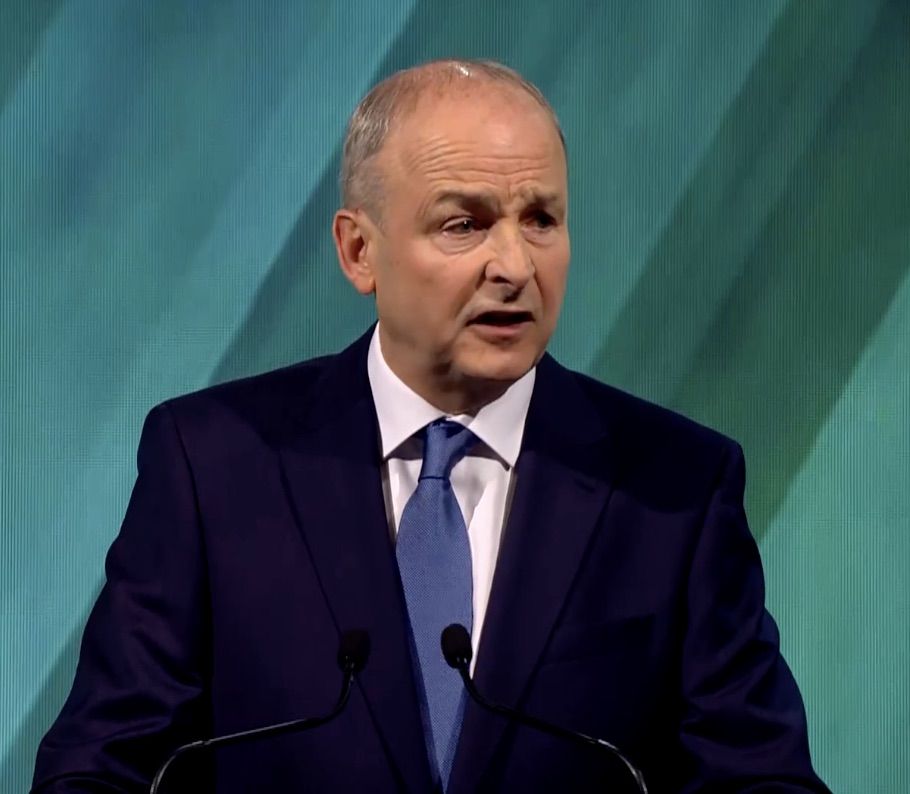
LAST Saturday the Fianna Fáil Ard Fheis in Dublin marked the centenary of that party. At its foundation in 1926 it was agreed that the party would be titled ‘Fianna Fáil – The Republican Party’.
Its principal aim was defined as ‘Securing the political independence of a United Ireland as a republic.’
That was the basis on which Fianna Fáil first entered government in 1932. But in the decades to follow nothing was done to advance that aim. On the contrary when in government every effort was made to thwart unity, including through the imprisonment and execution of republican political prisoners and the abandonment of nationalists living in the North under an apartheid unionist regime.
From its position of influence and power what has Fianna Fáil done to advance the aim of unity that was the foundation stone on which it was established a century ago? The short answer is very little. For 100 years Fianna Fáil has failed to confront partition and to advance the cause of a united Ireland. Yes, it occasionally indulges in verbalised republicanism. But in reality it constantly pushes unity to the sidelines. This has been reinforced with the leadership of Micheál Martin, who has stubbornly and vocally rejected any suggestion that Fianna Fáil should plan for unity.

Yes, Fianna Fáil was part of the process which ushered in the Good Friday Agreement and for that it deserves credit. But the Good Friday Agreement is a peace agreement. It is not a political settlement and opportunities to advance to that are being squandered every day.
Responsibility for that rests with An Taoiseach.
Micheál Martin is like a vinyl LP stuck in a groove, constantly repeating the lines that it’s not time to plan for a united Ireland; it would be too divisive; we need reconciliation first; and unity referendums would push people back into the trenches. Making reconciliation a precondition to any planning for or discussion around unity is to hand a veto over constitutional change to a minority.
This is a clear breach of the terms of the Good Friday Agreement which requires a simple majority in favour of unity.
Micheál Martin is not a united Irelander. Delegates emerging from last weekend’s Fianna Fáil Ard Fheis were disappointed by the tone of the conference and the lack of vision on the future in his speech. No mention of a united Ireland and two brief references to unity and no plan to achieve this. Some described it as lacking passion and one delegate commenting to RTE said: “I’ve never been at a larger wake.”
Much of the media conversation was around who will replace Micheál and when.
In the meantime, those of us who are for a united Ireland have a responsibility to continue to build the political momentum in that direction.
The visit to London last week by Uachtarán Shinn Féin Mary Lou McDonald and Leas Uachtarán Michelle O’Neill and their meetings with the Scottish National Party and Plaid Cymru is a case in point. These three parties are looking to a different future. One in which the people of Ireland and Scotland and Wales determine our own future free from the shackles of a Westminster system that does not have their interests at heart.
Use it or lose it: Making Irish part of our daily lives
I OFTEN quote the late Seán Mac Goill. Seán was one of the visionaries who gave us the new Bombay Street after the pogroms of 1969, the urban Gaeltacht on Bóthar Seoighe, the Andersonstown News and many other outstanding projects going back to the 1960s. Seán and his peers and their families were immersed in the Irish language and the wider cultural revolution across Belfast. It was they who laid the foundations for today’s revival and successes. Seán’s name is immortalised in the Gael Ionad Mhic Gioll in Ballymurphy, home of Glór na Móna, the outstanding Irish language organisation. .
Seán and his contemporaries were very practical activists. He told me once that we needed to replace English names of local projects and buildings with Irish ones.
“Don’t use the English versions. Use only the Irish and that’s what the people will use also,” he said.
Seán is right.
An Chultúrlann is a good example of this. So is Féile An Phobail. And Sinn Féin for that matter.
I am continuously chuffed at the number of people who say ‘Slán’ or ‘Sláinte’ as part of everyday speech. These and other words are now part of the vernacular. At least in the circles which I engage with. It can become contagious.
NATURAL: Irish words like Cultúrlann are embedded in our lives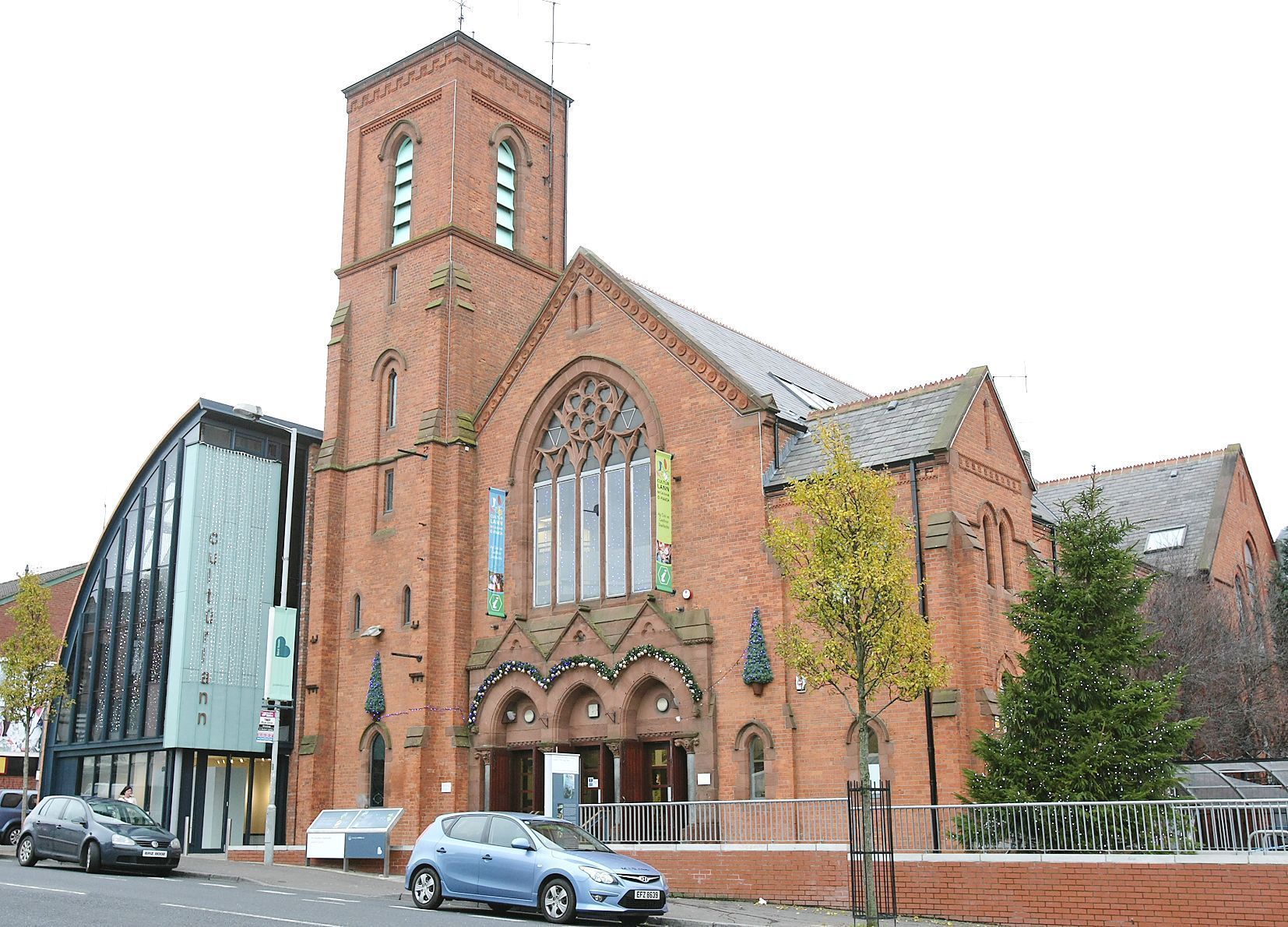

Even DUP leaders back in the day used to drop the odd ‘Sin é’ in their confabs with us. Many’s a time Arlene would slag us by ending engagements with ‘Slán’. That’s when she was in good form. Before the crocodiles.
Language is for speaking. A spoken language is a living language. It is for communicating. So no matter how little Irish you have, use it. We can all play our part in this by following Seán Mac Gioll’s example.
Let’s resolve to drop as many English words and phrases as we can and use only the Irish ones which we know. Slán and Sláinte are good examples. No need ever again to say Cheerio or Cheers. Here are other examples:
Cad é mar atá tú? How are you?
Tá mé go maith. I am well.
Níl mé go maith. I am not well.
Go raibh maith agat. Thank you.
Fáilte romhat. You are welcome.
Le do thoil. Please.
Gabh mo leithsceal. Excuse me.
Chífidh mé thú. I will see you.
Most readers of this column will be familiar with these words or phrases. So why not use them? There is really no excuse for not doing so. I have left out plurals but will return to these in my next list. The main thing is to use the Irish we have. You will be surprised at how easy it is. And by the number of people who are delighted to respond in kind. So let’s start with these few wee ones. Ádh mór.
The unending Nakba
ON May 15 Palestinians across Palestine and throughout their diaspora commemorate the ‘Nakba’ or ‘Catastrophe’ of 1948. In that year Zionist militias commenced a systematic assault on Palestinian towns and villages, creating fear and displacement. Massacres occurred daily and in a short time 800,000 Palestinians became refugees in their own place. The Nakba is ongoing. It is taking place now in the West Bank, in Lebanon and in the Gaza Strip.
Israel shares a great burden for this shameful situation but so to do many in the international community who have turned a blind eye to the genocide and pogroms that have regularly taken place against Palestinians by Israeli settlers and military. Prominent among these is Britain. Not just because British governments, and in particular the current Starmer government, have aided Israel’s actions, but because Britain is culpable for what is occurring in that region.
The British Empire once ruled 25 per cent of the world. Those people and the lands it occupied were pillaged and their wealth stolen in pursuit of profit and power. Violence and British law were used to exploit and destroy whole nations in British interests. It sanctioned and legalised violence, against people, their customs and histories. Ireland was among the first to experience this.
But so too were the Palestinian people. In 1917 the British Balfour Declaration promised the Jewish people a national home in Palestine – ignoring the rights of the people of Palestine. In 1923 when the British Mandate took effect the British organised the dispossession of Palestinian communities, and made life impossible for them by raising taxes and confiscating farm land.
In February 1947 the British announced their intention to end the Mandate and handed the issue of Palestine over to the newly formed United Nations. In November the General Assembly passed a resolution endorsing partition. The Israeli state was allocated 55 per cent of the land, despite there being twice as many Palestinians.
Israel moved quickly to consolidate its position and to take even more land. The consequence was the Nakba.
Today the Nakba continues. Israel has made no secret of its desire to force Palestinians out of Gaza. The attacks by the Israeli military and gangs of settlers in the West Bank have already driven thousands from their homes. In these challenging times our responsibility is to stand with the people of Palestine and defend their human and national rights.