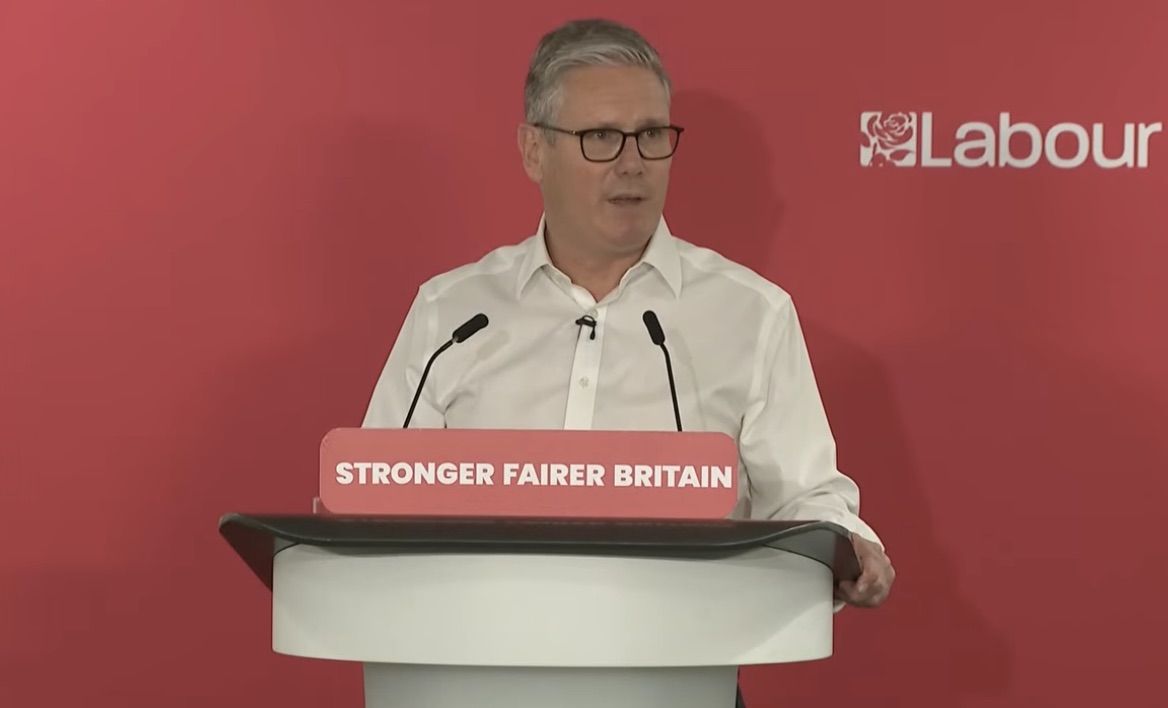
AT the time of writing this week’s column Keir Starmer is still the Leader of the British Labour Party and Prime Minister. On Monday he delivered a ‘Save Keir Starmer’ speech which may or may not work for him. Can he survive the voices of opposition within Labour? That is a matter for his party.
The reality is that his leadership of Labour and its success in the 2024 general election had little to do with Starmer and more to do with voters’ deep antipathy toward the Conservative Party. With a landslide victory and a massive majority of 174, Starmer was given a mandate to right the wrongs of a decade of Tory mismanagement and corruption, and of the Brexit debacle.
Instead and in just 23 months Starmer has lost the confidence of the vast majority of the electorate in Britain. His funding of public services in the North is disgraceful. His government’s abject failure to tackle the cost of living crisis and his bizarre and stupid appointment of Peter Mandelson to the post of Ambassador to the USA have cost Labour dearly. Allied to these has been his shameful support for Israel’s genocidal war against the Palestinian people. Consequently, Starmer is now reputedly the most unpopular British Prime Minister since opinion polling began decades ago.

Whatever the political outcome of all of this for Starmer and Labour, the election results have produced an additional seismic shift in the political demographics of the British state. In Scotland the SNP has emerged decisively as the largest party. It is fully committed to pushing for another independence referendum. The election has also delivered a resounding pro-independence majority in the Scottish Assembly. Together the 58 SNP and 15 Green Party representatives provide a clear vote for independence.
In Wales, Plaid Cymru is now the largest party. Its leader Rhun ap Iorwerth has publicly declared his desire to secure Welsh independence.
Within hours of the results Uachtarán Shinn Féin Mary Lou McDonald and Leas Uachtarán Michelle O’Neill spoke to the SNP leader John Swinney and Plaid Cymru leader ap Iorwerth to congratulate them on their successful and historic election results. They asserted Sinn Féin’s commitment to work with the other pro-independence First Ministers in common cause for self-determination. Rhun ap Iorwerth described the potential to advance the goal of self-determination as “a historic moment for these islands.” He is right.
There now exists an unprecedented opportunity to advance self-determination in Scotland, Wales and Ireland. We need to build on this and on the increasing support for Irish unity.
Last week the Island of Ireland EU Poll 2026, published by the European Movement, confirmed that the overwhelming majority of people on the island of Ireland are for Irish unity. According to the poll results, if a referendum were held today on a united Ireland within the EU, 59 per cent of voters in the South would vote Yes and 64 per cent in the North would vote Yes. In 2017 the European Commission stated unambiguously that in the event of Irish unity the island of Ireland would automatically become a member of the EU.
It is very obvious that people across the island of Ireland want a better future, a more hopeful future. It is also abundantly clear that increasingly citizens within the British system are looking beyond the limitations imposed by Westminster governments which have consistently made decisions without regard for the people of Scotland, Wales and the north of Ireland.
As Michelle O’Neill put it last week: “The future is beyond Westminster. The desire for independence cannot be ignored.”
So, where to next? The poll is evidence that the people of the island of Ireland are ahead of those politicians who are resistant to constitutional change. This is particularly true of Micheál Martin who stubbornly says no to planning for unity. Despite this, Sinn Féin and all of those who are advocating unity are willing to engage positively with the Irish government and all of those who are up for this historic challenge.
Israel cage Barghouti to frustrate Palestinian unity
AFTER 24 years the continued imprisonment of Palestinian Leader Marwan Barghouti is more than a punitive act of judicial oppression by Israel. It is a calculated strategic decision to prevent the emergence of a united Palestinian leadership. Barghouti is widely recognised among Palestinians as the leader who can unite the various Palestinian groups and provide a united, coherent political strategy to challenge Israel’s occupation of the Palestinian territories and its genocidal policy in Gaza.
For more than 50 years Marwan Barghouti has been part of the struggle against Israel’s apartheid regime, its brutality and occupation of Palestine. He was born in 1959 in the West Bank. When he was eight years old the 1967 war resulted in Israel occuping the West Bank, East Jerusalem and the Gaza Strip. It was under this military occupation that Marwan grew up.
Like many thousands of young nationalists in the North following the pogroms of 1969, as a schoolboy Marwan was involved in protests against Israel’s military occupation. He was imprisoned and beaten but refused to aquiesce to Israeli threats. He read widely and after his release he studied history and politics at university where he organised student resistance.
MURAL: A tribute to Marwan Barghouti at the International Wall on Divis Street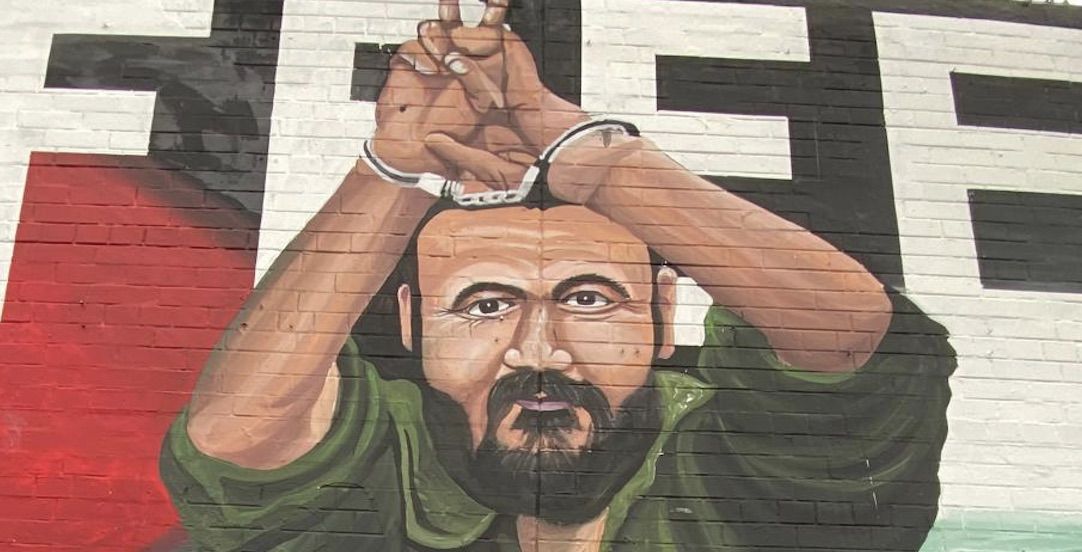

In April 2002 Marwan was kidnapped from Ramallah where he was an elected official. Israel organised a show trial which the Inter-Parliamentarey Union – which represents over 181 national parliaments – concluded was not fair. Describing Marwan’s trial Nelson Mandela said: “What is happening to Barghouti is exactly the same as what happened to me.”
Since then Marwan has only seen his family occasionaly and not at all since October 2023. He has never seen any of his six grandchildren.
While in prison Marwan has continued the struggle for Palestinian rights. He organised lectures to encourage political awareness and is consequently called ‘The Professor’ by the other political prisoners. While a leading figure in Fatah, he understands the imperative of Palestinian groups working toegether.
Twenty years ago next month, in June 2006, Marwan initiated and agreed with political prisoners representing the key Palestinian greoups – Fatah, Hamas, Islamic Jihad, the Popular Front for the Liberation of Palestine, and the Democratic Front for the Liberation of Palestine – a historic landmark document: the National Conciliation Document of the Prisoners.
This document sought a Palestinian state based on the 1967 borders, recognised Israel, and called for an inclusive Palestinian national government, and democratic reform. The prisoners’ document remains a key element in Palestinain strategy in any negotiations.
Marwan Barghouti believes in the right of the Palestinian people to self-determination. He seeks a Palestine built on dignity, equality and indpendence.
His family have been campaigning for years for his release. If you would like more information or to sign up in support of the campaign to free Marwan go to freemarwan.org/
Maith sibh
WELL done to Conradh na Gaeilge on the publication of its report, ‘A United Ireland: A Transformative Opportunity for the Irish language and Gaeltacht’.
The report, written by Roisin Nic Liam, a researcher at Queen’s University, is an insightful examination of how the Irish language has been traditionally viewed in the context of Irish unity and its place in the growing conversation now taking place on unity. It accepts that “comprehensive planning is required in order to clarify what a united Ireland might look like. Such clarity would ensure that the people of Ireland are able to make an informed decision about the future of the country. Central to this discussion is the question of the Irish language.”
The report acknowledges that much of the discussion around the language has been “incredibly regressive and negative.” As a result, some have opted to view it as a “bargaining chip or a symbolic concession to be negotiated.”
However, the Conradh report takes a different position, arguing that the Irish language community should “seize the historic opportunity presented by the conversations on Irish unity to articulate its own progressive vision and its own demands regarding the future of the language and the Gaeltacht.”
This means that the Irish language and Gaeltacht communities should now “pivot from this defensive position in debates on constitutional change towards a positive, proactive stance. Such a reconfiguration will ensure that the indigenous language of Ireland, and its speakers, are not further marginalised in any future political arrangement.”
At over 90 pages this is a significant contribution to the debate on Irish unity and in this instance the positive role that the Irish language can play as more and more people grasp this genuine opportunity for equality and transformative change.
The report is available at cnag.ie