A NEW Irish Language policy for Belfast City Council has received approval following an eight-month legal battle.
Belfast City Council’s Irish Language Policy commits to increasing the visibility and use of Irish across council services, facilities, and communications. It will include the introduction of bilingual corporate branding and bilingual signage across council buildings.
The policy was originally voted through by a majority of councillors in October but was subsequently called-in by Unionist councillors
Following that, Judicial Review proceedings were brought by TUV member Ann McClure against Belfast City Council’s call-in procedure. That led to the council’s Irish language policy being paused pending the outcome of that Judicial Review.

In April, Justice McLaughlin dismissed that legal challenge, claiming Belfast City Council’s original “call-in” procedures were valid.
At Monday evening's full Council meeting, Chief Executive John Walsh confirmed the ruling to councillors.
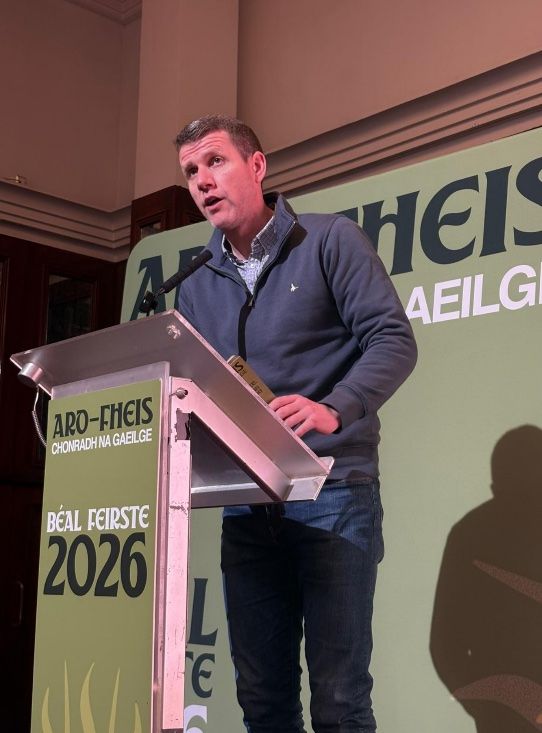
Ciarán Mac Giolla Bhéin, President of Conradh na Gaeilge welcomed the progress on the policy.
“The Irish language is flourishing across our city. Our Gaelscoileanna are growing, the number of families raising their children through Irish, and the number of people learning Irish are all growing. Over recent years, the Irish language community has brought the campaign for language rights to the centre of our public institutions and shared spaces.
“We have been working with Irish language groups and speakers, Belfast City Council and councillors for almost a decade on this policy. We have helped design this policy based on the fundamental principles of parity of esteem enshrined in the Good Friday Agreement to take resolute action to develop and support the Irish language. We used guidance from the United Nations, the Council of Europe, the Equality Commission, our own Humans Rights Commission and Foras na Gaeilge. The product of that long process is a progressive, minority rights compliant Irish language policy.”
He added: “We wish to commend all of those parties across the City Council who support this inclusive, best practice policy, council staff who have been working diligently on this, alongside the thousands of activists who have made this change a reality. Many will remember when Irish speakers were ejected from Belfast City Hall for speaking their native language in council.
"From this moment forward, Béal Feirste, will become a beacon of equality across this island regarding language rights and this policy will reflect the status of the ever growing Irish language revival across the city. This is another major milestone in our campaign towards equality and comprehensive language rights.”
Sinn Féin councillor Tomás Ó Néill said the Irish Language Policy, initially supported by a £1.9 million investment, includes the introduction of bilingual corporate branding and bilingual signage across council buildings.
“Promoting the rights of Irish language speakers and ensuring greater visibility for the language are at the heart of this historic policy," he said.
“Tonight’s approval marks the beginning of an important new chapter for our city, where Irish language speakers can feel heard, valued and respected.
“Belfast will now be established as a leader across Ireland in language development and visibility.
“It reflects the growing strength and vibrancy of the Irish language, something that is to be cherished by us all."
Cuisle Nic Liam, Language Rights Coordinator with Conradh na Gaeilge, added: “Today is a hugely historic day for the Irish language community, and indeed for everyone who believes in equality, rights and respect. Irish will finally be seen and heard across our city. Irish will finally take its rightful place as an official language of Belfast City Council.
"This historic policy will ensure Irish language rights will become a normal, everyday reality across our city. All of the international experts tell us that increased visibility and accessibility leads to increased normalisation of the language, which in turn, helps to increase tolerance. Equality is an expectation, not a concession."